Seeing is believing
Skysports.com spoke to Paralympic legend Noel Thatcher about 2012 and the race to tackle blindness.
By Julian Crabtree
Last Updated: 10/06/11 6:39pm
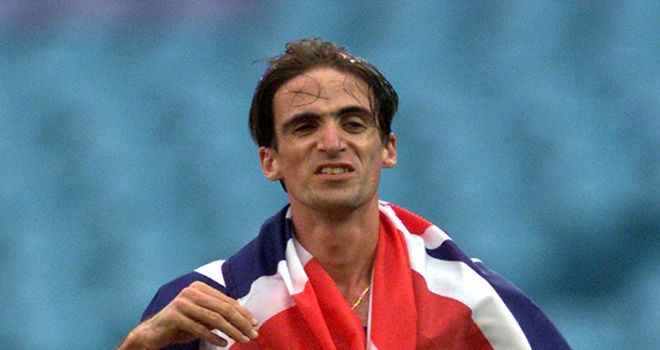
Skysports.com caught up with Paralympic legend Noel Thatcher to discuss London 2012 and the race to tackle blindness.
Thatcher, who is registered blind, has competed in six Paralympic Games from 1984 to 2004 where he won five gold medals - the same number as Sir Steve Redgrave. The multiple world-record holder, who has won 42 Major Championship gold medals, is delighted that the games are coming home and believes our athletes will rise to the challenge.
"To have the Olympic and Paralympic games coming to our city is a dream for most British sportsmen and women," Thatcher told skysports.com.
"It is unbelievable and that feeling when we won the bid was incredible. For me it is like the Paralympics are coming home - they were started in Stoke Mandeville hospital after the war and have become one of the largest international sporting events in the world.
"London is such a fantastic city and this is going to be the biggest party that London has seen for over a century and it is great to be part of it.
"Our athletes have the chance to be part of history and to leave a lasting legacy. Athletes like Tanni Grey-Thompson have been instrumental in changing the public's perception of the potential of disabled people and I think in 2012 people like David Weir will continue to push boundaries."
Preventing blindness
Pushing boundaries and fulfilling potential is very close to Noel's heart as he is the ambassador for the Standard Chartered Great City Race that is raising funds for Seeing is Believing. This is Standard Chartered's global initiative that tackles avoidable blindness around the world.
"I have been really impressed with the work that Standard Chartered and Seeing is Believing have done and really happy to be involved," explained Thatcher.
"When you look at the statistics, 80% of all blindness is preventable. The idea of this race is that the 6500 people taking part in this race will raise sufficient funds that they will be able to save the sight of 6500 people - every single runner will save someone sight, that is just incredible.
"Obviously I know a lot of blind and visually impaired people who are allowed to develop their potential over here but 80% of the world's blind people are not getting that. We have a massive potential to save peoples sight and to develop their way of life in their communities. Running around a track for 20 years can be a bit selfish - it has been fantastic but it is nice to be able to do something that makes a real difference."
Fulfilling potential
Thatcher has never let his vision slow him down and the physiotherapist is hoping that Seeing is Believing charity gives other people the same support that he had.
"I was really lucky; I was born with the visual impaired so I did not know any different. I was lucky to be surrounded by the right people from my parents to teachers to coaches and other athletes who never ever saw my vision as a barrier to development.
"My parents sent me to a boarding school for the blind and partially impaired. Part of the curriculum was cross country running three times a week. When I was 12 one of my mates persuaded me to have a crafty fag, so we nipped off during the run and a 2 mile run took us an hour and a half!
"As punishment we were sent on this Kenyan-type training camp which consisted of a five mile run every night for a month. The teachers would follow us around the streets in their cars making sure we did not stop. At the end of this boot camp I started to finish well up the ladder and started to win a few races too. I kind of decided I liked it and the rest is history really."
Hard time training
The rest is indeed history but training for Noel has not been as easy as lacing on his trainers and hitting the road.
"On the track, well 400 metres of track is more or less the same no matter where you are running. On the road it is an entirely different matter. For six months a year running in the dark is a bit of a nightmare. I have fallen down more holes dug by the local council than I care to remember. It has never stopped me doing it but it is pretty dangerous and I cannot train properly so I do need guide runners to help me with my road sessions and any races.
"One of the issues not having a guide in the 10k in Sydney was that I missed a big move made up in front. When I finally heard something had happened it was too late for me to react and do something about it. So there are all sorts of functional issues but you do get better in managing them and I have been lucky to be surrounded by fantastic people."
As for a return to the track for 2012, well the 45-year-old has not totally ruled it out but thinks he is best served as an ambassador.
"In all honestly I would love to be in that team - but I am not as fast as I was. It is not likely but I will be there in an ambassadorial form and supporting team GB all the way.
"We need to perform; there will be a lot of pressure to on our athletes to win medals on home soil. It will be tough but I think our athlete's will rise to the occasion. This will lift people and I think that is what true Olympic champions are made off - the ability to lift yourself and perform on the big stage. I cannot wait!"
The Standard Chartered Great City race takes part in London on the 14th of July 2011. For more information on Seeing is Believing click here