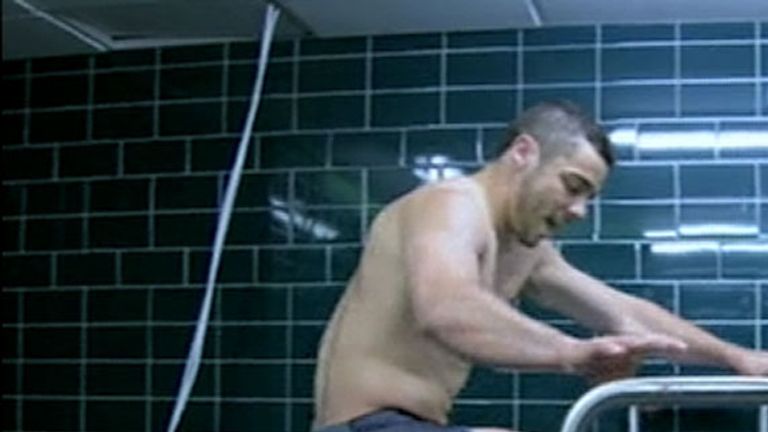
With ice baths now an integral part of sporting recovery, Boots 'n' All investigated the improved version.
New invention helps players recover sooner
The ice bath has become a traditional post-match activity for most sportsmen.
After the hard graft on the pitch, they head to the dressing room to slip into freezing water and ease their aching limbs.
The bog-standard bath could soon be a thing of the past, however, following the creation of the Cryo-Spa.
And
Boots 'n' All caught up with inventor Colin Edgar for the lowdown on his device.
"The idea of using cold water for soft tissue injuries has been around for years. It's just that current technology allows us to control it really effectively," said Edgar.
"We have a chiller maintaining whatever temperature the physiotherapist determines, so unlike an ice bath the temperature stays constant and doesn't warm up as each player goes in.
"We put the jets on so they're basically getting a massage effect as well as the low temperature. It's a bit like wind chill because as the water's moving all the time it's taking the tissue temperature down to a therapeutic level, and that makes it more effective than still water."
Reduces swelling
Players may get the chance to try out the new-fangled bath in this season's Challenge Cup Final and Clive Brewer, the RFL's head of human performance, believes the invention will be of huge benefit to the sport's stars.
"When players take part in a game and there's contact, the body's response is to swell. So the idea of that ice bath is that it reduces swelling," he said.
"A little bit of swelling is natural but we want to reduce that as much as possible so that players are able to get back training and playing.
"The idea is to get people in water about a metre deep for somewhere between seven-12 minutes and make it somewhere between four and 12 degrees centigrade.
"It's a means of getting something in a dressing room so they can immediately get the cold water effect and then go walking or swimming afterwards."