
ECB introduces new cricket independent regulator as Azeem Rafiq claims 'not enough has been done'
A report by the Independent Commission for Equity in Cricket in June said racism, sexism and classism is "entrenched" in English cricket; ECB have established a new independent regulator in response, as well as committing more money to the women's game and diversity projects
Tuesday 26 September 2023 05:05, UK

The ECB will introduce an independent cricket regulator and invest £25m per year into the women's game to make cricket more inclusive in reaction to a two-year inquiry.
In June, the Independent Commission for Equity in Cricket (ICEC) reported racism, sexism, elitism and classism as "widespread and deep-rooted" within the sport in England and Wales.
ECB chair Richard Thompson, who unreservedly apologised when the findings were published three months ago, again said sorry, saying "cricket hasn't got it right in the past, but this is an opportunity to move forwards together".
He added: "This response represents a set of actions that will accelerate and intensify our work to make cricket a game for everyone, actions that cricket can deliver and fund within an achievable timeframe. It builds on a huge amount of work which is already under way right across the network."
- English cricket 'deep-rooted' in racism, sexism, and classism, report by ICEC finds
- ICEC report 'damning', says Nasser Hussain | Michael Atherton calls for county pathways to be made free
However, former Yorkshire player and racism whistle-blower Azeem Rafiq believes the report lacks accountability and transparency about the new independent regulator, which the ECB hope to have in place for the start of the 2024 season.
"I expected the three-month response to be detailed, clear with strong commitments and unfortunately from what I’ve read it falls incredibly short and it’s flimsy at best. How independent is the new regulator? We don't have any detail about it." Rafiq said speaking to Sky Sports.
"There are a couple of positives with commitments around women's cricket and match-fee equalisation, that should be the bare minimum. These commitments are important, but is it going to solve the other issues that led us here in the first place? I don't think it will."
Rafiq also said he remains concerned for other South Asian players coming through the domestic set up who are still facing discriminatory attitudes.
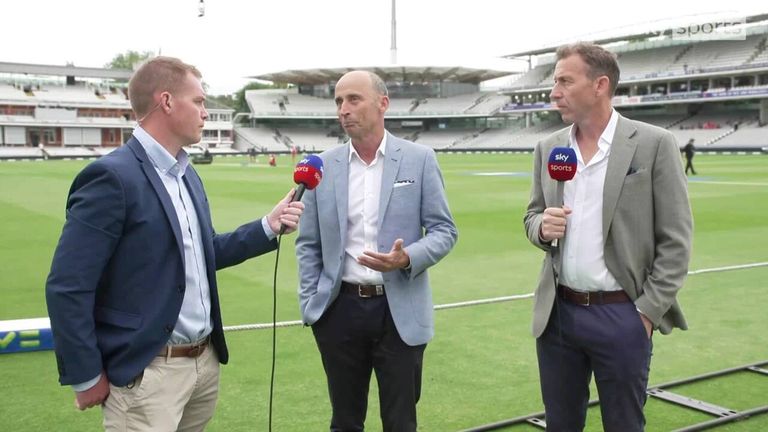
UK minister for sport Stuart Andrew said he was "encouraged" by the ECB's plans but added that the government would be watching "closely".
"Sport must be open to everyone - there is absolutely no place for racism, discrimination, bullying or harassment in sport or society.
"The ICEC report was a comprehensive examination of the game. It made for difficult reading.
"I am encouraged by the concrete actions set out by the ECB, such as the investment being made in the women's game. We will closely watch if, and how, these new measures make the sport more inclusive."
Gould: Equal pay will take time to achieve
The ICEC made 44 key recommendations and, after a three-month consultation, the ECB say it has a "positive direction of travel" on 94% of them.
However, it did not commit itself to the report's timeline for achieving equal pay for men and women. The ICEC recommended the ECB strive to ensure equal pay on average at domestic level by 2029 and at international level by 2030.
But the ECB did confirm last month that it would be bringing England Women's match fees in line with the men's team.
Chief executive Richard Gould said: "(Equal pay on average) is something that we would like to achieve. We know though that we need to accelerate the growth of the commercial element of the women's game.
"Broadcast value is the key determinant in any of these sports, and that is something we are going to have to deliver on.
"That's why we want to be open and honest and say that's not necessarily something we can do within those timescales, but we'll have a good go."
The ECB has also committed too:
- Removing finance as a barrier in the talent pathway by 2025
- Developing action plans to tackle specific barriers facing state school and black children.
- Enhancing Equality, Diversity and Inclusion (EDI) standards for counties, including more ambitious targets for
gender and ethnic diversity. - Assessing counties' performance against minimum EDI standards, and having the power to reallocate matches from venues if there is evidence of non-compliance.

Lack of ECB commitment on equal pay 'disappointing'
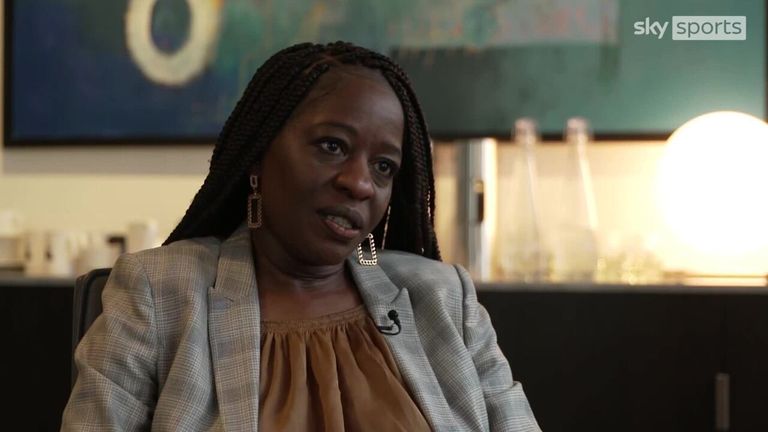
Georgie Heath, a representative for the Her Game Too campaign, said she was "disappointed" by the ECB's failure to commit to equal pay for women under current broadcast deals.
"I mean 2030 seems a very long way away if you ask me," Heath said. "It's great that they are bringing in the same match fees, but that is a very, very small box ticked out of a much bigger exam paper.

"I am disappointed by that. They can't just say… 'it's too far, we'll try to do what we can do'.
"I mean that's very much just words. I could try to climb a building if I wanted, I can try as hard as I can but I'm not going to be able to do it.
"That's something that needs to be looked at, needs to be addressed and more people need to be talking about this in the media.
"A lot of the players who are playing professionally now will have retired by then (2030) and not even get to see it happen.
"They've been part of this phenomenal growth of the women's game and they're not going to get to see that."
Thompson: This is an opportunity to move forwards together
Richard Thompson, ECB Chair, said:
"On the day the ICEC published its report, I apologised without reservation on behalf of cricket's wider leadership to anyone who has suffered discrimination or felt excluded from our sport. As well as reiterating that apology here, I reaffirm our absolute commitment that cricket will strive to become the most inclusive sport in England and Wales.
"There is no doubt that the ICEC highlighted to great effect the impact of discrimination on individuals and the extent of the systemic challenges to be addressed. Its in-depth analysis also presented an opportunity to put in place a comprehensive plan of action that will deliver meaningful change and rebuild trust among the communities we serve.
"I'd urge everyone to now come together, to put their energy and effort into delivering these actions, and to playing their part in ensuring cricket becomes England and Wales's most inclusive team sport."
Jones: How will the ECB fund its new "investments"?
Sky Sports News reporter Rob Jones
"With the seriousness and breadth of the issues that were laid bare by the ICEC report in June, there was always a certain amount of plate spinning that would be required by the ECB to approach some of the deep-rooted problems within the English game.
"Cricket's lengthy look in the mirror has largely been brought about by Azeem Rafiq's devastating experiences at Yorkshire and there's a hope that a new independent Cricket Regulator and the existing Disciplinary Panel will deal with any experiences of discrimination far better than in the past.
"For the women's game - with the report stating that they were paid "an embarrassingly small amount' compared to men - there have been steps in the right direction with equality in match fees and a £25m annual investment above forecasted revenue but that's countered by an acceptance that equal pay isn't realistic internationally by 2030.
"The ECB have called their financial outlay an investment rather than a cost, but there is a question as to where the money comes from to correct the errors of the past. Talk of "reprioritising" and "balancing the business" may not be enough to foot the sizeable bill for such a long period of neglect."
Stone: 'Class dictates everything about cricket'
Historian and author Duncan Stone researched the intersection of cricket and class for his PhD and has said it is woven into the culture of the game.
"Class dictates everything about cricket in this country in particular," Stone told Sky Sports News.
"Class is fundamental to all of the issues that are being addressed to the coming months and years by the ECB. The culture is how the game is organised and structured. It is why certain groups don't get the same chance that invariably privately educated boys or men do.
"There are certain things in the report that look encouraging but the political direction of the last 40 years has been very damaging for what used to be called a sport for all.
"Unfortunately, when you have private schools with all the best facilities it only exacerbates the over-representation of private athletes, not just in cricket, but in sport in general.
"Will cricket ever be more than a boutique pastime for white privately educated men? Will the South Asian community, in particular, still be playing their cricket in a discreet environment? If that remains the case, then we would have failed on all counts."