Ebony Rainford-Brent: Former England cricketer reveals racist hate letter she received
Ebony Rainford-Brent, the first Black woman to play for England, posted the sickening correspondence on Twitter; she said: "Had some letters in my time but this one up there!"; WARNING: This story contains language which you may find upsetting and offensive
Thursday 18 November 2021 10:53, UK
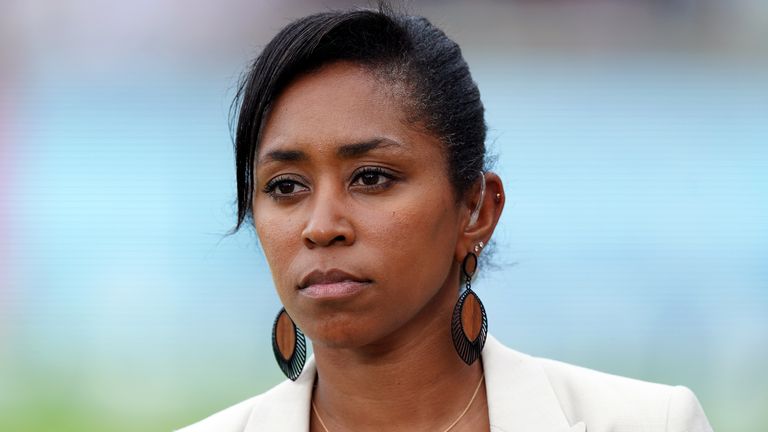
Former England cricketer Ebony Rainford-Brent has shared a picture of a racist hate letter she has received, where she was told to "leave our country".
Rainford-Brent, who became the first Black woman to play for England in 2001, posted the sickening correspondence on Twitter.
She captioned her tweet: "Interesting... Born in south London but apparently I was found naked in Africa as a primitive. Had some letters in my time but this one up there!"
The handwritten letter, which was full of insults and racial slurs, included a reference to "white cricket culture", described her as "illiterate" and "primitive" and instructed Rainford-Brent to "leave our country".
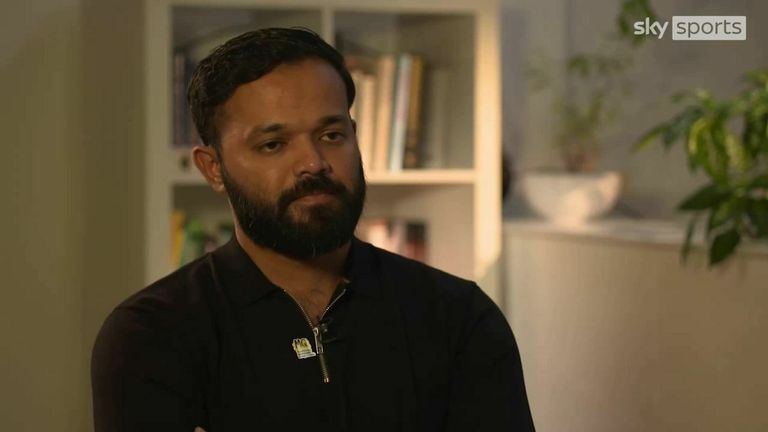
The incident comes just a day after Azeem Rafiq gave evidence to the Digital, Culture, Media and Sport select committee about allegations of racism in cricket.
Rainford-Brent played 29 times for England between 2001 and 2010 and soon moved into broadcasting, featuring regularly for Sky Sports and Test Match Special.
- Azeem Rafiq: There seemed to be an acceptance of racist abuse at Yorkshire
- 'No one stamped it out': Azeem Rafiq's key racism claims
She joined forces with her Sky Sports colleague Michael Holding in the summer of 2020 to feature in a powerful video discussing the Black Lives Matter movement, a campaign that saw the pair awarded the Freedom of the City of London.
In the short film, the 37-year-old spoke about how regular comments about her ethnicity made her question her future in the game.
Along with her broadcasting career and a role as director of Surrey women's team, she set up the ACE Programme - a charity aimed at increasing cricketing opportunities for members of the African-Caribbean community.
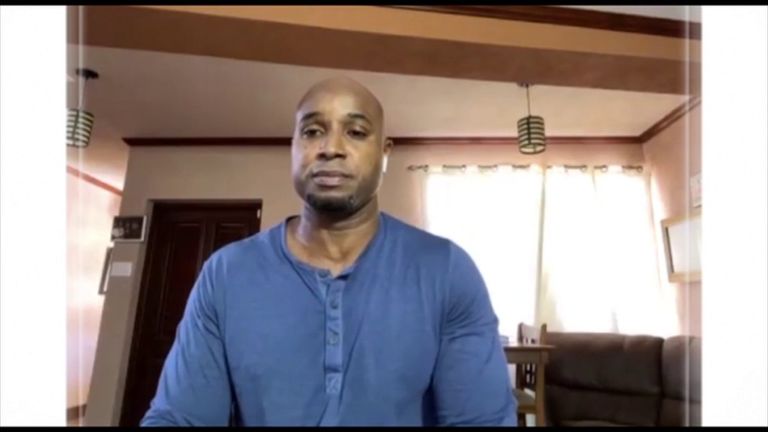
Best: I'm not surprised by Rafiq revelations
Speaking to Sky Sports News about widespread allegations of institutional racism in English professional cricket, former Yorkshire and West Indies bowler Tino Best, who was the club's overseas player in 2010, said he was aware of the discrimination faced by Rafiq and other team members during his time at Headingley.
Best said: "Having been around Azeem Rafiq, Adil Rashid and Ajmal Shazad, they would always bring up the stories about how they were being treated, how they were not getting opportunities and how they were being treated from the youth system.
"Everything that Azeem said in the DCMS hearing was what they told me 11 years ago. Azeem probably didn't go too in-depth when we spoke he only just touched the surface.
"When I was at Yorkshire I heard that story about Matthew Hoggard from those guys. Around the cricketing world we would hear about certain players and how they interacted with certain players.
"I'm not surprised about these findings. I didn't see it first hand, I was a Black guy in a Yorkshire dressing room and they're not going to say things to those three players with me listening.
"If they were going to say those things they wouldn't have said them around me because everyone would have been treading on egg shells, I am the second Black guy to have ever played for Yorkshire.
"So I didn't hear it but I would hear stories when we had dinnertime with those three guys of Pakistani descent, and it was mind-boggling because when I was there, I never experienced anything like that.
"I know the drinking stuff was a little different, we used to have drinking games and stuff. Me being an overseas pro, I drank what I wanted to drink, they couldn't force me but with the younger guys they had no choice.
"And I always had in the back of my mind 'Muslims aren't really supposed to drink', but for the bond with the team, you had to do that. I don't think it was fair to those guys."
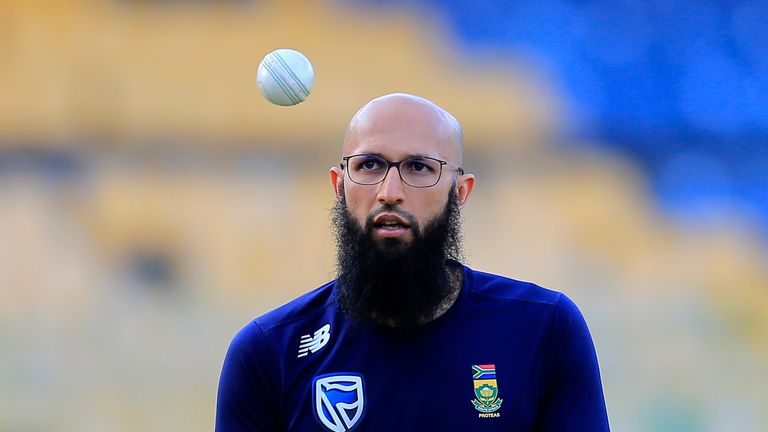
Best alleges on one occasion Martyn Moxon, the county's head coach at the time, told him he would send him back to his own country when the bowler questioned why he had been dropped for a game.
He explained: "What transpired was I got dropped for a game, I was absolutely livid. At the end of a game when coach Moxon was about to high-five me, I kind of shunned him. He called me into his office, he was saying things like he would send me back on the next flight to my country.
"I called Moxon at the end of my career, he took about three weeks to get back to me. He finally reached out and I said 'coach can you remember the incident that took place back in 2010', he said he remembered. I said 'what were you intending to get out of me by saying it?'
"And he was like: 'I would have said that to any player'. And I said 'well coach, it doesn't make any sense me and you having a conversation.'"
Best also said there needs to be a renewed focus on educating children around discrimination in order to properly tackle the issue in society, as well as in sport.
The 40-year-old said: "You've got to be educated from a young age not to discriminate because somebody may be transgender, white, Chinese, Black, but all of us are human beings.
"No one is born racist, it is something that is practised and your parents must pull you out on it even as a child, even something as trivial as saying 'I am lighter-skinned than that person'. You've got to call your kids out on it.
"No one is better because of their skin colour. I say we have to educate people from a young age so that when it comes to the workplace, people can be more fair, open and equal to each other.
"The problem is institutionalised in cricket, but it is a society problem."