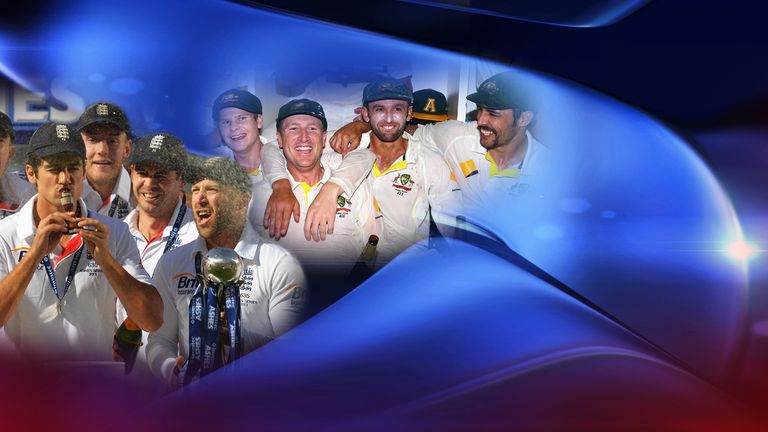
The cricketing year had a bit of everything; England's ups and downs included a double dose of the Ashes, while several exciting young players emerged - and an old master retired.
New Zealand v England, 3rd Test, Auckland: Match of the year
Close finishes in Test matches were few and far between but
England's escape act in Auckland was a notable exception. The three-match series in New Zealand remained 0-0 heading into the decider at Eden Park and the first four days went badly for the tourists. New Zealand dominated thanks to a hundred in each innings from opening batsman Peter Fulton and first-innings figures of 6-68 for Trent Boult. Entering the final day, England had been reduced to 90-4 chasing a target of 481. It seemed a matter of when - not if - New Zealand would be celebrating a first series success over England since 1999. But instead of a victory march for the home side, Matt Prior emerged as England's saviour, finishing on 110 not out as the tourists held out for a draw with nine wickets down. Prior was well supported by the efforts of Bell (75), Broad - who spent more than two hours making six - and last man Monty Panesar. In the end Panesar survived five deliveries, including one mad dash and dive for a single, to ensure England at least emerged with a share of the series.
Ashes to Ashes: Series of the year
Two Ashes series in the same year has seen cricket's oldest rivalry take centre stage for the past six months. A total of 10 Tests in a row between England and Australia - two of those are still to come in Melbourne and Sydney over Christmas and the New Year - have provided plenty of drama, intrigue and controversy. The quality of the cricket has been variable with both sides dominant in their own conditions. Familiarity appears to have bred contempt between the players, various DRS problems not helping the generally sour behaviour. Australia deserve much credit for the way they reconfigured their approach after hitting rock bottom with a heavy defeat at Lord's in the second Test. James Anderson, for instance, began with
10 wickets at Trent Bridge but became increasingly ineffective thereafter; as was the case for most of England's senior players, Bell the notable exception. David Warner was a player who travelled the opposite journey. Jeered mercilessly and short of runs in England, he emerged as Australia's trump card with the bat back on home soil. The turnaround was swift and brutal;
England's 3-0 win and subsequent celebrations long into the night at The Oval seem a long time ago now.
Australia returned the favour in even quicker time, landslide wins in Brisbane, Adelaide and Perth ensuring they held the Ashes for the first time in four years. The fall-out has already started for England with Graeme Swann announcing his retirement in mid-series and doubts about the future of Jonathan Trott after his early return home with a stress-related illness and team director Andy Flower.
End of an era: Sachin Tendulkar calls it a career
Tendulkar retired in November after a 24-year international career that saw him rewrite the batting record books. The India batsman made his debut as a 17-year-old back in 1989 and has since played 200 Test and 463 ODIs. He is the leading run scorer and century maker in both formats; 15,921 runs and 51 hundreds in Tests, 18,246 runs and 49 hundreds in ODIs. If the runs dried up slightly towards the end, he was still able to sign off with a stylish 74 in his final appearance against West Indies on his home ground in Mumbai. A class act right to the end, Tendulkar addressed the crowd at the Wankhede Stadium: "My life for 24 years, it's hard to believe that wonderful journey is coming to an end. Your support was so dear to me and it meant a lot. I want to thank you from the bottom of my heart and also say that time has flown by rather quickly. But the memories you have left with me will be with me for ever and ever, especially (cries of) 'Sachin, Sachin'. That will reverberate in my ears until I stop breathing. Thank you all very much. Goodbye."
The year began with Australia batsman
Mike Hussey's shock decision to retire and ended with England spinner
Swann's equally surprising announcement. Hussey's career was a lesson in persistence; he did not make his Test debut until he was 30, by which time he had already scored 15,313 first-class runs. The left-hander was an instant success when he finally got his chance in international cricket, becoming an important member of his country's middle order in all formats and hitting more than 6,000 Test runs and 19 centuries. Swann also travelled a similar road, discarded by England for more than seven years after a lone ODI appearance as a 20-year-old on the 1999-2000 tour of South Africa. He returned to domestic cricket, switching from Northants to Nottinghamshire, developed his bowling and finally re-emerged for England at the end of 2007 for the limited-overs leg of their Sri Lanka trip. His second coming was worth the wait; a Test debut followed in India in 2008 and he quickly usurped Panesar as the premier spinner. He went on to take 255 wickets in 60 Tests - sixth on England's all-time list, second only to Derek Underwood among spinners - and was part of three Ashes-winning sides in 2009, 2010-11 and 2013.
England seamers
Matthew Hoggard and
Steve Harmison both hung up their bowling boots after the 2013 summer. Best remembered as part of the four-man pace attack - alongside Andrew Flintoff and Simon Jones - that helped England reclaim the Ashes after a 24-year gap in 2005, both had played out the final years of their careers back in county cricket. Hoggard's 248 Test wickets place him eighth on England's all-time list, just ahead of Harmison, who is 13th with 222 in five fewer Tests.
Short and sweet: Dhawan lights up the last Champions Trophy
The
final edition of the ICC Champions Trophy took place in England in June. The two-and-a-half week schedule provided a welcome contrast to the long and unwieldy format of the World Cup in recent times, although it was a shame that rain reduced the final between India and England to a 20-over affair. England fell six runs short of a target of 130 to ensure their wait for a global 50-over trophy continues, while India added the Champions Trophy alongside the World Cup in their trophy cabinet. India opener Dhawan, who had introduced himself to Test cricket with 187 off 174 balls against Australia in Mohali in March, was the player of the tournament with 363 runs in five matches, including two centuries.
Strong Onions: Durham dominate Division One
Durham were a class apart in the County Championship,
winning their third title in six years thanks to 10 wins in 16 matches, three more than anyone else. Graham Onions was their star performer with his 70 wickets coming at an average of 18.45 and strike-rate of 35.9. Gary Ballance finished as the leading run scorer in the top flight, his 1,251 runs helping Yorkshire to second place and earning him an Ashes tour berth. Surrey won just once all season and were relegated along with Derbyshire, to be replaced by Division Two champions Lancashire and Northamptonshire. Promotion capped an excellent season for Northants, who also
won the Friends Life t20, David Willey sealing their final victory over Surrey with a hat-trick.
Nottinghamshire beat Glamorgan at Lord's to win the Yorkshire Bank 40.