
Catching the best
Wednesday 4 August 2010 18:26, UK
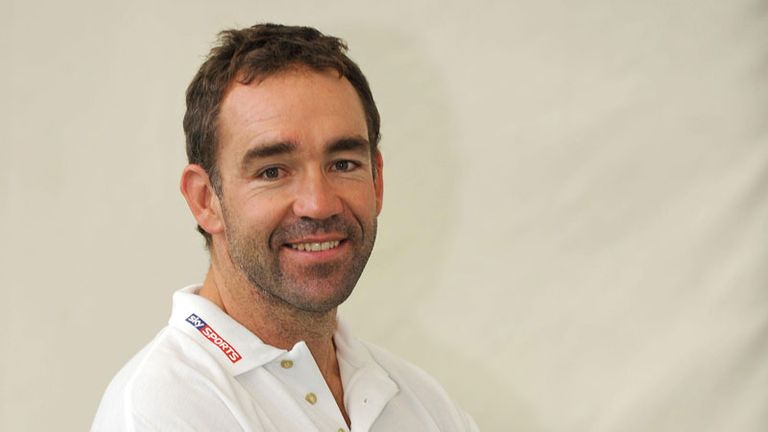
Specialist coach Richard Halsall explains why England aren't the best fielding side in the world - yet.
'Consistency is key if England are to match world's top fielding sides'
Everyone knows catches win matches. England proved as much with a superb display in the slips en route to a 354-run win over Pakistan in the first Test at Trent Bridge. But developing safe pairs of hands is only part of Richard Halsall's remit. The 41-year-old, who became England's first fielding coach in 2007, explained some of the finer aspects of throwing and catching in a hands-on masterclass in Warwickshire on behalf of the Sky Sports ECB Coach Education Programme. Over the last year, 4,000 youngsters aged between 14-18 have qualified as 'Cricket Young Leaders' through the initiative - with Warwickshire enjoying a 35 percent rise in successful applicants - and as Richard found there is no shortage of emerging talent... skysports.com: The days of stopping the ball with a big Size 12 boot are long gone, if this masterclass is anything to go by! Richard: Definitely. It's been really uplifting actually to see the levels of enthusiasm in the group. There's a real willingness to learn and incredible passion for the game which is infectious. Humility is also a very good quality for a coach to learn and when I dropped a ball they were all very sympathetic, as you can imagine! skysports.com: What three words best sum up your approach to improving England's overall standard of fielding? RH: Physicality, precision and sacrifice. I'm in the fantastically-privileged position of helping England to win cricket matches and will do anything to achieve that. Sacrifice comes in many forms, but in terms of fielding it means all those extra yards that only your team-mates really appreciate. It's about diving full-length on rock-hard outfields that cut and scrape your body, chasing down what appear lost causes, sprinting 40 yards to congratulate a mate, or simply backing up a throw just in case something happens. Sacrifice also means practising a skill 100 times so you can execute it the one time in a hundred you need it. skysports.com: How pleasing was it to see all that hard work pay off in this year's World Twenty20 tournament where England set the standard and went on to win the competition? RH: We put a massive emphasis on our physicality across all three skills in the World Twenty20 - fielding, batting and bowling - and the players' work ethic was just phenomenal. I see fielding as an element of the whole display; it complements the other disciplines and all three are very significant to us as a group. skysports.com: If there was a world ranking for fielding, what position would England be in? RH: In Test cricket we'd be a very close third behind Australia and New Zealand and in one-day cricket we are probably only second to Australia. skysports.com: That's a bit low given some of the incredible catches England took against Pakistan, isn't it?! RH: Australia and New Zealand have performed to a high level consistently over a long period of time and we are striving to emulate that. To do so we need to replicate the high standards we saw at Trent Bridge over a sustained period of time. skysports.com: Given that time-frame, then, how important is it that training sessions are enjoyable as well as technically beneficial? RH: It's crucial for any coach. Players learn far quicker when it's emotional, so having fun and enjoying the challenge are key aspects of any session - especially when it takes a great deal of work to improve. If you can mix that work with elements of humour and challenge then the time goes far quicker - for everyone!Intense

skysports.com: Is that where techniques like interference and sensory deprivation - getting players to dodge obstacles and wear eye patches and the like - come in? RH: It is when I'm dealing with people at the top of their profession who respond very well to a challenge. It's important in a general sense to overload people's skills whether you're practising bowling, batting or fielding to raise the intensity so that players are able to execute what they've learnt in high-pressure situations. We are constantly tweaking our drills so that the players move forward. skysports.com: So how do you go about that? RH: It's all about putting pressure on the core skills. So in terms of catching we might adjust the machine up so the ball travels more quickly or targets different areas; alternatively we might practice high catching with two or three balls in the air at the same time or get the players to throw at half a stump. Anything that pushes the boundaries a little bit further. skysports.com: What's been the biggest single step forward in cricket training in recent years? RH: Probably the amount of gym work the players do now. It's enabled them to execute more skills and increase the amount of work they can do in training, which in turn allows them to improve more quickly. Using bowling machines and ramps to help players practise their catching has helped too because they enable you to do a larger quantity of work very quickly. That means sessions can be shortened and more focused and intense. skysports.com: Quite often these days we see players using baseball mitts in fielding practice while Mike Young, Australia's fielding coach, is himself a former baseball manager. Does US sport have a big influence on English cricket? RH: We have stolen one or two things from baseball over the years, such as a technique that allows players to release the ball quickly when they are fielding within the ring. It's essentially a shortcut from where the throw starts to where it finishes. That shouldn't diminish the importance of a 'photo moment', though, where you stabilise yourself and throw. We saw Eoin Morgan take a moment in the first Test against Pakistan to steady himself before he ran out Mohammad Asif. As a rule the more balanced you are when you throw, catch or dive the more successful you are going to be. If you haven't got a stable base you are going to struggle to be accurate. skysports.com: Do you believe everyone - even the most hopeless of cases - has the potential to catch a ball and how can a club coach teach that skill? RH: Imitation can be a great teacher. Watch how the likes of Paul Collingwood and Matt Prior catch and then try to mirror what they do. I focus a lot on the England players' posture, using film analysis when it is useful, and ways they can make a big target with their hands - but there's no substitute for catching a lot of balls. It's important to remember, too, that no-one's perfect! We are a very honest group so when someone does mess up they are the first to put their hand up and make amends. I dropped another one the other day in practice and the players definitely let me know about it! Richard was talking to Oli Burley to promote the Sky Sports ECB Coach Education Programme, which promotes the Cricket Young Leaders Course - an initiative that aims to raise the profile of cricket by inspiring Young Leaders to get actively involved with cricket and provide additional support for the ECB Kwik Cricket Tournaments.