
Thirst for fitness
Friday 29 April 2011 14:58, UK
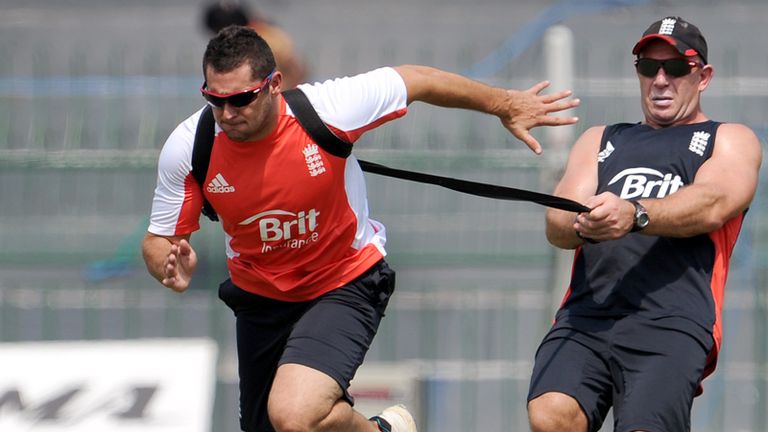
In the third installment of our coaching feature, pro coach Sam Lavery talks fitness and nutrition.
In the third installment of our coaching feature, ProCoach Cricket Academy's Sam Lavery talks fitness and nutrition
After looking at some key technical information for both batting and bowling in weeks one and two, I thought it was important to spend a little time this week touching on what is often the most dreaded of training areas for club cricketers around the world... Fitness! I've actually studied strength and conditioning, and delivered a series of programmes to individuals and teams over the years, however being well aware that in recent times my focus has been firmly on cricket coaching as opposed to the fitness delivery, I thought it would be wise to seek some more specialist advice from a fitness professional. So on Wednesday evening I ventured to the Rose Bowl, arriving just in time to catch the closing overs of David Griffiths steaming in against Marcus Trescothick as he set out on his way to another epic double hundred. After which I managed to sit down with Hampshire's Strength and Conditioning specialist and creator of Inspired Cricket, Iain Brunnschweiler. After an initial chat about the complexity and attention to detail that is put into monitoring the Hampshire players, it became quickly apparent that fitness in cricket is one area that is always being challenged and developed. However, after momentarily wondering how we were going to relate what these modern day athletes do back to how you may be performing as club cricketers, two things leapt out. Firstly, as a club cricketer you don't actually have to be a highly tuned athlete in the same sense that some of the top first-class and international cricketers are, simply because the physical strain placed on the body throughout the course of a season is barely comparable. A successful first-class cricketer can play more than 100 days of cricket in less than a 200-day season, and that doesn't account for training days, nets, countless fitness sessions, not to mention any additional time spent touring abroad, or the time spent on the M1 during the constant transit from ground to ground in the pursuit of silverware. The average club player however will top out at around 25 games per year with probably no more than 75 hours of practice, and very little travel time either. So there is no need to prepare in the same way, while it may be beneficial, it isn't a necessity. While the opportunity to recover as a club player from performances is far greater. The second point that stood out was that the training principles being used could still remain the same, even if the workload and intensity may not be quite at the same level. So what are these principles of training we talk of? Well the simple way to look at it is to break down your role into its basic movement patterns. For instance a fast bowler has lots of straight line sprints, or intervals. A batsman has numerous shuttle sprints back and forth as he builds his innings. A wicket keeper may have many short and sharp multidirectional movements, I'm sure you get the picture. Once you've identified what these key movements are, you need to start reproducing them in a training environment whilst at the same time upping the intensity and the duration, this it what is known as overload, pushing the body beyond what it is usually accustomed to doing. Below are a few examples of how you could start to introduce some simple fitness drills into your own training that should directly relate to your performance fitness.Fast Bowlers - Extended Sprints
Measure out a distance twice your usual run up length, and put a cone or marker out at either end. Now run from one to the other at a slightly higher pace than you normally would when you run into bowl. Then take a recovery walk back to the start again before repeating the exercise. Repeat this six times to make an over. To start with you may just want to aim to complete a couple of overs at this higher intensity, having a 2-3 minute break between each over. But you should find that as you become accustomed to the drill you can start to extend it out week by week until your starting to do the kind of training over that mirror the sorts of spells you actually bowl in a game.Batsmen - Shuttles
Simple recreating the running between the wickets is a great way to prepare yourself for a long innings, so measure out 25 yards (in an effort to overload) and mark it out with two cones. Then start working through a series of sprints between the cones, each with a walk recovery single in between. Eg. 1-2-1-3-1-2. To start with you may just look to complete two overs worth of sprints, repeating the above sequence after a one minute break, but as you develop from session to session you may be able to add an additional over of sprints from week to week.Each over represents 10 runs so the more you can build up the more representative of a big innings it becomes. Iain recommends never to increase your workload by more than 10 runs in a session (an extra over of sprints), he does however say that as a regular fitness exercise the players he works with at Hampshire will aim to complete 100 runs in a single session, as this would resemble the work load a player should be completing during an innings. Another piece of advice i'd offer would be to make sure you imagine a direction in which the ball may have been played, and subsequently not only should you practice changing hands on the bat as you run between the wickets and look toward the ball when turning, but you will also practice the physical action of turning and pushing off in different directions with each leg, something that often gets over looked.Wicketkeepers - Box Shuttles
The movements of a wicketkeeper are very much based around extremely short sharp bursts in a range of different directions. So to recreate this the easiest thing to do is lay out four cones in a square about three meters apart, and on top of three of the cones place a ball. Now the aim of the drill is to move very quickly shifting the balls one by one around the square until they are laid out in the same position as when they started. To do this, moving clockwise, pace along the sides of the square moving a ball on to the vacant cone, then move anti-clockwise to retrieve the next ball and repeat. Eventually the balls will be placed in their starting position, repeat the activity in the other direction and then rest. You can repeat this drill two-three times to begin with, and then as the weeks go by you can develop it further with more repetition, or alternatively by adding different angles and movements. Another exercise for wicketkeepers that is key for developing power is a simple squat jump. By squatting down to a parallel squat position with your feet at shoulder width apart repeat up to five squat jumps before resting and repeating. All of the above drills are very simple, take minimal time; no more than 15-20 minutes regardless of your role within the side, and above all are effective. The key now is to integrate them into your regular training sessions, and as with developing any other aspect of your performance establishing them as part of your routine is the key to progression.Nutrition
The final aspect I wanted to discuss with Iain was nutrition and hydration, what should we eat and when should we eat it? The message from Iain was clear, don't let your eating and drinking routine get too complicated. Have a good balanced meal the evening before/on the morning of the game and try to eat some complex, or, slow release carbs. These are found in an abundance of foods such as porridge, or whole meal breads, and help provide you with a steady release of energy throughout the day. Immediately before and during that game you can top up your energy supply with simple sugars that are easily digestible, so little bits of fruit, sweets, or carb based sports drinks are a great way to take on a little bit of extra energy through out the day. As far as hydration goes the message was simple, stay hydrated by starting hydrating. It so often the case that people will take on fluids when they get thirsty however this is generally too late if you're already into your performance. Therefore, starting from the night before, take on plenty of fluids and again on the morning of the day and throughout the game. If you can try to make having a bottle of water at your side another part of your routine to prepare you and get you through your performances. Just remember when we say take on plenty of fluids the night before just be sensible with what those fluids are, I'm sure you know how to make the right choices yourself! The closing line from Iain was simple: Eat well, drink well, sleep well! If you would like any more advice on this subject, or if you have anything else you'd like to discuss about you or your teams training sessions and performances feel free to get in touch via any of the details below. Good luck with your cricket this week, as always it would be great to here of any successes around the country. Sam LaveryPro Coach For both junior and senior cricket coaching from professional cricketers and coaches around the UK visit www.procricketcoachingacademy.com or drop me an email to find out what may be going on near you: sam.lavery@procoachcricketacademy.com For regular coaching tweets follow: @samlaveryPCCA, or @ProCoachCricketAlternatively follow us on Facebook: Pro Coach Cricket Academy