
Analysis
F1 testing: Why Ferrari, Mercedes, McLaren and Red Bull are all claiming not be the fastest team after Bahrain test
Formula 1's big four of McLaren, Mercedes, Red Bull and Ferrari appear to be at the front again, but in which order? Watch full live coverage from 7am-4pm on all three days of the final pre-season test in Bahrain from Wednesday on Sky Sports F1
Friday 13 February 2026 21:02, UK

There is always mystery at Formula 1 testing over which team actually has the fastest car, but the 2026 pre-season puzzle is shaping up as one of the most confusing and complex in the sport's history.
With two thirds of an extended testing schedule complete, any thoughts of a total reshuffle of the established pecking order have been dispelled, but who is fastest of the 'big four' remains very much up for the debate.
Listed in the order they finished last year's Constructors' Championship, McLaren, Mercedes, Red Bull and Ferrari, are all insisting that they are not fastest and that at least one of the others is quicker.
- When to watch Bahrain pre-season testing live on Sky Sports
- F1 2026: Testing, calendar, line-ups, new regulations, how to watch on Sky Sports
- Not got Sky? Get Sky Sports or stream with no contract on NOW📺
In years gone by it might have been easier for neutral onlookers to work out who is telling the truth, but the introduction of both new chassis and power units as part of radical new regulations for the 2026 season means there are many unknowns.
Speaking in the final stages of Friday's track action, Sky Sports F1's Ted Kravitz compared the situation to a game of "pass the parcel", but why is it all so convoluted?
Who appeared to impress in Bahrain?
Looking at the numbers alone, Mercedes set the fastest times of the week - both coming on Friday - as Kimi Antonelli set a 1:33.669, which put him a couple of tenths clear of his team-mate George Russell.
Ferrari were next on the timesheet, half a second back from Antonelli, with Lewis Hamilton and Charles Leclerc separated by less than a tenth. Then came the McLarens of Oscar Piastri and Lando Norris a few tenths further back, and Red Bull's Max Verstappen just behind them.
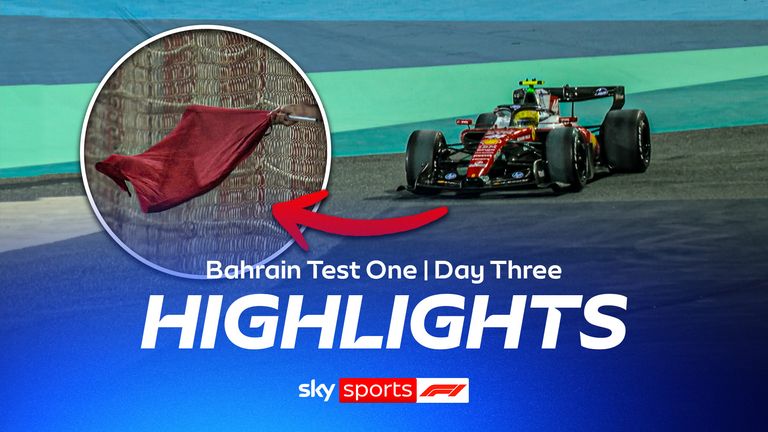
In terms of mileage, McLaren's total of 422 laps pipped Ferrari by just one circuit, Red Bull completed 343 laps after a hydraulic leak interrupted them on Thursday morning, while Mercedes were limited to 282 laps by a couple of different problems.
While high lap counts are an indicator of good reliability, which is crucial, the lead times must still be taken with a pinch of salt at this stage, as teams are highly unlikely to unleash their full pace at this stage.
Perhaps the most reliable indicator of performance at this stage are race simulations, and it was in this area that Ferrari excelled. After upgrades were brought to the SF-26 on Thursday, Leclerc and Hamilton produced consistent fast times in the evening sessions on the final two days.

Verstappen was also quick on the opening day on the long runs, while McLaren were a few tenths off the Ferrari and Red Bull pace judging by Norris and Piastri's numbers.
Mercedes were being outshone on the long runs too until Antonelli in the final hour of the test was able to rival Hamilton's race simulation, but overall, Ferrari offered the most impressive all-round performance over the course of the week.
Are Mercedes sandbagging amid engine dispute?
Every year pre-season testing takes place with the caveat that all might not be as it at seems, with teams potentially wanting to hide their true performance until the first qualifying session of the season, which this year takes place at the Australian Grand Prix from March 6-8.
However, Mercedes potentially have more motivation than usual for not unleashing their full performance at this stage, or 'sandbagging', as it's known in the paddock.
The biggest talking point of the pre-season has been a dispute over the new power units, centring on compression ratio limits amid suggestions from rivals that Mercedes and Red Bull may have found a way to deliver a higher limit than what was theoretically imposed by the new regulations.

Mercedes and Red Bull initially dismissed suggestions the rules could be changed, but it became apparent ahead of the Bahrain test that the latter had joined the other three engine manufacturers in lobbying the FIA to "level the playing field".
Mercedes boss Toto Wolff came out swinging at his team's launch on February 2 when he suggested rivals should "get your s*** together", but he struck a far more conciliatory tone in Bahrain this week as he appeared to accept a rule change has become a genuine possibility.
The lobbying from Mercedes' rival manufacturers was only heightened by the Silver Arrows' flawless display at the Barcelona shakedown in late January, where most considered them to be a clear step ahead of the rest of the field.
With an F1 Commission meeting to be held next week where a decision could be made, some have theorised that it wasn't in Mercedes' interest to remain the clear front-runner at the first Bahrain test.
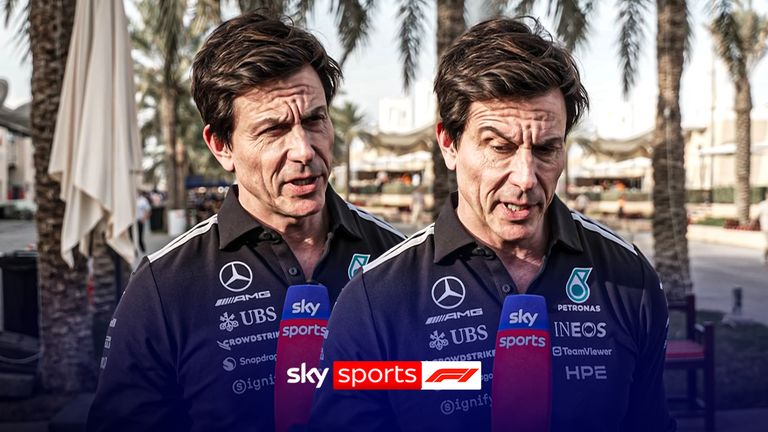
It's, at least partly, for that reason that Mercedes' claims that Red Bull are much faster than them are being viewed with scepticism.
Characteristically forthright with his view on the matter was four-time world champion Verstappen, who said: "They are obviously trying to shift the focus to us because we did so many laps on Wednesday. But you have to look at it from both sides. Just wait until Melbourne and see how fast they suddenly go on all the straights."
Leclerc shared a similar sentiment, telling Sky Sports F1: "I think we've seen a few things on the Mercedes engine that are very impressive and they are not showing any of that. And when I say any of that, we are speaking about quite a lot."
But what about Red Bull's deployment advantage?
While there seems to be something of a consensus outside of Mercedes - and the three other teams (McLaren, Williams and Alpine) that they supply engines to - that some performance is being held back, there are of course politics at play.
It makes total sense that Ferrari, Audi and Honda, each of whom reportedly has not taken advantage of the compression ratio loophole, would have wanted action taken, but what about Red Bull.
Back at their very early launch in January, Red Bull engine chief Ben Hodgkinson described compression ratio complaints as "a lot of noise about nothing", but they are now understood to be aligned with those seeking a change to the rules.
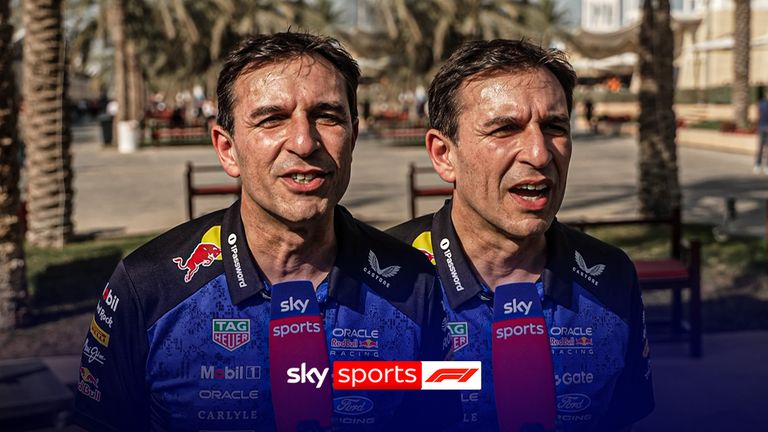
It's unclear why that is, but Red Bull have massively exceeded expectations with their first foray into engine-manufacturing, producing superb reliability so far, and also having seemingly developed what is currently a field-leading energy deployment system.
It's this deployment system that Mercedes were focused on this week as Wolff claimed that Red Bull were in fact setting the "benchmark". It's also worth noting that others were also jolted by Red Bull's showing, with Leclerc describing them as "very impressive".
The complexity of the new power units makes it hard to pinpoint where Red Bull might have an advantage, but Russell described it as being "somewhere between the hardware and the deployment."

Red Bull's apparent switch of position in the compression ratio dispute suggests that Mercedes might have better exploited that area, and that they perhaps need the Silver Arrows power unit to be restrained for their own apparent efficiency advantage to become effective.
In any case, it will be interesting to see how Red Bull team principal Laurent Mekies, who was absent in Bahrain this week after undergoing planned minor surgery, will approach the topic next week.
Why is there a lack of Ferrari excitement?
Ordinarily, a week like the one Ferrari have had would have created a huge amount of excitement around the sport's most popular team.
Admittedly, we only heard from Lewis Hamilton before he'd driven with the upgrades that seem to have drastically improved the SF-26, but the seven-time world champion didn't express a huge amount of optimism or enthusiasm about his prospects.
Leclerc and Ferrari boss Fred Vassuer both played down their hopes by insisting they were adamant rivals were holding back significant performance, but no F1 team would ever say at this stage that they think they are out in front.
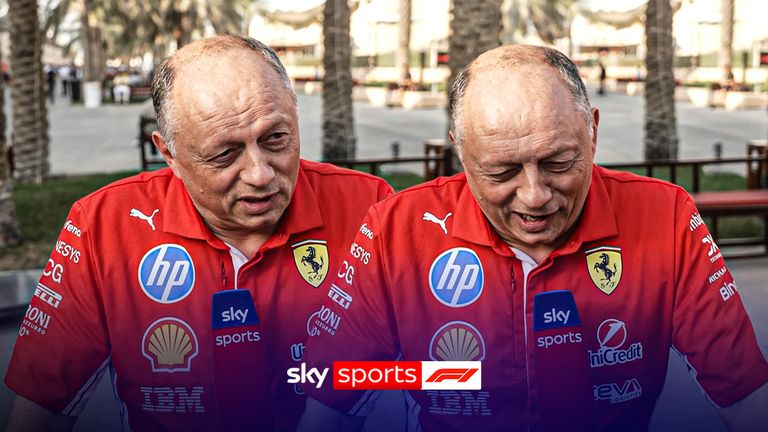
Therefore, it's probably actually more useful to gauge the expert opinions coming from elsewhere in the paddock, with rival pit walls best placed to judge who really has the fastest car.
It was therefore notable that for the first time in this pre-season, the sentiment did somewhat shift in Ferrari's favour on Friday, albeit with questions remaining over how much Mercedes might be holding back.
McLaren team principal Andrea Stella said on Friday evening: "Early indications from a competitiveness point of view, I think, definitely put Ferrari and Mercedes at the top of the list, in terms of those that seem to be ready from a performance point of view, in particular."
Quite frankly, even being in the discussion is progress for Ferrari, after a dismal 2025 saw them go from being considered pre-season contenders to failing to win a grand prix all year.
What about McLaren's title defence?
McLaren have a curious position, given their engines are supplied by Mercedes.
Unlike fellow Mercedes customers Williams and Alpine, they've chosen to largely stay out of the power unit compression ratio debate.
Regardless of where they think they are in relation to Mercedes at the moment, McLaren would undoubtedly want claims that the Mercedes power unit is the strongest to be true, as it will set them up for continued success throughout this generation of rules.

Therefore, assessments from Stella, along with reigning world champion Lando Norris, that Ferrari, Mercedes and Red Bull are all faster than them, would not appear to be political.
"We're not really close to them at the minute," Norris said of Ferrari on Thursday. "We're certainly not bad, but we're not quick enough."
Despite McLaren having won the last two constructors' titles and assembled an all-star technical team, most expected Mercedes, as a works team, to have an advantage over them at least at the start of this season.
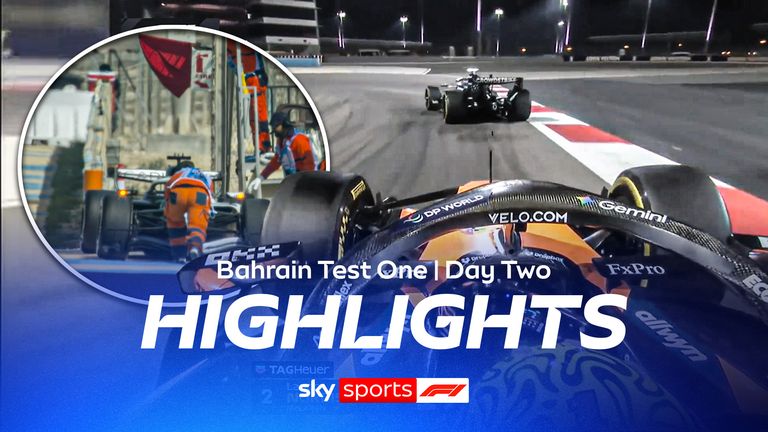
When considering their prospects, it's worth considering the words of Vasseur, who insists that while there's a lot of furore about the current competitive picture, it's a long season that will be decided by development.
"One year ago, everyone was struggling to find hundredths of second, now it's more about tenths," Vasseur said. "The competition will be much more on the development than on the initial potential of the car."
Sky Sports F1's Bahrain Testing schedule
Test Two: Wednesday 18th, Thursday 19th, Friday 20th February
- 6.50am-11.05am: Morning session Live
- 11.55am-4.10pm: Afternoon session Live
- 8pm: Testing Wrap
Watch every race of the 2026 F1 season live on Sky Sports, starting with the Australian Grand Prix from March 6-8. Stream Sky Sports with NOW - no contract, cancel anytime