
Sebastian Vettel predicts chaotic start to the Belgian GP
New start procedures to be introduced on Sunday in attempt to give more control to drivers; Lewis Hamilton to start from pole position
Tuesday 25 August 2015 14:10, UK
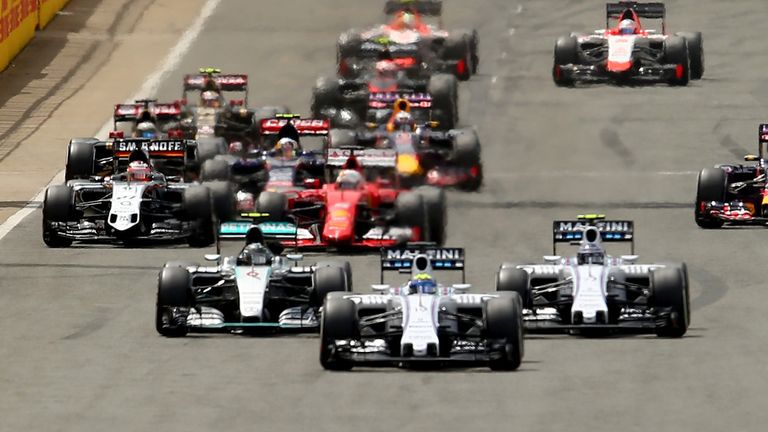
Sebastian Vettel has predicted the start of Sunday's Belgian GP could be "chaotic" when F1 introduces its clampdown on start procedures.
In a change which will come into force at the legendary Spa circuit, the clutch bite points on all the cars will have to be fixed for the start of the race from the moment they have left their garages for the formation grid. The teams will then be barred from advising their drivers on making any tweaks to their start systems.
While the majority of his peers have welcomed the crackdown, which has been triggered by fan feedback and is designed to give the field more responsibility in order to rebuff perceptions that the sport has become too technical, four-times world champion Vettel has voiced his scepticism.
"I don't really get the point of what we're trying to achieve," said the Ferrari driver, who lines up eighth on the grid. "I don't think it will change much but it may be a bit chaotic on Sunday."
In contrast, Williams' Valtteri Bottas has downplayed the likely impact. "I don't expect anything big," said the Finn. "The information we got from the engineers was just fine-tuning. I don't think it will make a big difference. There is more stuff for us to remember but that is about it."
But while a concurring Fernando Alonso agreed that "it will not be a significant change", Nico Rosberg, who will start alongside pole-sitter Lewis Hamilton on the front row, believes the tweak could have a telling effect.
"It's quite a big difference," the Mercedes driver argued. "First of all, the whole parade lap – if you go back to recent races and look at radio communication, it doesn't stop from when I leave the grid to the race start.
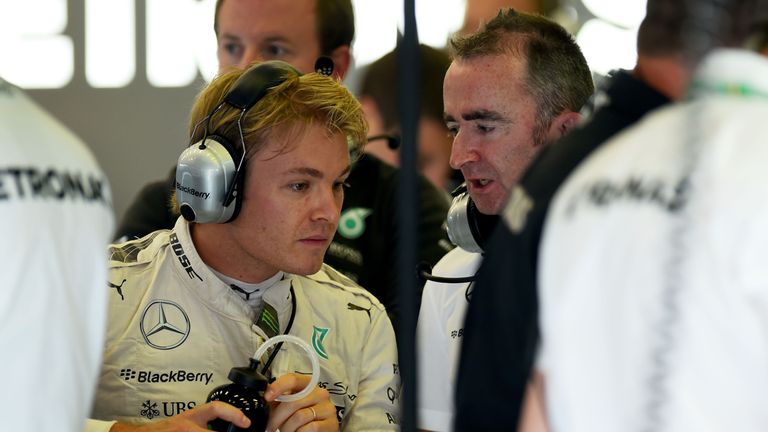
"Now it's going to be absolute silence, and I still have to do all those things. So there's a lot of procedures to remember, which will be more difficult, and then the start itself will also be more complicated because the clutch setting is fixed and it's down to me to decide."
And the changes are not the only upheaval Rosberg is currently grappling with. The German is set to become a father imminently and admitted a car adjustment of a different kind had been taxing him at the end of the summer break.
"We just have family cars at the moment in the garage – a Mercedes ML and a Mercedes GLK," he told reporters. "The baby seat is in the ML and it took me two hours to put it in there – one of my toughest recent experiences!"

F1's new start changes explained
Why have F1's start procedures been changed?
Sky F1's Mark Hughes: "One of the recurring themes of fan criticism has been that too much control is taken out of the hands of the drivers and placed with team engineers.
"Obviously, the start is one of the most crucial moments of the race and having the engineer advise the driver on where to set the clutch bite point after making a getaway from the dummy grid was felt to cross over the line of where fans want to see the driver assume full control. This change is a direct response to fan criticism."
What has been changed?
Sky F1's Mark Hughes: "Previously, the race engineer would monitor the startline performance away from the grid slot on the dummy start using a clutch bite point chosen from various dummy starts throughout the weekend. After assessing if there was more than optimal wheelspin or clutch slip, he would advise the driver to refine the bite point setting further for the actual race start.
"From this weekend at the Belgian GP, there can be no communication by the engineer to the driver about the clutch bite point after the car has left the garage. The driver must estimate the optimum clutch bite point for himself - and set the appropriate clutch paddle accordingly."
What difference will it make?
Sky F1's Mark Hughes: "The change seems certain to introduce less uniformity of start quality through the grid. With drivers estimating through feel rather than engineers guiding them by actual numbers of grip co-efficients, there should be a greater variability of starts.
"There could also be the occasional car bogging down into anti-stall for any driver getting it badly wrong. But the sequence of getting the car off the line - with two paddles working on a single clutch, one released at the start, the second released as the driver feels the car gaining good traction - remains exactly the same as before."