Brian Barry
GAA Editor @BrianGBarry
GAA and Ukrainian refugees: How volunteers are helping new members of the community feel at home
"When they first came, they didn't expect to be here for the summer. And then when summer came, they didn't expect to be here until the end of the summer"; with almost 50,000 Ukrainian refugees in Ireland, we look at how they are being made to feel welcome by GAA clubs around the country
Last Updated: 06/09/22 11:34am

The plight of Ukrainian refugees forced to settle in a new country is made all the more difficult by the fact there is no end date for their stay in sight.
Fleeing the Russian invasion, almost 50,000 Ukrainians have now arrived on Irish shores over the past six months.
In order to welcome new members into the community, the GAA has stepped up to help those new arrivals to bed in, any way they can.
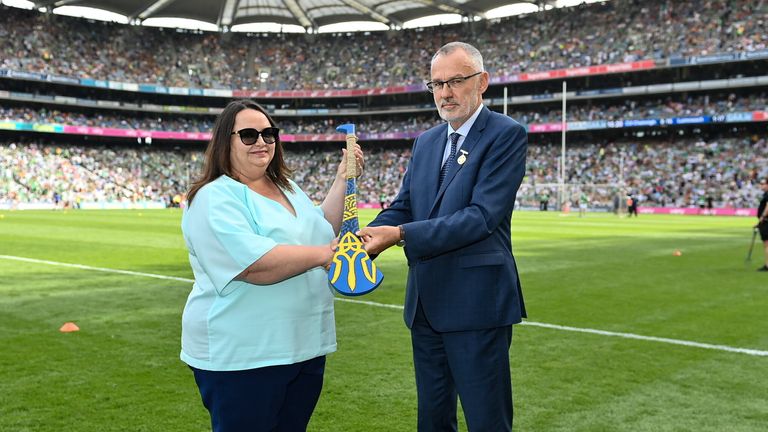
'Every little helps', is the mantra, from small gestures like allowing Ukrainian children to bring the Liam MacCarthy Cup onto the field at Croke Park for the 2022 All-Ireland Hurling Championship final.
"Whatever we can do in terms of that visibility - making sure that they appreciate that the Irish communities are 100% behind them, that the association is doing whatever we can," explains Colin Regan, the GAA's Community Manager.
Although the association was unable to provide accommodation, in the wake of calls from the Irish government to sporting bodies there is still significant work being done.
"It's a grassroots response," Regan says.
"We have been engaging with the government and the Red Cross on numerous occasions back in April when the first request from government came out to see if there was an opportunity for sports clubs and organisations to make available any suitable premises that might be used for temporary accommodation. When we passed that call out to the club network, a small response at the time.
"A few clubs would have worked with the local authority then to get their facilities assessed. And on a small number, they were used to house Ukrainian refugees.
"The vast majority of work is happening in what the Irish Red Cross would have called the equally important integration of Ukrainian refugees into the local communities. We've just seen countless examples of clubs across the country, where they have initially held a welcome and open day. And then on an ongoing basis done everything within their power to ensure their new community members are feeling welcome and know the GAA club is there for them."
That work is being carried out by volunteers on the ground, in countless communities across the country.
One such example is Clontarf GAA club on the northside of Dublin. With a group in place to implement the GAA's Healthy Clubs initiative, they went straight to work when the crisis arose and refugees began to arrive in the area.
"We had already been doing work with families in temporary accommodation, who could be from anywhere to be honest," says Clontarf's Healthy Clubs officer, Ciaran Doran, hailing the contributions of club members Olga McCarrick and Roisin Kelly in particular.
"They could be Irish or they could be eastern European, or anywhere. What we had been trying to do was make them welcome to our nursery. Because it's often very hard to connect with your local community if you're in temporary accommodation.
"We had set up a welcome group, inclusion group within our Healthy Clubs team. So that was already going before the Ukrainian families started arriving after the Russian invasion. So it wasn't a big step then to respond quickly whenever the families started to arrive into the local community.
"The families arrived on a Sunday night into basically bed and breakfast accommodation, basically 70 mothers and children. And by Tuesday, Olga had organised a public meeting to see what people could do, and just to coordinate the support because it does need coordination."

They went above and beyond their remit as a GAA club, not only inviting the children to play the games, but also organising English language classes for the refugees.
"From a GAA point of view, first of all we invited all of the small kids to our nursery," Doran details. "That's really important.
"You can imagine mothers coming such a long distance with small children, not knowing the area, not knowing where they can even bring the kids, was a big barrier.
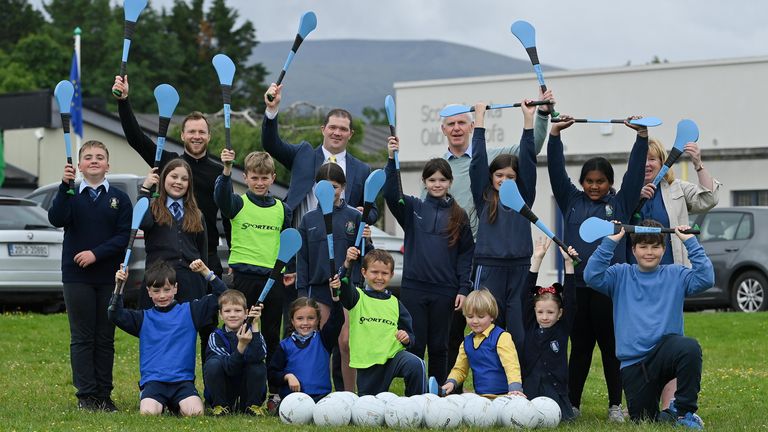
"So very quickly, some of the kids were taking up Gaelic football, hurling and Camogie and doing very well at it actually on a Saturday morning, which is just brilliant.
"When we looked at the other needs, the needs were around English language. They were very keen to learn better English, both the parents and the children. And support for the kids.
"Through the GAA club, we organised a rota of volunteer teachers. Two nights a week, we do English language classes. And we have about 12 teachers taking part in that, and anywhere between 20-30 Ukrainians, mainly mothers, coming along to that. And at the same time, then we look after the kids during the class. That's worked really well.
"So the Gaelic games, the language classes, looking after the kids....We developed a very strong connection now with them.
"We're just keeping up the connection and seeing what we can do. Different people in the community would have done other things, just sorted out child benefit or doctors appointments or jobs in some cases for people. We've done a few day trips for kids as well to the local urban farm, and other places. Really just bits and pieces to make the families welcome and make them feel that connection."
A Ukrainian family who were already based in Clontarf before the events of this year have been a significant help in bridging the linguistic divides.
"It may well be [unique]. It was a big advantage," Doran says. "They've been brilliant. The two kids (Alexey and Anastasia) have been brilliant at coming along, welcoming the younger kids, showing them the skills in Ukrainian. It's kind of funny. The skills of hurling being coached in Ukrainian!"
And as uncertainty reigns in their home country and around any potential return date, the Ukrainians are being made to feel as welcome as possible.
"They're fitting in quite well," Doran says.
"I would say talking to a lot of families, they're not thinking medium term or long term. When they first came, they didn't expect to be here for the summer. And then when summer came, they didn't expect to be here until the end of the summer. So from their point of view, it's not quite week to week, but maybe month to month.
"You just keep going with it. It's not a problem for us to do the things we're doing.
"It's very hard for them, they don't want to think they're going to be here for the longer term. So we don't really talk in those terms, so we go week to week or month to month."