BAME term upsetting and disrespectful says Sporting Equals study
Phrase is a too casual and lackadaisical 'catch-all' acronym; 'diverse ethnic communities' or 'ethnically diverse communities' should be used; findings come after charity consulted members of over 200 organisations, which represent more than 150,000 service users and 4,000 volunteers.
Friday 13 November 2020 19:12, UK
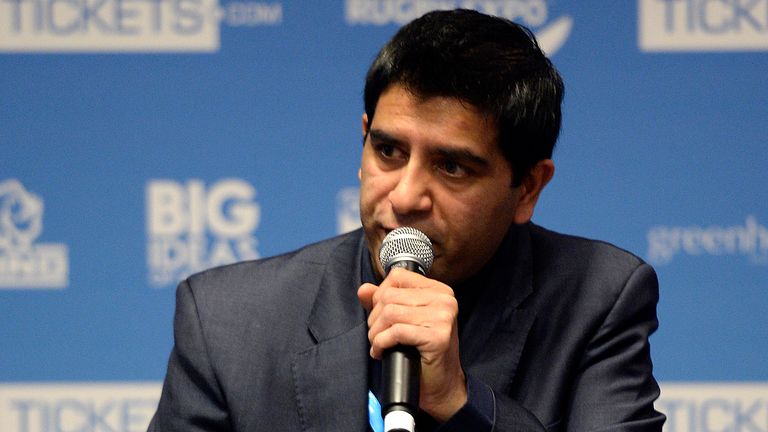
The term ‘BAME’ is both upsetting and disrespectful to the people it is meant to represent, according to a new study commissioned by Sporting Equals.
The findings come after the charity consulted members of over 200 organisations, which represent more than 150,000 service users and 4,000 volunteers.
Many felt the term, which stands for Black Asian Minority Ethnic and is used to describe any non-white person or group, has become a too casual and lackadaisical 'catch-all' phrase.
It "places recognition on some communities whilst ignoring others entirely", does not allow for "ethnic and cultural complexities" while many also find it offensive to be labelled as an acronym.
- Ferdinand not interested in FA chairman job
- Clarke: My FIFA resignation 'better for football'
- Q&A: What now for the Football Association?
Speaking exclusively to Sky Sports News, Arun Kang OBE, CEO Sporting Equals, said: "It upsets people because it describes nationality, geography and it's all a bit of a mix-up really.
"The term BAME sort of forgets the ME part - the minority ethnic part that is not just Black and Asian communities that the first two letters stand for.
"It means nothing really and people don't want to be known as an acronym either - they find it disrespectful.
"They want to be more specific about their communities and defined depending on what the representation or target audience is.
"For example, a lot of the time racism can be different for different communities, so we need to know who we are talking about.
"It all comes down to respect and relating to communities - using the wrong terminology means communities can feel organisations don't relate, empathise or respect them."
'Adopt more sensitive and respectful terms'
Kang believes many organisations have been able to claim 'diversity' as they engage well with 'BAME' but are ultimately targeting specific communities they find easier to engage with.
And while calling for more clarity on who is being targeted, there is an acknowledgement there may well be times when a 'catch-all' term is required for administration purposes of bureaucracy.
However, Kang supports the survey's findings that this should still not be 'BAME' but instead a more sensitive and respectful term such as 'diverse ethnic communities' or 'ethnically diverse communities'.
"If it is going to be a 'catch-all' term then it has to be something more respectful and broader that then forces an organisation to very quickly deep dive onto who you are actually talking about.
"What is coming through is either 'diverse ethnic communities' or 'ethnically diverse communities'.
"These are respectful terms on who they are - they don't want any mention of minority though as it makes them feel inferior or not as important as a majority."
'Clarke situation avoidable with diversity'
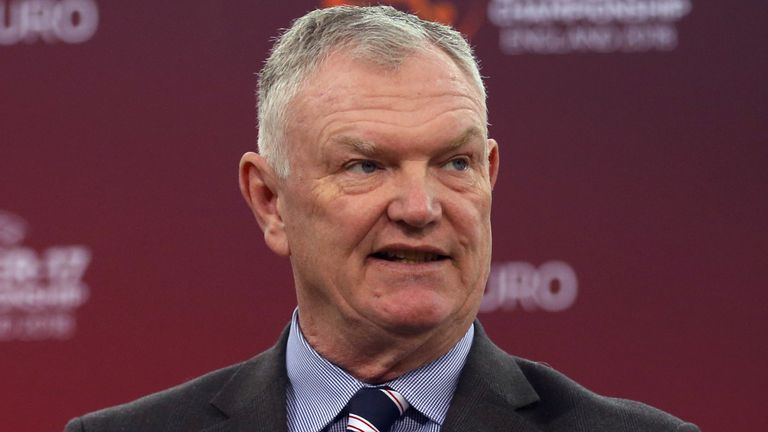
Kang has also called for more diversity in sporting boardrooms, firmly believing the recent situation surrounding FA chairman Greg Clarke could have been avoided if there was a broader cross-section of people represented in positions of power.
Clarke resigned from the role on Tuesday after making a number of offensive remarks before a Digital, Culture, Media and Sport committee, which included using the word "coloured" to describe black players.
"It's disappointing to see an influential organisation with their leader coming out with a term so disrespectful and outdated.
"But if the boards were more diverse that type of language would have been picked up.
"Moving forward, what would be fantastic is if an organisation like the FA looked to a more African-Caribbean or other ethnic communities to take on that type of role and leadership position.
"You can't just have one person on the board, you need more than one and our campaign at the moment is to have at least 20% more diversity on those boards."