
Analysis
Winter Olympics: Matt Weston stars, GB's record medal haul, too much snow, and penis injection claims - The Games report
Great Britain had a remarkable medal haul, Matt Weston became a star - a lot happened at the Winter Olympic Games, including days with too much snow and a curious mystery about whether ski-jumpers were injecting their genitals with hyaluronic acid, for reasons of lift and drag
Monday 23 February 2026 08:15, UK
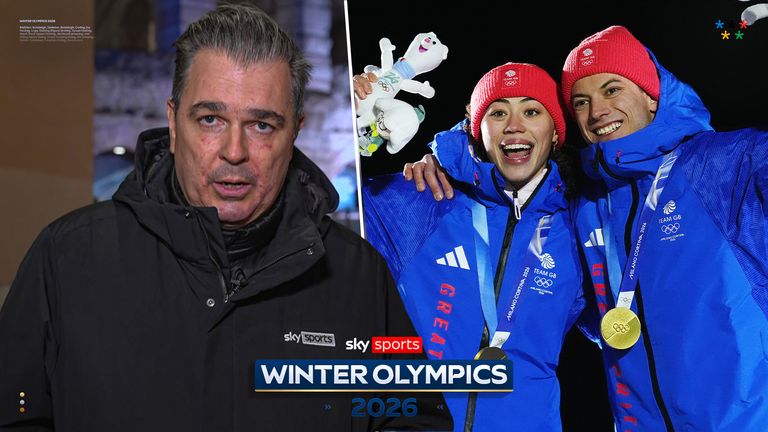
Sky Sports News' Geraint Hughes appraises the good, the troubling and the weird from the latest edition of the Winter Olympics...
GB's report card
Team GB leave Milano-Cortina with five medals, that's a record-equalling haul matching the five won at Sochi 2014 and PyeongChang 2018.
However there is one very big difference for Team GB and that is the gold column. They leave with three Olympic champions - that has never happened before and was probably beyond hopes and expectations.
- Canada deny Britain curling gold after tense final at Winter Olympics
- Choose the sports notifications you want
In Olympic terms a gold medal surpasses anything else. As far as the medal table goes it's gold that matters and Team GB won three.
A number of British athletes finished in the worst possible place - fourth. Three athletes in four different events all placed fourth, missing out on a medal of any colour by very small margins.
That hasn't happened before for a Winter Olympic Team GB. While it will hurt for those athletes, it does mean Team GB are amongst the world's elite. The team have also had 20 top 10 finishes at an Olympics, again that's a first.
Many would secretly have hoped for more than five medals but the plethora of fourth places and a multitude of top 10 finishes will be seen as success.
Value for money?
The GB curling programme for instance received approximately £6 million over the course of this last Olympic cycle, with a significant chunk of that money coming from you the taxpayer and also those who play the National Lottery.
If you like, enjoy, take pride in British sporting success including Team GB doing well at a Winter Olympics then doubtless your emotions were lifted by the GB men's curlers winning the silver medal. To get to that point though the curlers haven't just turned up in Italy, along the way they've become world champions twice, pretty much won every competition they could except an Olympics - in which they have taken silver at two consecutive Games.
My point here is that if you want British sportsmen and sports women to be among the elite and consistently among the world's best it requires a large infrastructure, quite a few people and that means a big chunk of cash.
Some will say the funding is too generous and why do we need to be good at skeleton when the UK doesn't even have one ice sliding track? In the times we live in, where the cost of living is for many is crippling, the thought of public funds going to elite sport does raise eyebrows.
Everyone has an opinion, all I can share is having witnessed the British high performance system go from one extreme to another is that if the British public want to see British sporting success, it won't come free, it does cost. Is the money received by the various sports spent well? Well, that is actually one of the jobs of our government, it's their job to ensure bang for buck and to hold high performance sports to account.
Weston shines
To win one gold is pretty sensational, to do it twice at one Games puts you among a fairly elite group. It's not just Matt Weston's two gold medals that stand out, it's the way he won them.
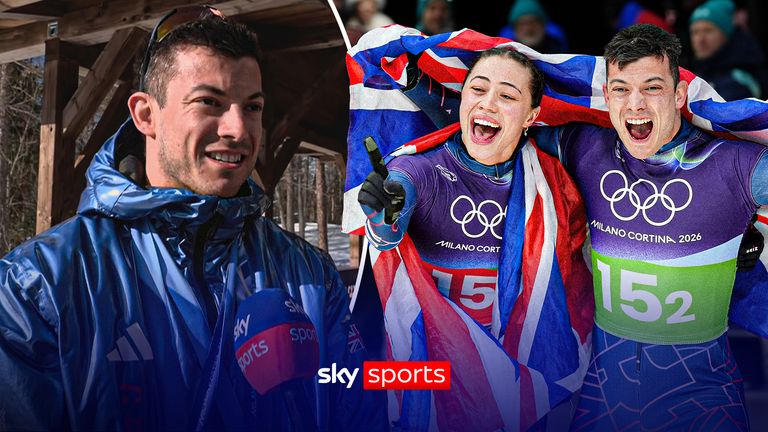
He was utterly dominant. His individual gold medal was remarkable by the sheer distance he won it by, but perhaps his greatest achievement at these games was the mixed team event. On his final run, the very final run of all competitors he had to make up 0.30 seconds which in skeleton terms due to the sheer high speeds is a fairly sizable time difference to have to close.
Those with far greater knowledge of skeleton told me he'd made-up that gap within between 150 and 200 metres so good was his start, so slick were his manoeuvrings and of course just how fast he was sliding down the ice.
Sport and politics
A story that did not have a happy ending involved the IOC and Ukrainian skeleton athlete Vladyslav Heraskevych.
By all accounts Heraskevych was in the mix for a skeleton medal - probably not the gold - but is very good at his sport. He wanted though to wear a helmet which had 24 photos of friends and teammates who'd all been killed during Russia's war with their country.
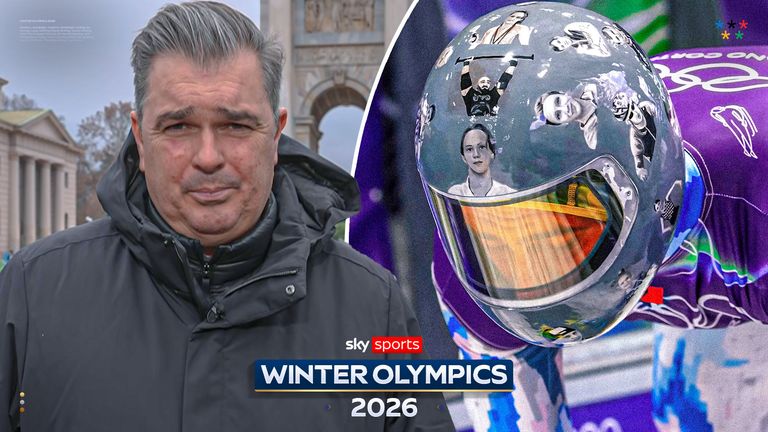
The IOC has a charter and athletes on the field of play and during that moment of competition are not allowed to make political, controversial or inflammatory statements.
It's bizarrely a rule voted in by the athletes themselves to protect that precious moment of sporting greatness so it can be enjoyed for what it is.
Heraskevych was deemed to be making a political statement on the field of play during competition where his actions could detract from the sporting glory of others if he'd worn the helmet.
Heraskevych says his helmet was an 'act or remembrance' not a 'political statement'.
It's hugely emotive and very easy at the very least to have sympathy with Heraskevych. "Just let him wear it," I heard more than once uttered under muted tones. For the IOC they have these rules which were voted in by and for the athletes. It was a strange and rather uncomfortable moment at these Games.

Strange enlargement
Were ski-jumpers enlarging their penis and genitals with hyaluronic acid to help aid performance? You read that right...
An allegation, it appears with little foundation, was made that ski-jumpers were enlarging their nether region in order to be fitted with larger ski-jumping suits. The larger the suit, the greater the crotch area. When the athlete is airborne the larger that area is the greater the lift and drag so jumpers stay in the air longer and therefore 'jump' further.
Now the rules in international ski-jumping are that every jumper gets 3D scanned at the start of a season and that determines the size of suit they are allowed to wear - they get two per season.
The International Ski and Snowboard Federation (FIS) called the allegation "wild rumour."
They are adamant that: "There has never been any indication, let alone evidence, that any competitor has ever made use of a hyaluronic acid injection to gain a competitive advantage."
At the moment, hyaluronic acid is not a banned substance with WADA (World Anti-doping Agency), but no ski-jumper according to the sports governing body has used such a product anyway.
Snow stops play
Yes, it did. I was witness to it and uttered the words "snow has stopped play" without fully realising how ridiculous that actually sounded.
However, it is possible to have too much snow for a snow-sports event at the Winter Olympics. At Livigno, one of the highest resorts in Italy the weather did not play ball in the second week of the games and while there had already been a fair bit of snow already during one evening and the following day, blizzard conditions dumped over 10 inches of snow in the area forcing the postponement of all events on one day and prompting organisers to hastily rearrange events for the following day.
The clean up was a sight to behold, they were incredible at clearing roads and pathways and making the area safe for athletes and spectators alike, but in extreme blizzard conditions it is just impossible to keep an area open.
So the snow had the final say on few days of the Games ... and for a brief moment, it did stop play.