Houston Rockets' new 'micro-ball' style analysed - how it works; pros and cons; has it made them better?
Watch Rockets @ Hornets from 10pm on Saturday evening on Sky Sports Mix and via a free live stream on skysports.com, Sky Sports app and YouTube
Monday 9 March 2020 05:54, UK

Sky Sports NBA analyst Mark Deeks breaks down how the Houston Rockets' new 'micro-ball' style works, after Mike D'Antoni's team decided to take small-ball basketball to a whole new level in order to remain competitive out west.
Gathering the personnel
Despite having a good quality two-way center signed to a reasonable price for a number of years, the Houston Rockets decided they did not want him. In a move that had been rumoured for over a year, they finally did trade Clint Capela at last month's trade deadline, moving him to the Atlanta Hawks in a complicated deal that landed them Robert Covington as the main returning piece from the Minnesota Timberwolves.
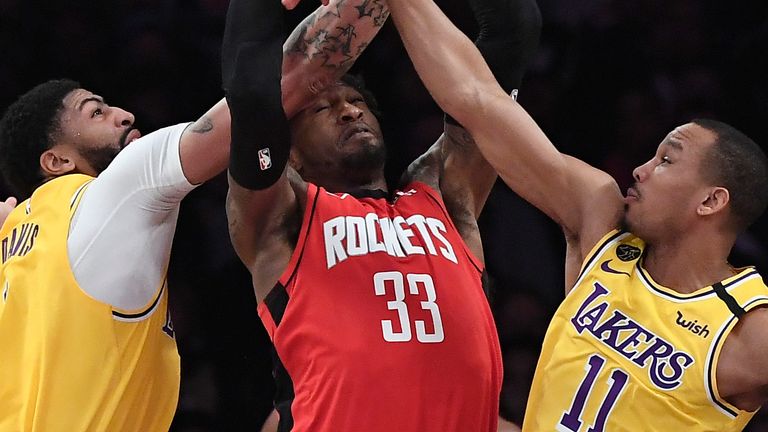
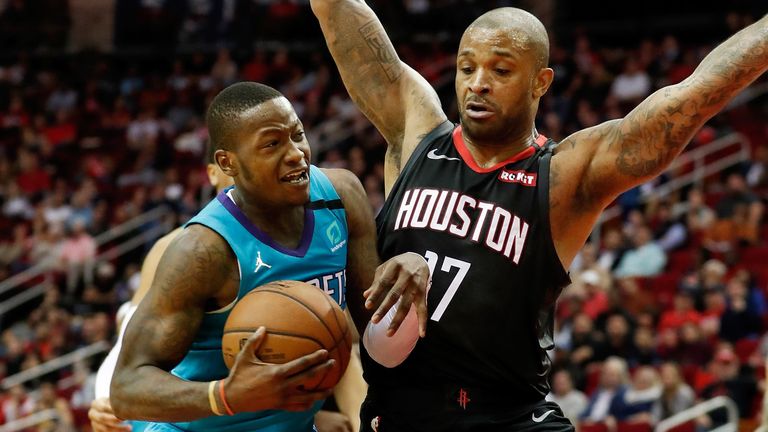
Covington is essentially a combo forward, but someone who hitherto had largely only played small forward. He is also a former Rocket who broke out after they mistakenly waived him some years ago. To trade away a noted quality piece such as Capela for a player they once did not value as much as Jason Terry, Tarik Black, Joey Dorsey and Francisco Garcia is eye-catching, particularly since it left PJ Tucker as the starting center. Tucker, as is well documented, stands only 6ft 6in at the biggest position in the world's biggest sport, where seven-foot was until recently the threshold.
The Rockets had often used Tucker at the center spot prior to this move, and indeed, it was only a few short years ago that they were also playing Chuck Hayes at the position, himself also standing only 6ft 6in. Going small at the centre position is not new to them, nor is it unique to them. But what is both unique and new is only going small at the center position.
Whereas previously Tucker would play the spot in certain line-ups and Hayes would play only about half the game, with the trade of Capela, the Rockets essentially committed to only playing small options at the centre spot, including Covington. They have Isaiah Hartenstein and Tyson Chandler on the roster as legit seven-footers, yet they are on the fringes of the rotation. For the most part, the Rockets have committed to a new brand of small ball that no one else rivals.
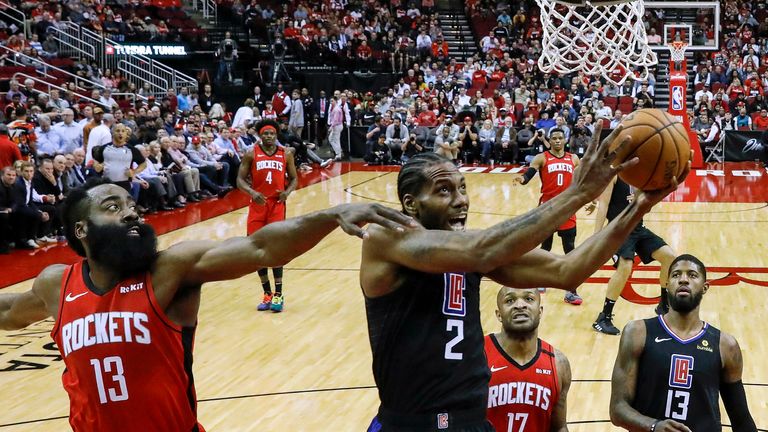
Going against the grain is not an issue for a Houston team that has for some time now played a style of basketball quite unlike anybody else. In the James Harden era, they have embraced a volume of three-point shooting greater than any other team, casting them up with a historic frequency and taking more of them than two-point field goals. But more important than that is the way that they have done it.
Where once isolation-heavy basketball was demonised as being inefficient and bad for spacing, rhythm and efficiency, the Rockets have done it differently, allowing Harden (who moves at the slowest average pace of anyone in the NBA, a metric that speaks to how much time he uses pounding the ball into the ground outside the arc) to spend the majority of his time in isolation, looking to get to the basket and do his flaily thing to get to the line, or step back for a three-point shot.

All good teams have players in the backcourt who can create in isolation, but no one does it with quite the sheer bloody-mindedness of this Houston team. All good teams have players either built like power forwards or wings who now play at the centre spot in certain line-up configurations, too, yet no one does it nearly as much as Houston are now doing.
How Tucker and Westbrook make it work
It is all made possible because of Tucker, who plays bigger than his size. What Houston lost in Capela's ability to run the court at his position and finish lob passes thrown by Harden and Russell Westbrook, they make up for by having Tucker serve as a good and regular three-point shooter from the corners, shots that make up almost all of his offensive game. He is physical enough in the post to overcome the height disadvantage, his deceptively long wingspan is more important than his height on the defensive end, and although he is not a sprightly or athletic rim protector, he is heady with good hands and both the willingness and awareness to always rotate so as to provide some good defense in the backline.
With Covington able to do the same while also having an athletic advantage, plus contributions from recent pick-ups DeMarre Carroll and Jeff Green (who both have experience of playing down around the basket defensively in the latter stages of their careers), the Rockets are perfectly happy running these combinations of what used to be small forwards at their de facto center spot.
One of the main theoretical advantages to doing this was the increase in spacing. Capela was not and will never be a shooter, and although he offers vertical spacing via the lob, it was felt that being able to play five-out line-ups would expand the court better for Harden, but more importantly, for Westbrook. His play since the trade is a main reason why it has been a success so far.
Considering the expense in both his salary and what was given up in trade to get him, the Rockets are tied to the success of Westbrook. If they are to have a title window during Harden's prime years, they need to optimise the team around him, which includes optimising it around Westbrook. And it seems as though they have done so - finally, Westbrook, never a good outside shooter yet one who would stubbornly take them anyway, has put those shots away and is attacking the rim with a frequency that he has not done since his own best years.
He had started to do this already. In 26 games across November and December, Westbrook attempted 131 three-pointers, or five a game. In the 20 games hence, however, he has attempted only 47. In those first 26 games, he had a true shooting percentage of .498 percent and a net rating of -7.4. In the latter 20, he has a true shooting percentage of .579 per cent and a net rating of +4.0.
Westbrook leads the league in points off of drives, even more so than Harden. And, when able to space the floor via the three frontcourt positions with contributions from Danuel House and Eric Gordon, he has spacing like he has never had before, and he has made the adjustment accordingly.
Pros and cons - and is it working?
The disadvantage to the lack of conventional size as a team was supposed to be on the rebounding glass and interior defense. While his rotations were spotty, Capela could at least be a shot blocking deterrent around the basket and in a way that neither Tucker, Green nor Caroll can be, and he also always cleared the defensive rebounds at a high rate. Replacing him with Covington - a decent rebounder for a wing but not someone who stands out on that end - opens up this hole.
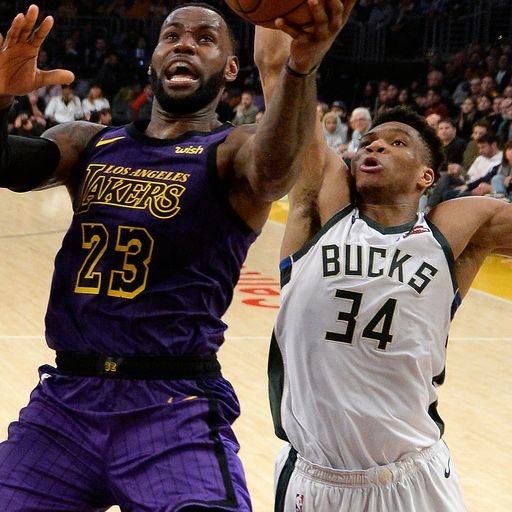
The Rockets attempt to overcome this with strong all-around contributions in boxing out and getting back to clear the glass. Westbrook in particular is an excellent rebounder for a guard, and Harden contributes as well, yet it is now a palpable weakness for the team. The Rockets were not a good rebounding team even with Capela; without him, since the trade, they have been second-last in the league in rebounds per game.
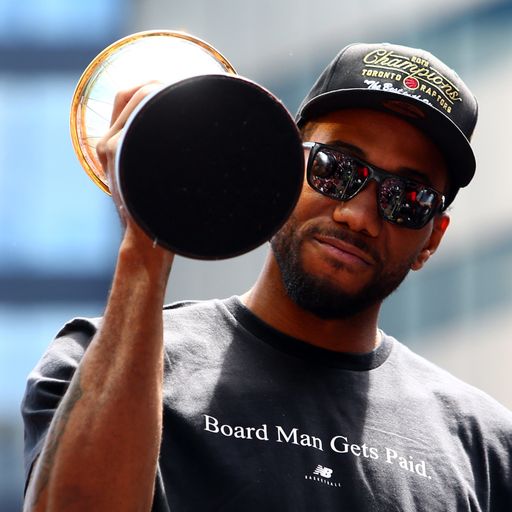
The best counter to that is an attacking defense, which the presence of Covington provides. Covington as an individual has been able to assuage a lot of the potentially-lost possessions with his defensive plays both around the rim and on the perimeter. He has been a phenomenal all-around defender, being able to play down low and still get out to shooters, being a big wing who can take on opposing star forwards such as Kawhi Leonard while also being the head of the rim-protecting unit.
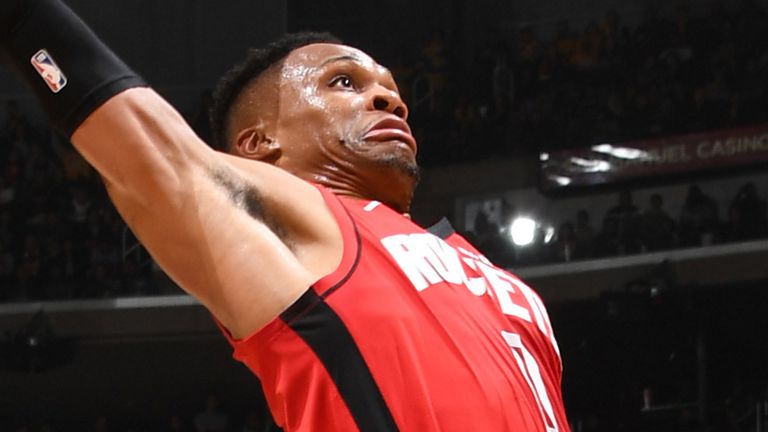
Since the trade, Houston have posted the third-most steals per game (10.0), the second-most blocks per game (6.1), the seventh-most deflections per game (16.2), the 11th-best opponent field goal percentage (45.8 percent) and the ninth-best defensive rating (109.9). They are not clearing the glass, but they are guarding their own end, and while they cannot clear misses, they prevent the shots in the first place, with the third-highest opponent turnover rate since the trade (17.1 per cent).
All of this has been possible without a regular big man. And while it is taking a very specific set of circumstances in roster construction to do so, they have managed it. It turns out that they do not need a big man, and it turns out that despite many years paired with the quality of Steven Adams, Westbrook is better without one also.
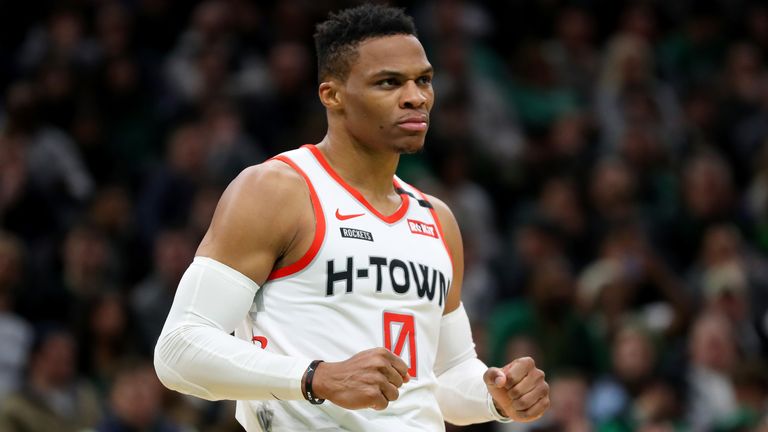
The Rockets, as constructed, have a knack for lulling opposing teams into traps. Opponents regularly seem to feel, for example, that they can take advantage of Harden's supposed poor defense and post him up. However, while he does have obvious and well-documented defensive deficiencies, Harden has always been a good post defender, with good hands adept at slapping the ball away down there.
Similarly, on offense, teams try to engage the Rockets often in a shootout, which suits them well - especially now that they are able to play five-out line-ups on both ends. They are adept at closing on shooters, something which is much more possible with a center like Tucker rather than a lumbering one such as Capela.
There is a very thin margin of error for the Rockets, of course. To be this good while this uniquely constructed takes important contributions from a select few players, lacking for reliable depth and with the joint-oldest roster in the league - Westbrook and Harden are both kind of old by this time, and Tucker is very old - the Rockets are all-in with a small window, reliant on a few aged players.
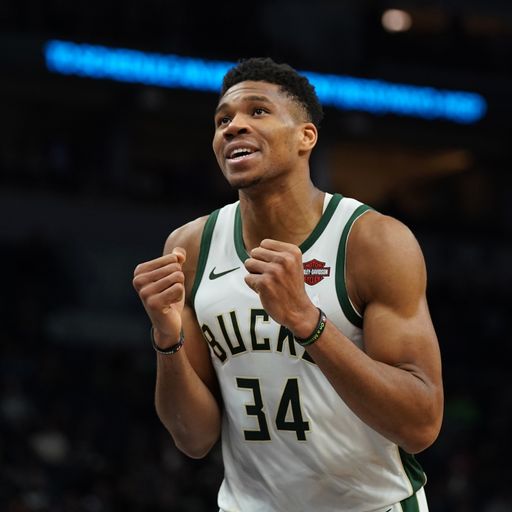
That said, they have found a formula to keep hopes of contention alive. Despite the indictments of many commentators, myself included, about quite how they were going to survive and thrive without any big man whatsoever, it turns out that the development of Covington and the embracing of a new style of play by the formerly stubborn Westbrook have made both him and his Rockets into a better team than ever before.