Kawhi Leonard has improved his offensive game in first season with LA Clippers
Friday 10 April 2020 14:49, UK
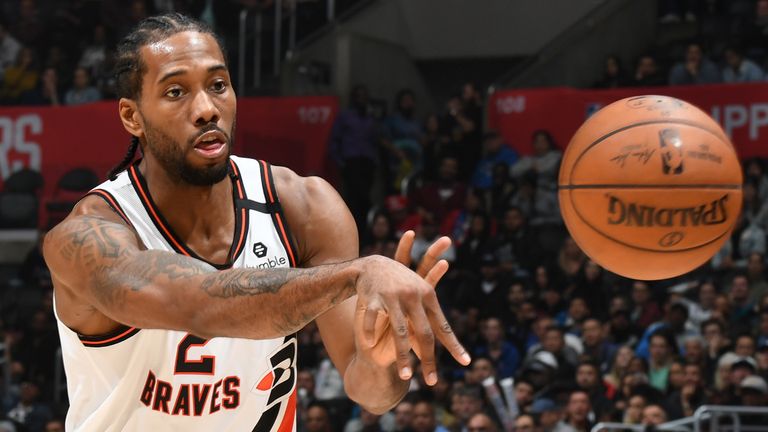
Kawhi Leonard has made incremental offensive improvements throughout his career. His first season with the LA Clippers has seen him continue that trend, writes Sky Sports NBA analyst Mark Deeks.
A certain line of conventional wisdom holds that the hallmark of a basketball superstar lies in how they always come back each season with something else added to their game. It is that which separates the superstars from the mere stars, the greats from the very goods, the perennial All-Stars from the fringe.
For example, look at how great scorers such as James Harden and Kobe Bryant added one new move in the half-court with each new season, or how LeBron James has steadily added better shooting, late-game execution and team defensive awareness over his career.

These are the greats, and they are greats because they never ceased getting better until their ageing bodies give them no choice.
Heading into his first season with the LA Clippers, after signing from the Toronto Raptors over the summer even after having won the NBA championship in his only year there, Kawhi Leonard seemed to know that line of thinking, too. Still in his prime, to remain as one of the greats, he too needed to add something. And so in his first season with the Clippers, he brought with him a passing vision and willingness in the pick-and-roll that simply was not there before.
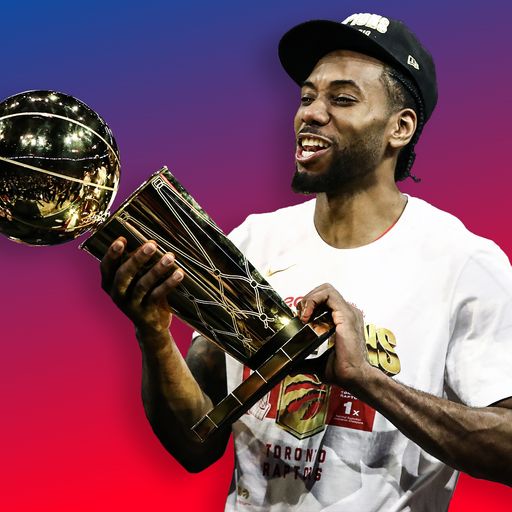
Consistent incremental improvements to his offensive game has always been a part of the Kawhi Leonard package.
With the exception of the 2017-18 season in which he played only nine games due to injury (one sufficiently statistically anomalous to be discounted hereafter), Leonard improved his scoring average in each of his first seven full NBA seasons, from a lowly 7.9 points per game as a rookie all the way up to 26.6 with the Raptors, and he did so again this year (26.9 PPG).
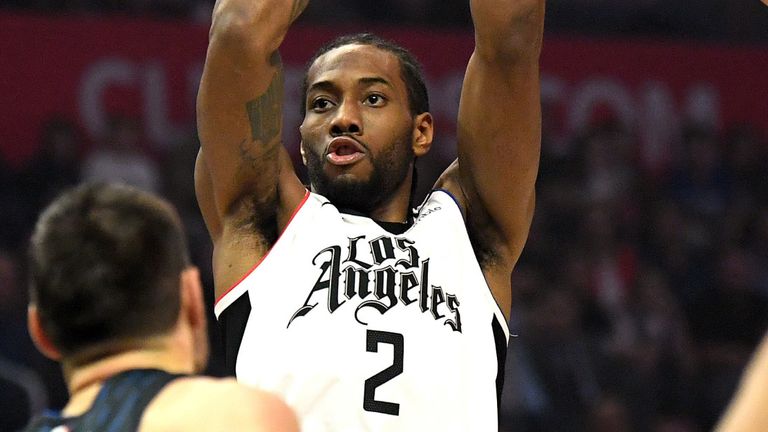
Additionally, apart from a negligible 0.2 assists per game decline last season - when he had Kyle Lowry to play alongside, the best point guard he has ever played with and arguably a Hall of Famer in his own right - Leonard had managed to always steadily improve in this category throughout his career as well.
In doing so once again in 2019-20, the 3.3 assists per game of last season shot all the way up to 5.5 in this one, and they were often of the incisive variety. He is not merely swinging the ball while flanked by shooters, getting assists in that Howard-Eisley-simple-passes-to-a-hot-Allan-Houston way. Kawhi is working the ball through the seams when both he and his target are on the move.
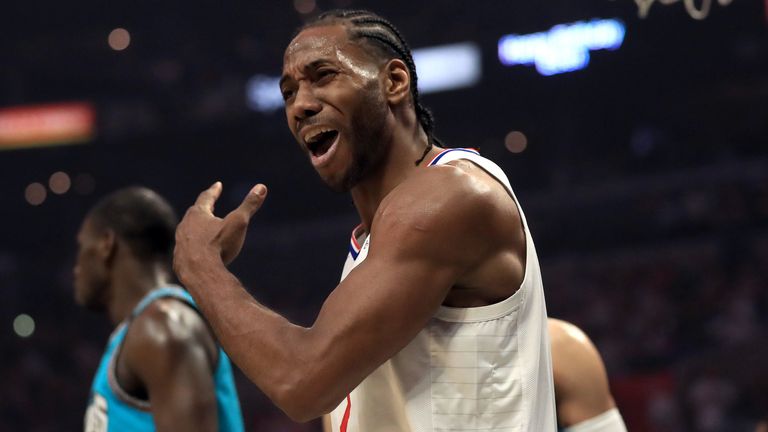
To be sure, it helps having targets such as Ivica Zubac and Montrezl Harrell as offensively skilled big men on the roll, and having shooters such as Landry Shamet on the perimeter to work with. Leonard came to LA to play with quality players at all positions, and in putting together a very stacked roster around him, the team ensured he had plenty of offensive weapons (including those such as Paul George, Lou Williams and latterly Marcus Morris, endlessly confident scorers and shooters who can turn any simple perimeter pass into an assist opportunity).
However, Kawhi has always played with good players. Being paired with them is nothing new for him. What changed was how he played with them. Leonard did not reform his game or lose any of what had before. Rather, he just got slightly better once again, and worked to better capitalise on his own defensive gravity.
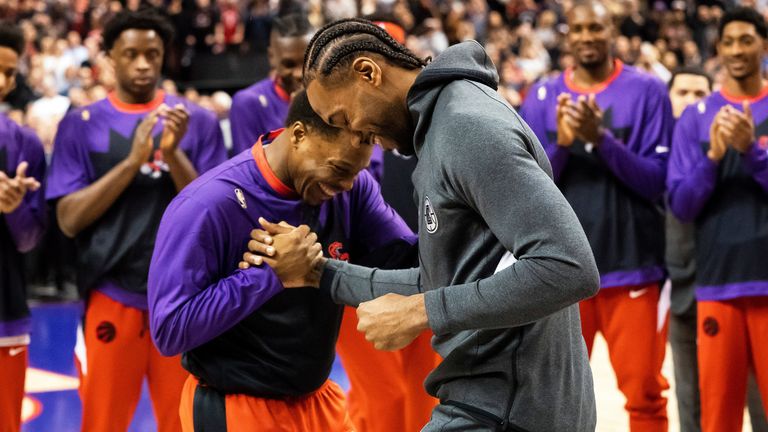
Since year three of his career, Kawhi has been deadly in the pick-and-roll, a much better ball-handler than most players of his body type yet mostly thriving through his much-improved shooting game, both from outside and the mid-range areas.
What has been considered an inefficient area of the court within NBA basketball as a whole is nevertheless a favoured area for Leonard. He is so dangerous at getting mid-range shots in half-court situations that he needs to be heavily defended in situations where most other players would be allowed to shoot.
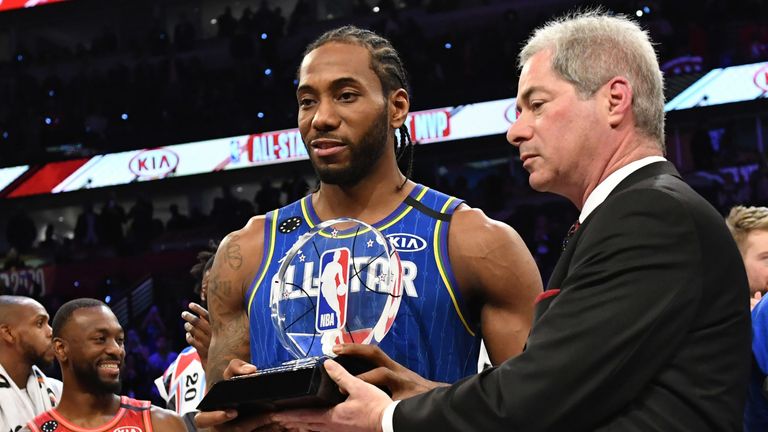
It is this ability to move defenders around simply by meriting defensive attention in areas most players are normally allowed to loaf into which proved so effective in the Raptors' championship run.
They could run Kawhi into these areas and/or allow him to isolate from them, and he usually came through. Aided by the presence of Lowry, Pascal Siakam, Danny Green and others, double teams were hard to justify.
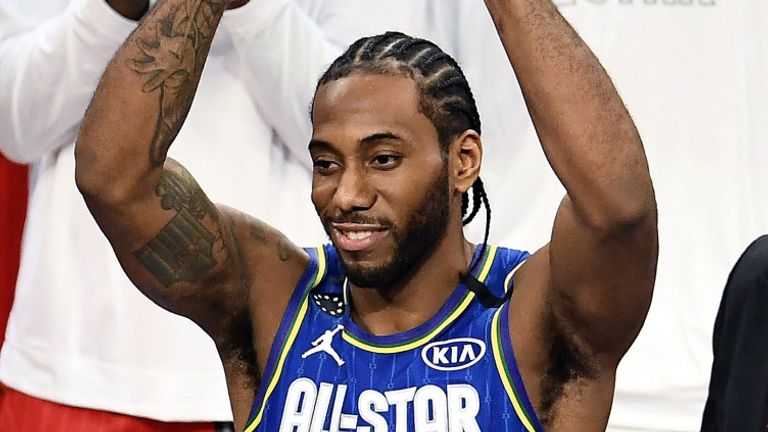
To stay ahead of the defenses, though, Leonard needed to turn what was once his great weakness into a strength. Still relatively new to the idea of a perimeter and skills-based go-to guy - remember, he came into the league having gone through San Diego State as a combo defensive forward - Leonard's playmaking for others was still below the level of Harden, James et al.
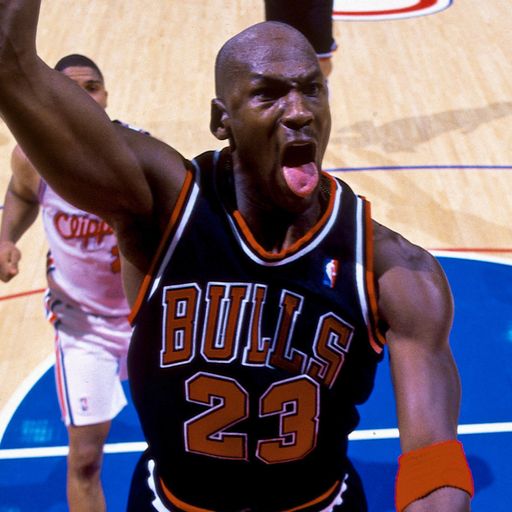
To be strictly fair, it still is. But the gap closed more in this one season than in the previous eight combined. Never until this year had he been so good at finding team-mates, especially when finding bigs on the move. Adding this wrinkle to his offensive game has made Leonard almost Jordanesque, given his ability to muscle his way to his preferred spots and score in isolation on anybody from the mid-range close to the basket.
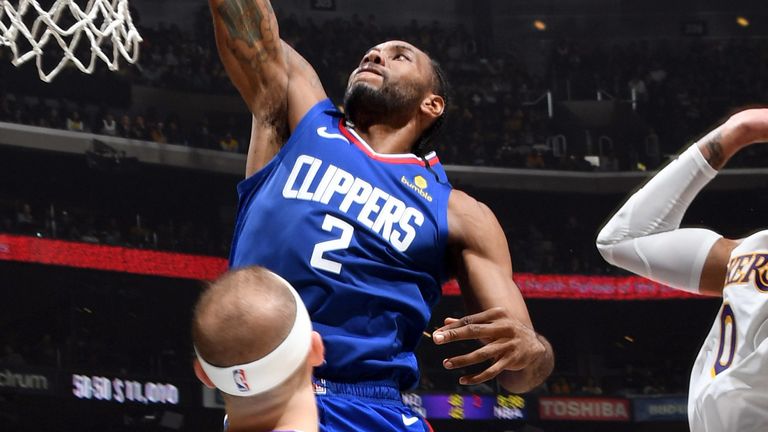
Leonard continues to grow offensively without losing any of the Scottie Pippen-esque defense that was the hallmark of his first few years.
At this stage, Leonard is not far short of being the perfect player, and if he is not the best overall player in the NBA today, he very, very nearly is.
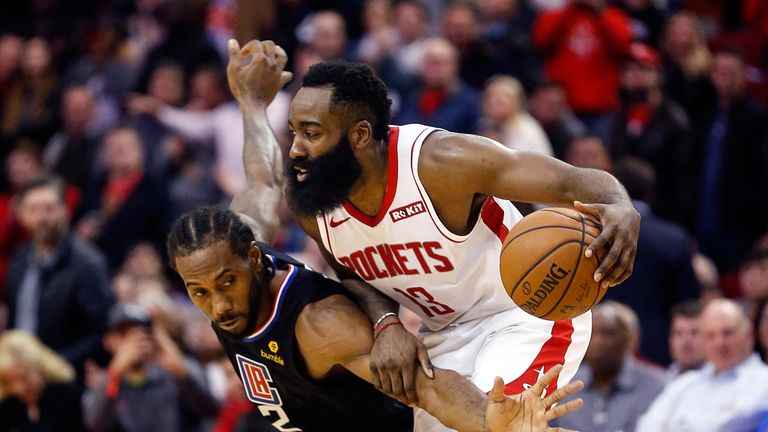
Someone else about whom consistent improvement has long been seen is James. Back in 2010, his high-profile move from the Cleveland Cavaliers to the Miami Heat (known as "The Decision" after the TV broadcast of the same name in which he announced the move) ushered in a new era of player power.
Stars and superstars were more empowered after James broke the mould to change teams as free agents, or to use the threat of doing so to leverage trades from small-market teams. The move of Kevin Durant from the Oklahoma City Thunder to the Golden State Warriors some years later corroborated that new direction and made it a new normal.
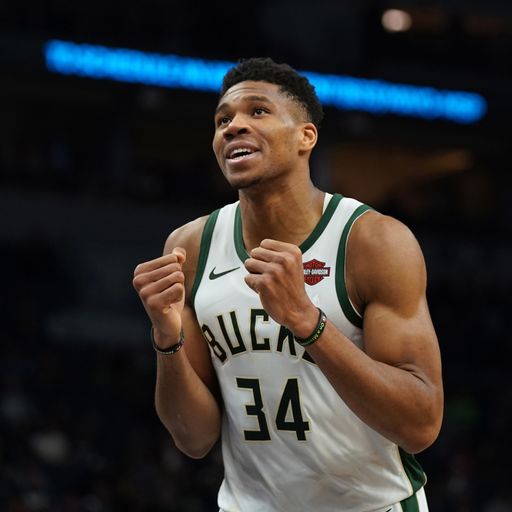
With Leonard now changing teams twice in two summers, it is no longer surprising when it happens. Given that Kawhi's move to Toronto turned them into a truly excellent team, and the Clippers were in the process of doing the same before the season's suspension, it is hard to blame him for doing that.
Wherever Leonard goes, his chosen team becomes contenders, and they do so because he as a player upheld his end of the bargain. Once again, he improved, and won because of it.
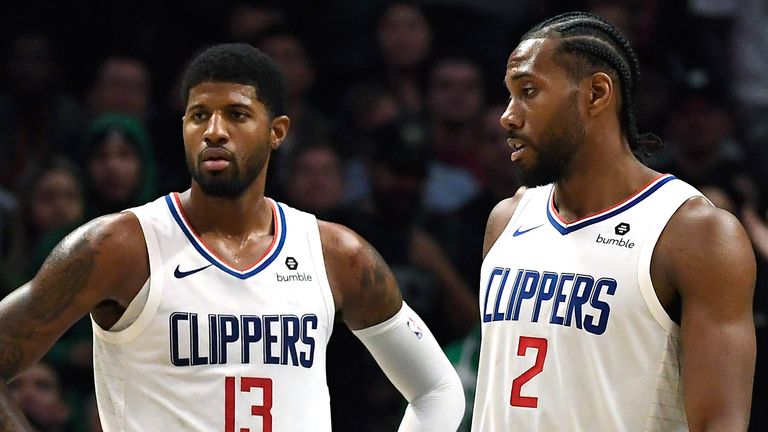
If missing a heavy diet of games for rest from this point until the end of his career is the best way to make him as good as he can be through April and June, then so be it, because, as frustrating as it can be that he misses so much time relative to his elite peers, Leonard is still improving.
And that can only come from putting the work in.