Exclusive
Kelly Gallagher: GB’s first Winter Paralympic gold medallist on Russian participation, advising GB and trusting your guide
Kelly Gallagher, GB's first Winter Paralympics gold medallist, gives an athlete's perspective on Russian and Belarussian participation in Milano Cortina; Gallagher has stepped into an advisory role with GB after retiring from elite sport

Friday 6 March 2026 15:37, UK
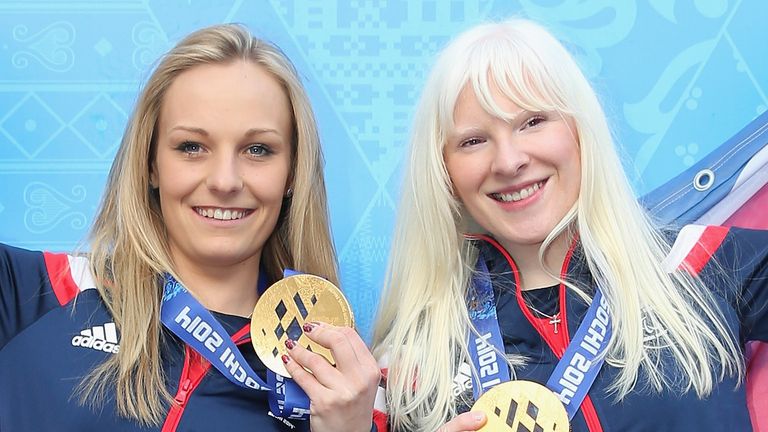
Kelly Gallagher is a bit of a legend in Para-sports circles, certainly for any British & Northern Irish Team. Kelly is visually impaired, but has a fearless nature driven by an infectious energy.
After the 2010 Vancouver Paralympics, where she competed with with her skiing guide Charlotte Evans, the two began a journey to the summit of Super-G success culminating in multiple world medals and then Paralympic Gold at Sochi 2014. Never before had a Paralympics GB winter athlete won gold: she was the first, so she knows what's she's talking about.
- Winter Paralympics 2026 LIVE: Latest schedule, updates and results
- Sky Sports on WhatsApp: Breaking news, videos and analysis
- Not got Sky? Get Sky Sports or stream contract-free on NOW
- Choose the Sky Sports push notifications you want
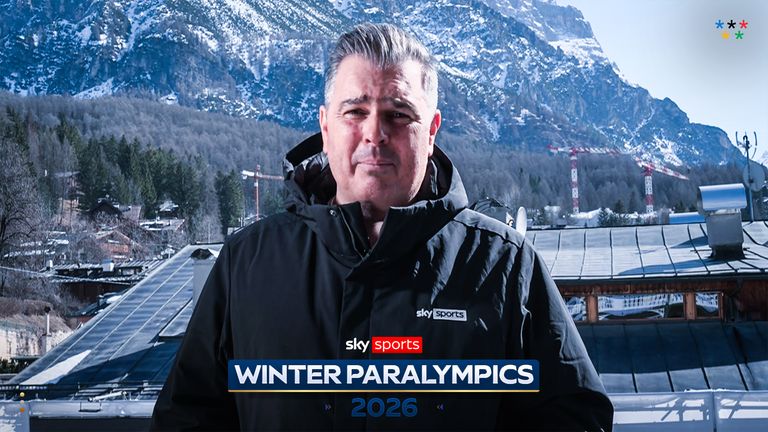
Now retired, Gallagher is back with Paralympics GB to help advise, guide and reassure the current cohort on how to best be ready to take their opportunity. Of the 25-strong team, including guides, all are world-level athletes - they have to be to get selected.
But the Paralympics, just like the Olympics, is a once-every-four-years chance at glory.
"There's multi-medallists that are returning to the Games and then we've got a big group of people who this is their first time," Gallagher told Sky Sports.
"We've got Britain's first female snowboarder in Nina (Sparks) and I think just them getting to the start line and putting in their best prepared performance is going to be really, really special to watch.
"Keeping it all together and focusing just on your performance can be really, really difficult. [Winter sports are] just really unpredictable and we saw that with the Winter Olympics, but I think winter sports is kind of hard to predict medals and hang your hopes on any one person, so I think the fact that we've got so much experience and it's spread out so much... there could be medals out there."
'It's insane - I can't see my guide!'
Paralympics GB has been set a target of winning between two and five medals by UK Sport, slightly lower than the six medals won by the team at the Beijing 2022 Paralympics.
Gallagher's confidence in the 2026 team comes witnessing changing attitudes towards disability sport and the levels of achievement that the athletes themselves are reaching. The bar is constantly being raised.
"When I first began with sport it was very much like an investment in my own kind of time, my own little journey, my own adventure and I was gathering all these people along the way. Then when I hooked up with Charlotte (Evans) after the Vancouver Games, in 2011 we went to World Championships and we got a silver and a bronze," Gallagher said.
"That was like the first World Championship medals at that level for us, we got funding from the National Lottery and it really elevated us. Now, you know, over a thousand athletes are supported from the National Lottery with £208m since 1995 in investment support, and that support isn't just in elite performance: it's in grassroots, it's in venues, it's in sports psychology, sport performance, the kind of areas where you can do strength and conditioning at home.
"We had so little in terms of resources we really maximised that at home - in terms of strength and condition - and then brought it out here!"
It may be an awkward question to ask a visually-impaired athlete, but Gallagher is a skier and in her events there is a need for speed and confidence that you are heading in the right direction, otherwise a painful accident awaits. She explains how she worked with her guide Evans: "Okay it's quite insane... so I can't see the guide!
"I have our Bluetooth radio communications and we've got shorthand-like commands for what we're doing, so instead of describing the beautiful landscape or the snow underneath there's kind of like a right-arm-down signal... it's more like a navigator or rally driver!
"But you've got to remember that the guide is looking ahead assessing what's going to happen, and skiing themselves. They've got to be a really competitive skier, but they also are responsible for my safety and if they mangle me that's it, it's over. so they really need to be really competent!
"It takes an interesting personality, somebody who really does love ski-racing, but also loves working together in order to create something really beautiful. It's kind of artistry when you think about, it's really beautiful."
Sport and politics collide once more
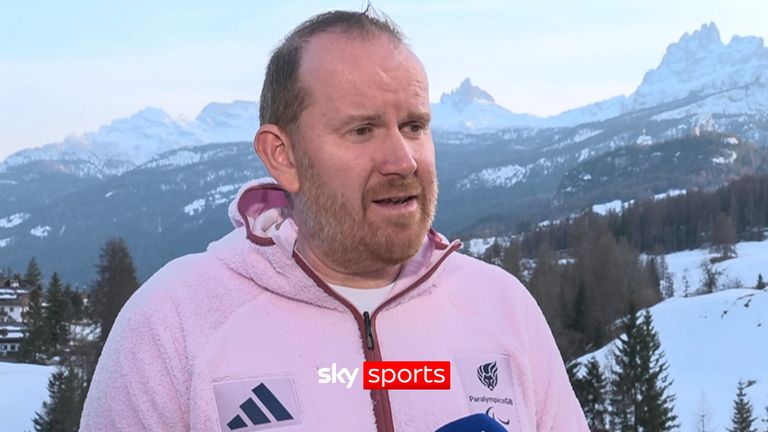
While Gallagher is in on hand to help with any sporting queries from the team, she also has experience of handling the potent mix of sport and politics. Gallagher won her gold at Sochi 2014, a highly politicised Games hosted by Russia. At Milano-Cortina 2026 a Russian flag will be flown, with Russian athletes allowed to compete for their nation for the first time since Sochi.
It's a controversial and uncomfortable moment for many within the Paralympic movement. The Paralympics GB view on Russian participation, while the war against Ukraine still rages on, is clear, with GB chef de mission Phil Smith telling Sky Sports they did not vote to lift the suspension of Russia and Belarus and don't think athletes from those countries should be allowed to compete under their national flags here in Italy.
Gallagher can't alter that decision now but feels GB athletes need help to focus on their jobs: "Around every Games there's always political issues, there's always things happening all over the world - that's been happening through time. I myself had it in 2014, and I think that the best way speaking as a retired athlete is you really do have to get into your bubble, exclude and kind of move all of those issues out of the way.
"If you are going to use your platform to speak about those issues it's going to take some of your energy, so it's kind of a choice of whether you're going, for these next two weeks, focus on what you've been working on for four, eight, 12 years or your whole life, or whether it is that you're going to address those issues.
"You've signed up to be an athlete and you've got your job to do. And the IPC (International Paralympic Committee), CAS (Court of Arbitration for Sport), World Anti-Doping (Agency) - it's their governance and it's their work and the sport administrators' work in order to be able to make sport fair and safe, and give the medals to the person who did the race the best on the day.
"Athletes are intelligent, clever people and we have opinions, but today - right now - you know there's a downhill to be run, there's curling to be done, there's sled hockey, there's so much going on that is literally our day-to-day jobs, and so we have to just I think allow the things to play out. And when we can use our voice, we can use that.
"It does affect our performance... it kind of gets in your mind and you think 'well maybe I should have spoken about that or possibly that wasn't the right thing to say' and, you know, it's kind of sabotaging ourselves by giving it the energy.
"But [that's] not to be a cop-out and think that we don't have these opinions and we don't have important thoughts about politics and the world around us."