
1928 - Amsterdam
Wednesday 20 June 2012 14:05, UK
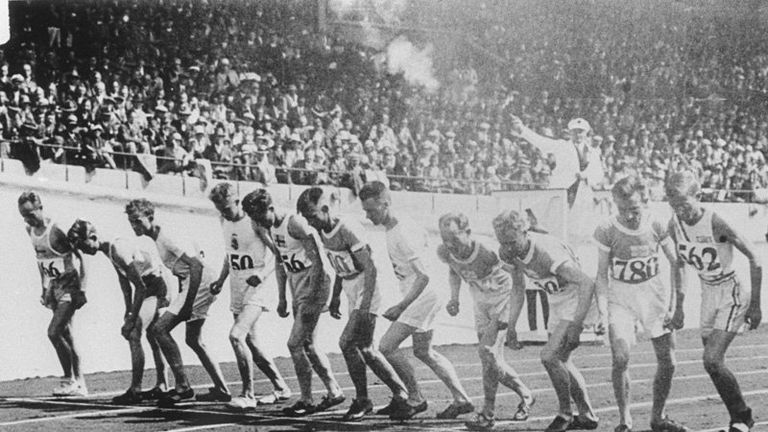
At the opening ceremony the Olympic protocol of Greece, the birthplace of the modern Games, leading the parade of nations with the host country marching in last was established.
At the opening ceremony the Olympic protocol of Greece, the birthplace of the modern Games, leading the parade of nations with the host country marching in last was established. An Olympic cauldron was lit for the first time, with the flame placed at the top of a tower in the stadium in Amsterdam. Australian Henry Pearce underlined his dominance in a quarter-final as he stopped rowing to allow a family of ducks to pass single file in front of his boat before going on to not only win the race but also eventual gold. The number of female athletes more than doubled as women were finally allowed to compete in gymnastics and athletics, with the USA's Betty Robinson winning the 100m - first-ever women's track event - by half a metre in only her fourth race. Asia won their first gold medals through Japan pair Mikio Oda (triple jump) and Yoshiyuki Tsuruta (200m breaststroke). The Indian hockey team won the first of what would be six successive gold medals while Hungary won the first of seven consecutive gold medals in team sabre fencing. Germany returned to the 'Summer Games' as they were now called after being banned following World War I, while a 400m track was used which would become the standard size for athletics. The great distance runner Paavo Nurmi performed at his final Olympic Games and won one gold to take his tally to nine, while Johnny Weissmuller won two more golds in swimming. Olympic Stars: Canadian sprinter Percy Williams sprung a major upset as he claimed both the 100m and 200m titles and become his country's greatest track and field star of his generation. Williams later broke the world record when winning the Empire Games 100m, but a thigh injury hampered his progress and he failed in the Los Angeles Games of 1932 and gave up running soon after. India's hockey team stormed away to the gold medal and it was a significant moment for them as it started a period of dominance that would yield six consecutive gold medals. Superstar Dhyan Chand won three gold medals as the leader of the Indian team, starting in 1928 when he was the tournament top scorer with 14 goals in five matches. Swiss gymnasts dominated in Amsterdam, with Georges Miez the big star of the show taking home three gold medals and one bronze as the most successful athlete at the Games. Miez, who competed in four Olympics overall during his career, had his most successful spell in Amsterdam as he won the overall individual and team titles, along with the horizontal bar and silver on the pommel horse.