Super League's eras: Looking back at Bullmania, the Entertainers, Leeds Rhinos' golden generation, Woolfball, and Hull KR ripping up the script
To celebrate 30 years of Super League, Sky Sports' Megan Wellens looks at the eras and teams that have shaped the competition; Super League celebrates its 30th birthday across March 26 to March 29, live on Sky Sports
Friday 20 March 2026 17:40, UK
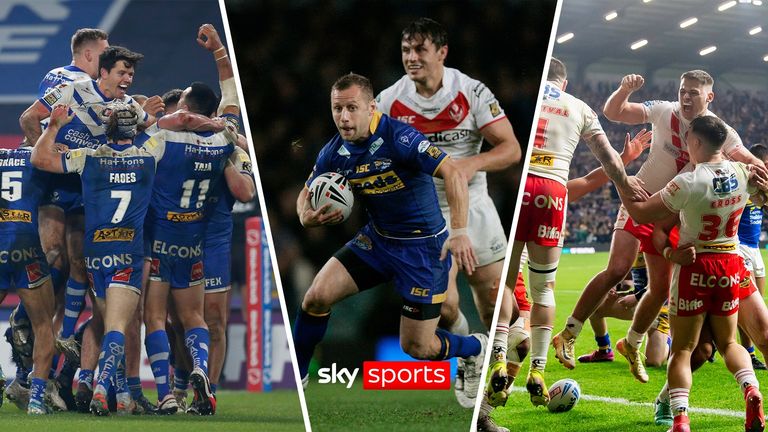
The theory of evolution, in its most basic form, comes down to the principle of "adapt or die". In rugby league terms, there have been distinct eras in which, usually, one side has adapted more quickly than the rest.
Six chances, six play the balls, six moments to get your team on top - but how these moments have influenced games has changed as styles of play have modified over time.
Sociological studies argue that every cultural movement or moment is circular. A reliance on religion is followed by a cultural focus on freedom. Then, religion reigns once again.
- Super League 2026 - fixtures for regular season and play-offs
- Not got Sky? Get Sky Sports or stream contract-free on NOW
- Download Sky Sports app for expert analysis, video and more
- Choose the Sky Sports push notifications you want
In rugby league, similar patterns emerge. When Super League began in 1996, 'eyes up' rugby reigned supreme. The early noughties then saw the 'Entertainers' emerge from this philosophy before a wrestle at the play the ball was the new key to success.
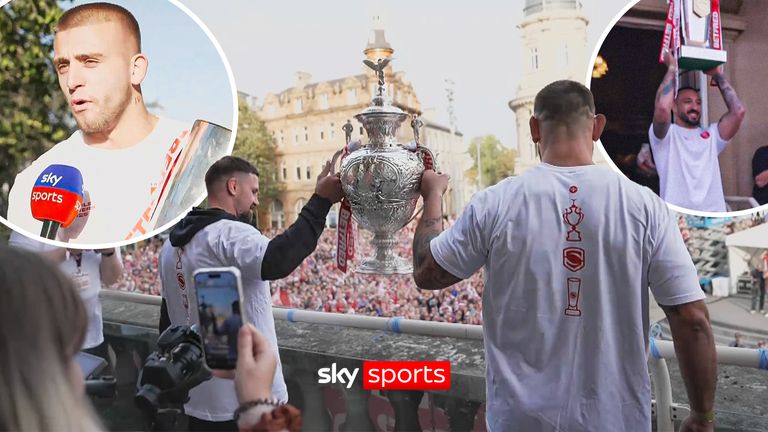
Now, we are at the precipice of a new, fast-moving moment once again.
So, just what are the defining moments of Super League and where are we heading from here? What are the moments and teams that have made Super League tick? What coaches have not only put their stamp on a club but also put their stamp on a competition as a whole?
Let's take a look as we celebrate 30 years...
The early leaders: Who can beat the Bradford Bulls?
The two words that encapsulate the Bradford Bulls team that dominated the early days of Super League are power and pace.
Working off quick play the balls, the likes of Lesley Vainokolo would be tasked with running hard and fast.
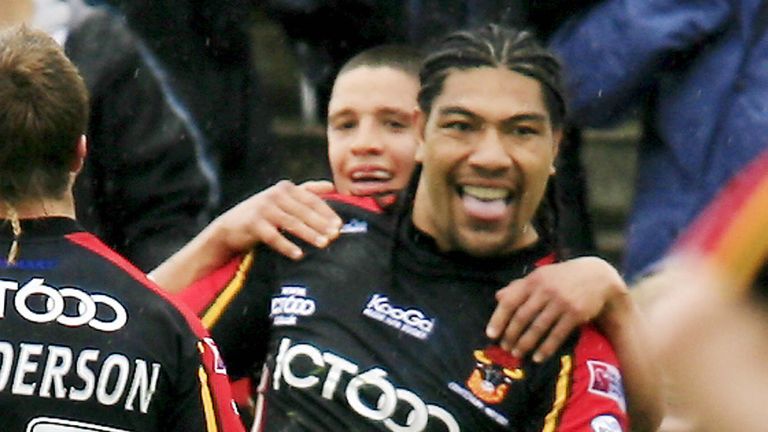
They were a big outfit but not one that relied on that size to slow the game down. Indeed, they combined that size with speed to dominate play the balls and get quick ball.
Their power was focused on supplementing the attack rather than slowing down the opposition in defence and it worked, wins in 1997, 2001, 2003, and 2005 cementing them as the side to beat as Super League was in its infancy.
The Entertainers: Never write off the Saints
In the early noughties, the phrase 'never write off the Saints' became the catchphrase for the off-the-cuff style of play that St Helens made their own, taking what the Bulls did but making it less structured and more 'heads up' rugby.
Of course, to play this brand of rugby, the Saints were intensely reliant on play the balls being quick, giving Keiron Cunningham the chance to break the line and keep them on the front foot.
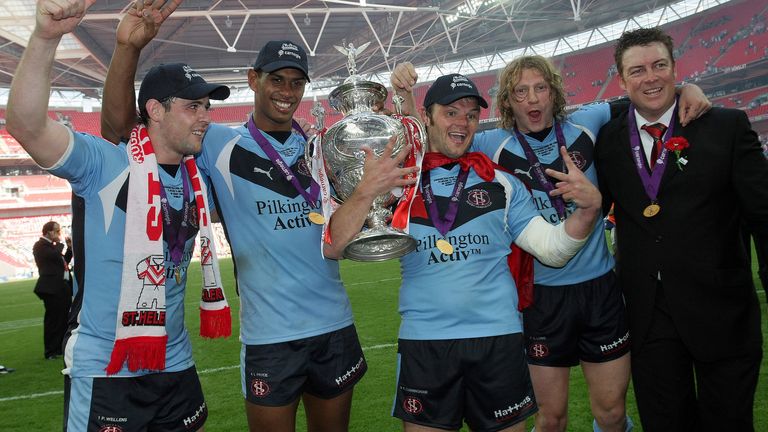
They had a side littered with star-studded backs, the likes of Leon Pryce, Paul Wellens, Sean Long, and Jamie Lyon combining incredibly for tries that relied not on wearing sides down, but taking their attacking opportunities whenever they presented themselves.
They could be down by 12 points with five minutes to play but the never-say-die attitude, brought in by Ian Millward and continued through Daniel Anderson's tenure, created a side that had some magical moments that came from that play the ball that was quick, the pass to Sean Long, and the drop goal that sent the Saints fans into pandemonium.
Treble winners and BBC Sports Personality Team of the Year in 2006, they made it clear that entertaining rugby turns heads.
When their dominance began to end in 2008, we were only a couple of years away from one of the biggest changes to how European rugby league is played and it came at the hands of their rivals, Wigan Warriors...
Winning the wrestle: Maguire makes his mark in England
When Michael Maguire took over at Wigan Warriors in 2010, he made one of the most defining moves the competition has ever seen.
Joining from Melbourne Storm's backroom staff, Maguire added something new to Wigan's training regime - grappling and wrestling.
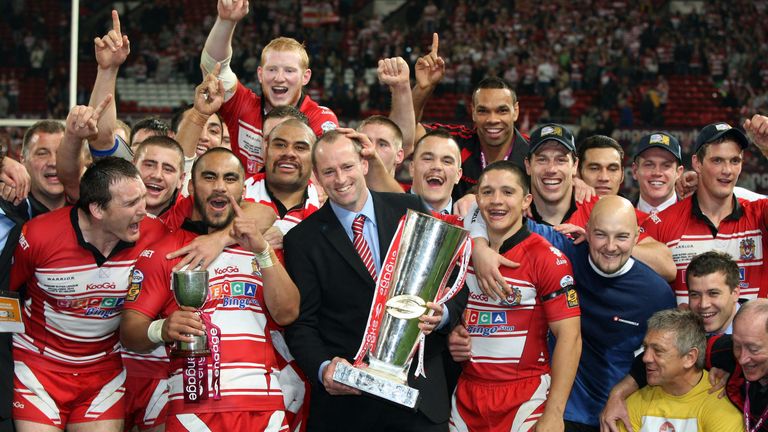
A focus on slowing down the play the ball became a central tenet of Wigan's philosophy and while the brand of rugby was not the most exciting, it got results.
They became a side that were consistent - defending hard, grinding out matches, and taking their opportunities.
"The results have been spectacular, even if they have been achieved by mostly unspectacular rugby," is how Wigan were described by journalist Andy Wilson in the Guardian, an all-encompassing picture of how defence was about to become the focus for the foreseeable.
Five in a row: Leeds Rhinos' 'golden generation'
To have a sustained period of dominance, you have to be doing something very right on a regular basis and that is what the Leeds Rhinos did in the 2010s with what they refer to as the 'golden generation'.
Winning the Grand Final in 2009, 2011, 2012, 2015, 2017, they were a strong defensive unit and had a game plan that was a decade in the making, creating a cohesive unit that we may not see in Super League again.
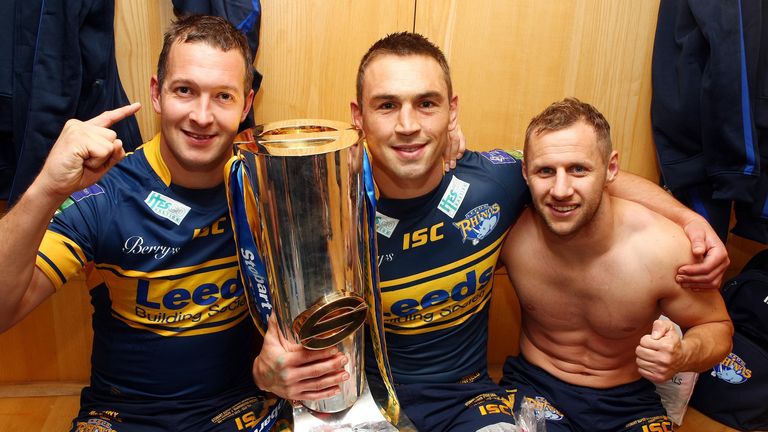
Kevin Sinfield, Jamie Peacock, Rob Burrow, Danny McGuire, and Jamie Jones-Buchanan were constant faces in the side.
They were professionals, winning from anywhere in the table because they would defensively put themselves in a position to do so before letting their stars shine.
Game knowledge was key and they used it time in and time out, especially on the big day at Old Trafford.
Woolf-ball: The brick wall of St Helens
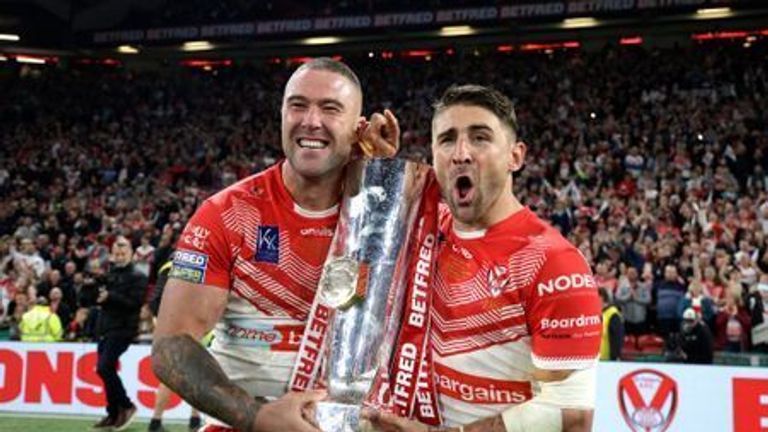
In 2020, St Helens saw Grand Final winning coach Justin Holbrook depart and welcomed Kristian Woolf. In a first season marred by Covid, Woolf started what would be the most successful era in St Helens' history and the key to his game was an evolution of the brand of rugby Wigan brought in in 2010, combined with the game control that Leeds relied on.
It is fair to say that Saints fans sacrificed some scintillating attack for a sustained period of immense success, St Helens' defence becoming an almost unbreakable force as they ground teams out of the game.
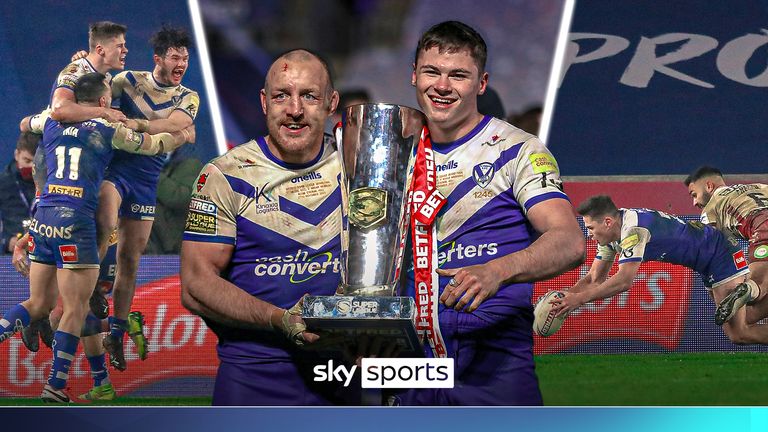
Set completion, safety, and strong mentality were key and while Saints showed their class in attack, it came off their work at the play the balls. Eyes-up rugby only happened when the work had been done without the ball in hand.
They were doing something that other teams had not caught up to, seeing them conclude 2022 with four Grand Finals in a row, with many hailing them as the most dominant team Super League has ever seen.
Five trophies in a row: Peet's Wigan rule the roost
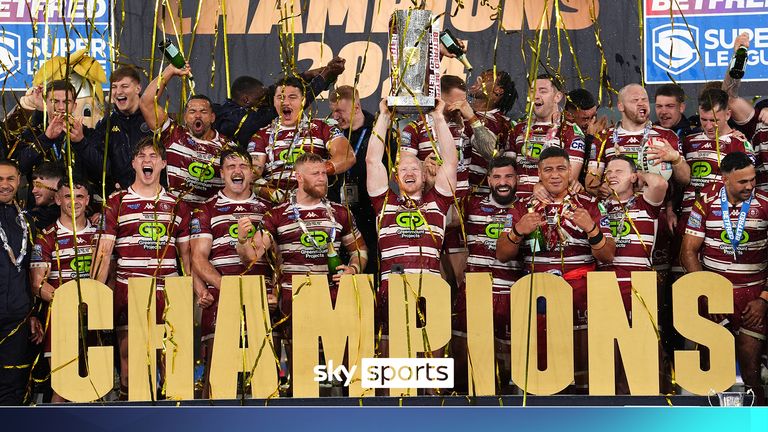
Taking over from your rivals is always a sweet moment and that is exactly what Matt Peet got to do as he led his hometown club Wigan to quadruple glory.
Indeed, the Wigan native picked up every trophy you could possibly win in the first 66 games in charge.
His side were renowned for their defensive nous with the flair from the back. They stopped other teams from scoring points game after game and then they scored points out of nowhere. The best of both worlds, right?
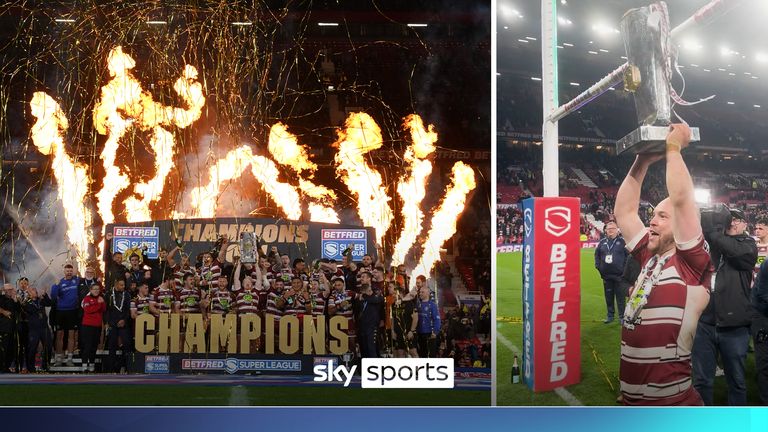
That structure and those attributes led them to pick up the Grand Final in 2023 followed by the World Club Challenge, League Leaders' Shield, Challenge Cup, then Grand Final once again in 2024.
Total domination and total control. Then, it was someone else's turn to do the same thing...
New kids on the block: Hull KR's moment arrives
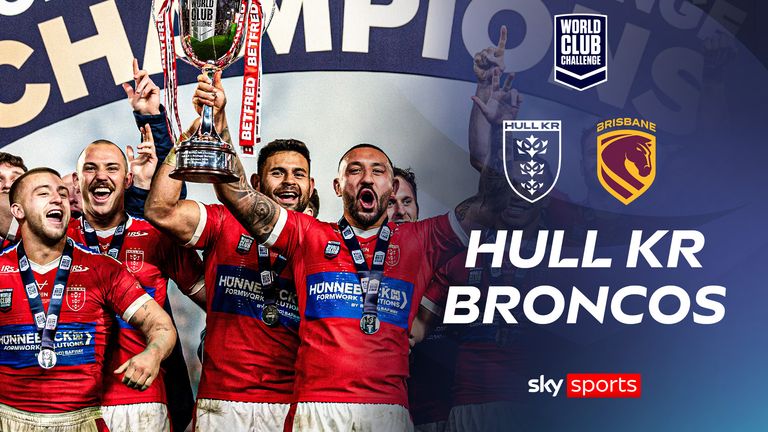
There were four teams who had ever won Super League from 1996 to 2024. Hull KR changed that in 2025.
The era of the 'big four' dominance was finally over and Willie Peters and his side did what so many before them could not do. Not only that, they completed the quadruple like Wigan Warriors in 2024. Before that, it was St Helens in 2007.
There are many who find similarities in the styles of play that Wigan and KR have to offer but it is fair to say that the Robins offer a more expansive style of rugby with Tyrone May and Mikey Lewis dictating things.
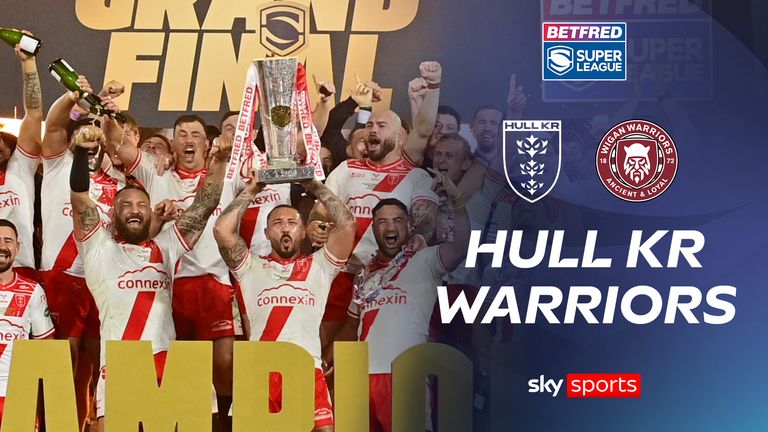
They dominated the rucks and from it, Jez Litten was allowed to run riot, tearing apart opponents off the bag of the work of the big men.
That domination was key.
In 2026, we have seen a significant increase in the speed of the ruck with the referees making a concerted effort for a quicker game.
Some teams it will suit, for other teams it will be a struggle.
Come October, we will know whether that will see KR reign supreme once again, we will get another new name on the Super League trophy, or whether one of the originals takes back control as Super League celebrates 30 years.
2026 Super League - key dates and what to look out for
- Super League's 30th birthday: Thu Mar 26: Castleford Tigers v Bradford Bulls, 8pm (Sky Sports)
- Rivals Round: April 3-April 5
- Super League in Paris: Sat Jun 6: Catalans Dragons v Wigan Warriors (Paris), 6:30 UK (Sky Sports)
- Magic Weekend: July 4-July 5
- Rivals Round reversed: July 23-July 26
- Elimination Play-offs: September 19-September 20
- Play-off semi-finals: September 26-September 27
- Grand Final: October 3, Old Trafford.
Sky Sports will again show every game of the Super League live this season - including two matches in each round exclusively live, with the remaining five matches each week shown on Sky Sports+