
Davis Cup classics
Monday 2 March 2015 12:59, UK
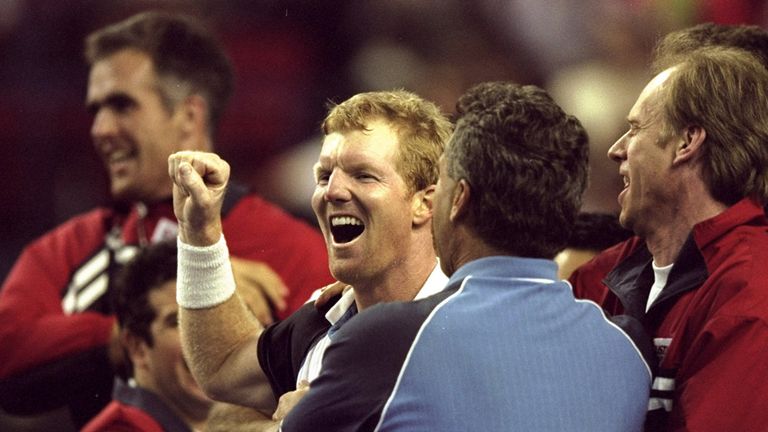
Ahead of this week's GB v USA clash, Andy Schooler remembers some classic British Davis Cup ties.
The Great Britain v USA Davis Cup tie takes centre stage this week and we're beginning the countdown to what could be a classic contest.
The last meeting between the two nations in this country was just that - and it got me thinking about my favourite GB ties of recent years. I've come up with five below and it’s no surprise to see GB v USA in 1999 feature.
v USA, home, indoor hard, World Group first round, 1999 – lost 2-3
Former world number one Jim Courier and Todd Martin led the American charge and when both won opening-day singles – Courier beating Tim Henman in five sets after the Briton had saved four match points in the fourth - British hopes looked all but over.
However, Henman fought off that disappointment to team up with Greg Rusedski for the Saturday doubles, the pair beating Martin and Jan-Michael Gambill in another five-setter.
With a full 10 sets in his legs, Henman still had it all to do in the fourth rubber against Martin to keep the tie alive but, helped by a controversial line call, he fought back from a set and break down to lift the NIA atmosphere to new levels.
In homes across the nation, fans were switching on in their droves – a peak audience of almost eight million watched during the final rubber which pitted Rusedski against Courier. It was a superb see-saw encounter, Rusedski twice hitting back from a set down. When he won the fourth 6-1 the momentum appeared to be with the home side but in a marathon final set it was Rusedski who blinked first. With the Briton serving at 6-7, Courier, now the US captain, struck the killer blow to seal a 6-4 6-7 6-3 1-6 8-6 victory.
A thoroughly dejected Rusedski said afterwards: “I basically let the team down by not winning at least one singles match." Captain David Lloyd disagreed. “I always knew it was going to be just a few points here and there but no-one let anyone down." Lloyd had nailed it. A handful of points across the rubbers had decided one of the great Davis Cup encounters.
v Morocco, away, outdoor clay, World Group play-off, 2003 – lost 2-3
If you like your Davis Cup ties filled with drama, this one had it in spades. Still the days of the Henman-and-Rusedski-but-no-one-else era, the British pair both lost their singles on the opening day to leave themselves in a big hole. However, the duo won the doubles in straight sets – ideal for their heavy workload – and when Henman put a neck problem to one side to beat Younes El Aynaoui in the first reverse singles, one he described at the time as his best ever victory in the competition, it was all to play for in the final rubber.
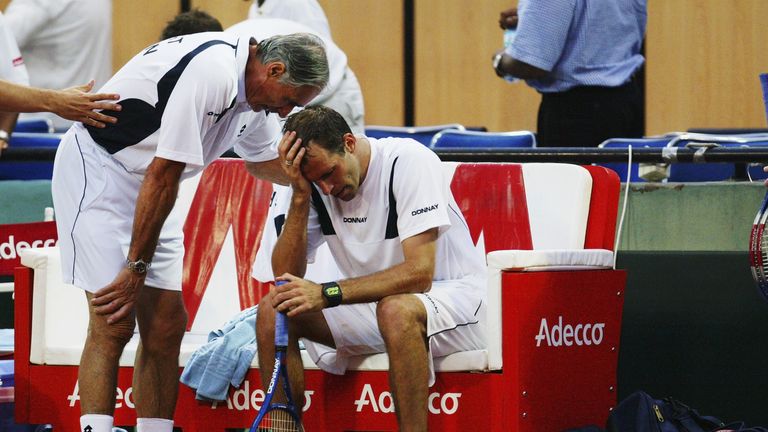
That was when the real drama began. In what was always a tight contest, Rusedski won the opener 7-5 against Hicham Arazi but lost the second by the same scoreline. The light began to fade in the third set and although the floodlights were switched on, a pre-tie agreement meant only the set in progress could be completed before a suspension. Under the lights, a third-set tie-break was required and despite having three set points, a tired-looking Rusedski failed to clinch it. Arazi grabbed his second chance before the players left the court – much to the disgust of the home fans. That meant it was a case of play it again in Casablanca on Monday.
GB hoped Rusedski would be able to recover and stage a famous comeback but it was not to be, the Briton losing the fourth set on another tie-break. With defeat, Britain were relegated from the World Group. As captain Roger Taylor reflected: “To come back from 2-0 down and come this close - it can't hurt more than that.”
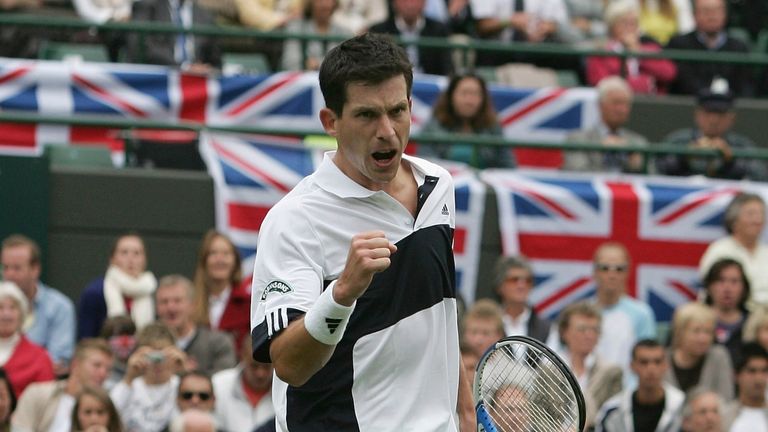
v Croatia, home, outdoor grass, World Group play-off, 2007 – won 4-1
It was Tim Henman’s farewell which meant this tie makes my 'most memorable' list. The clash was actually denied true competitiveness by the withdrawal of Ivan Ljubicic the day before it got under way. That left Marin Cilic, the current US Open champion but then just a promising 18-year-old, leading the team. Victory over Andy Murray, who had only just returned from a wrist problem, in the opening rubber was crucial for Croatia’s hopes but it was not to be with Cilic going down in five sets.
Then came the Henman show. The Briton had slipped down to 92nd in the world by this stage but was up against a player ranked even lower in Roko Karanusic. Roared on by fans who had followed him for a decade on the lawns of SW19, Henman dominated, posting a straight-sets win.
That left just one more match in his famous career, Henman being picked for Saturday’s doubles rubber along with Jamie Murray. The British duo fought back from a set down to win in four and fittingly it was Henman who clinched victory with a winner. “I've had a few good scripts over the year but this is right up there - hitting the winner to seal the Davis Cup victory is brilliant," said Henman before heading to the golf course and the occasional commentary box.
v Russia, home, indoor hard, Europe/Africa Group I second round, 2013 – won 3-2
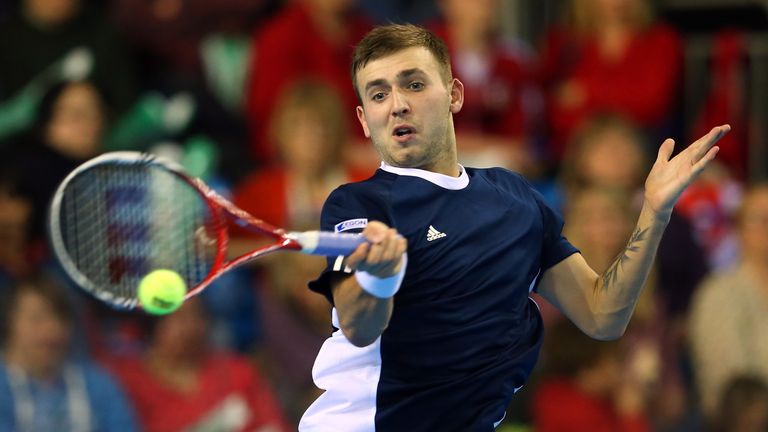
GB had been on the road to recovery under new captain Leon Smith for a while before this tie arrived but it was this win which was the main reason they were able to reclaim their place in the World Group, where they currently reside.
Russia were not the powerhouse of old and did not name their full-strength side, yet they were still heavy favourites to claim victory in Coventry.
They were even heavier favourites after taking a 2-0 lead on day one as both Dan Evans and James Ward agonisingly lost tight five-setters on what was an epic day. Colin Fleming and then-Wimbledon champion Jonny Marray got the recovery rolling with a straight-sets doubles win on the Saturday but Russia must still have been confident going into the reverse singles. However, the British comeback – their first from 2-0 down since 1930 – would be completed.
First, Ward recovered from two sets to one down to edge out Dmitry Tursunov and then Evans turned on the style to crush Evgeny Donskoy and give the hosts a truly memorable win.
Perhaps the most pleasing aspect was the team nature of the performance. Every player contributed an important point and it showed GB could still win Davis Cup ties without their star man Andy Murray, who was in the middle of what was to be a two-year break from the competition. Murray would return in the following tie and claim the headlines as GB beat Croatia to return to the World Group but the real heroes of that achievement were those who took part in this tie.
v USA, away, outdoor clay, World Group first round, 2014 – won 3-1
Great Britain and the USA last met in the Davis Cup just over a year ago with Leon Smith’s men claiming a famous victory in San Diego to clinch what was their first World Group win since 1986. The Americans opted to lay a claycourt in Petco Park – the city’s baseball stadium – but the decision backfired badly. The surface had been chosen with John Isner very much in mind. With Isner holding a decent clay record, the US hoped he could beat Andy Murray on it and thus all but end GB’s hopes. However, Isner was ruled out due to injury and instead Murray sauntered to victory over Donald Young on day one.
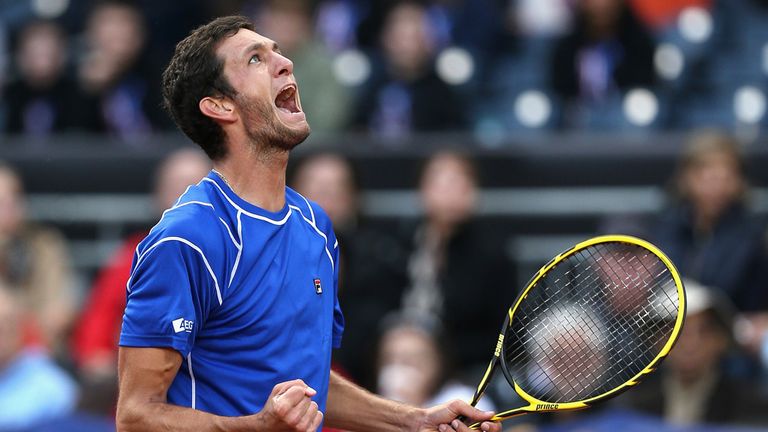
The second rubber was to be the crucial one in the final outcome and was the standout encounter of the tie. James Ward emerged the hero with a battling performance that left opponent Sam Querrey stunned. The big-serving Querrey would surely have preferred a faster surface, yet he still held his delivery until the fourth set by which time he was two sets and a break up. It looked like the tie would be level at 1-1 after day one but from 4-2 down in the fourth, Ward lost just one more game as the rubber was turned on its head in astonishing fashion. In the process, so too was the tie. With GB leading 2-0 they could afford to leave Murray out of the doubles for which the Bryans twins, Bob and Mike, were always going to be favourites. They duly won but with the trump card of Murray still to be played in the first of Sunday’s reverse singles, GB still held the advantage. Although Murray lost the second set on a tie-break to Querrey, there was rarely much doubt he would prevail. He did and, against all odds, Britain moved into the quarter-finals.