Exclusive
Social media abuse, stalking and death threats: Why it's never just about performance for our sportswomen
Sky Sports News documentary 'Beyond The Noise' explores challenges our sportswomen face in pursuit of glory; Part one looks at the darker side of women's sport; Warning: contains discussion of social media abuse, stalking and death threats which some may find distressing
Wednesday 15 April 2026 10:30, UK
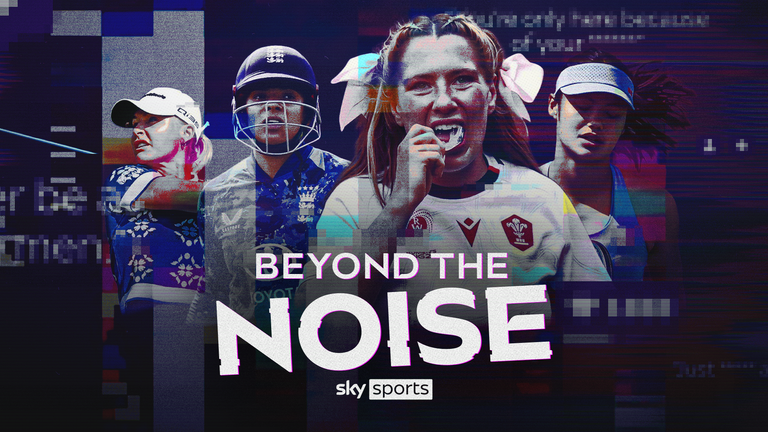
Too feminine, too masculine. Hair too short. Too much makeup. Too muscular. Too skinny. Too outspoken. Too aggressive.
Who would be a sportswoman in today's landscape? In the eyes of some so-called fans, they can't do right for doing wrong.
In 2025, women's sport took huge strides on the pitch again as the Lionesses created another piece of history by defending their Euros title and the Red Roses claimed World Cup glory on home soil - as well as a host of individual successes from Beau Greaves' heroics on the oche to Lottie Woad's emergence on the golf course.
Yet many of our sportswomen are climbing their sporting ladders while being subjected to unsavoury comments and negativities outside of their sporting arenas. It's another layer of pressure for our athletes.
When Wales and Saracens' Georgia Evans found herself the subject of unnecessary abuse during the Women's Rugby World Cup last autumn for simply choosing to wear bows in her hair on the pitch, she took matters into her own hands. She couldn't stay quiet.
"There was a social media post [from another account] saying 'Georgia Evans is ready' [ahead of Wales' World Cup opener] and a picture of me looking quite crazy with two big pink bows in my hair, which isn't abnormal for myself," Evans told Sky Sports.
"But then I went through the comments and there were a lot of derogatory remarks regarding my appearance, how silly and childish I looked. There were a number of other derogatory comments and, while I didn't take them too personally, my team-mates and family were seeing them.
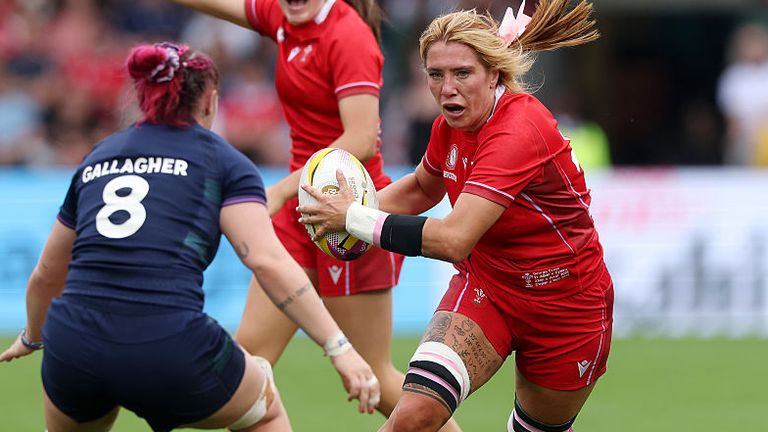
"My sisters were having Facebook wars with people for days afterwards arguing with women and men who were talking about how my parents had affected how we were playing, which was bizarre to me because I've worn bows in my hair for years. I've worn them since my first cap and it's never had a bearing on my ability on the pitch, to nit-pick on that was very strange."
'What I look like has no bearing on my ability'
Evans, who has won 43 caps for Wales and opened their Six Nations campaign against Scotland on Saturday, thought long and hard about whether to respond to the abuse, rewriting a statement "1,000 times over" before deciding to press send.
Within her response, Evans said: "This game allows space and room for every boy and girl, whatever their haircut, body shape or look they wish to wear on and off the field. 'It's not a rugby look' - a rugby player is no longer defined by your gender or what you look like.
'It's childish' - but to all those young girls it's understanding you don't have to compromise who you are to fit into a stereotype.
"In an old-school, man's game, I'm bringing a bit of Barbie to the party.
"To all those that aren't fans, that is OK. To all the support and love - thank you. Don't worry, I won't be changing."
Evans was blown away by the reaction on social media and the subsequent love and support she felt from the Welsh Rugby Union and wider rugby community.
Thousands of young girls, women and men turned up to Wales' next match sporting their own bows in a display of solidarity. A moment Evans will never forget, yet she feels it was a situation that shouldn't have happened. After all, why should sportswomen be judged for their appearance?
"People have a right to their opinion. As sportspeople, we put ourselves out there. When you're in the public eye, people will criticise you for what you do, which is what I do on the pitch. But what I look like, what I wear, how I choose to present myself has no bearing on my ability.
"A big thing that women find is you constantly just get knocked down and it's such a fight to get back up and be on the level playing field with our male counterparts. So when you're literally picking at someone's appearance, whether you are male or female, it's not what we're out here for.
"We're not models, we're not fashion models or icons in that sense but we're out here to do a job, so that was the important part for me, is 'criticise my rugby all you want' but hitting back at appearances is slightly too personal for me especially with everything that we do as women to put ourselves out there to make this game bigger."
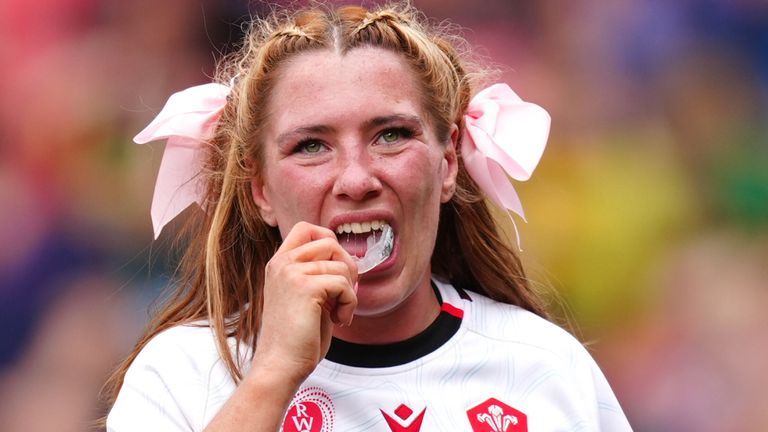
When you're in the public eye, people will criticise you for what you do, which is what I do on the pitch. But what I look like, what I wear, how I choose to present myself has no bearing on my ability.
Bartoli: I'm not sure next generation can survive that constant judgement
A survey by Women In Sport published earlier this year found the number of girls who dreamed of becoming professional athletes has fallen to its lowest level since 2020. Now just 23 per cent say they dream of sporting glory compared to 53 per cent of boys.
The research found that teenage girls don't feel that they belong in sport, feel judged and worry about not having the 'right' body as well as worrying about their safety. The report also revealed that 70 per cent avoided sport when girls are on their period.
Former Wimbledon champion, Sky Sports tennis pundit and coach Marion Bartoli is well aware of the alarming statistics.
Bartoli coaches teenage girls and has seen first hand the impact social media has had on their progress and future aspirations.
"I started coaching a girl when she was 13 years old, she's now 16 and I've seen her going through those three years with social media developing and how much it has affected her mentally with her body image and how much she's constantly looking at what people comment on her pictures or what people say about her," Bartoli told Sky Sports.
"I'm really worried for the next generation because it has come to a point where it is so bad - it is already - but if it keeps going I'm not sure the next generation will be able to survive that many comments and judgement constantly."
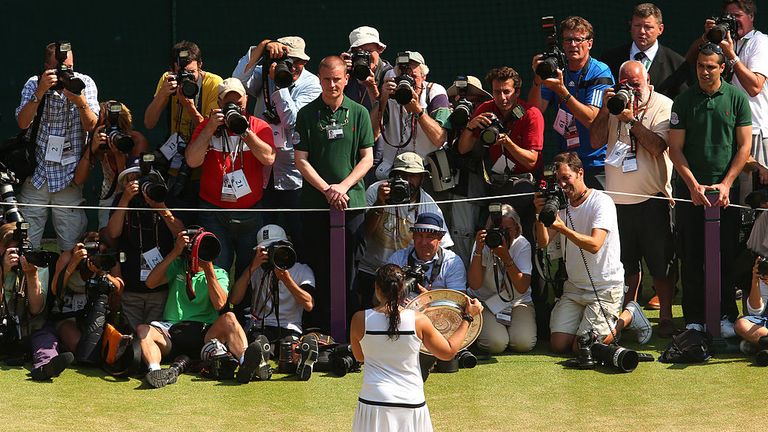
Bartoli knows how damaging a personal attack on your appearance can be to your mentality and confidence having infamously been humiliated in the aftermath of her 2013 Wimbledon triumph, the greatest success of her career, when BBC commentator John Inverdale made a derogatory remark.
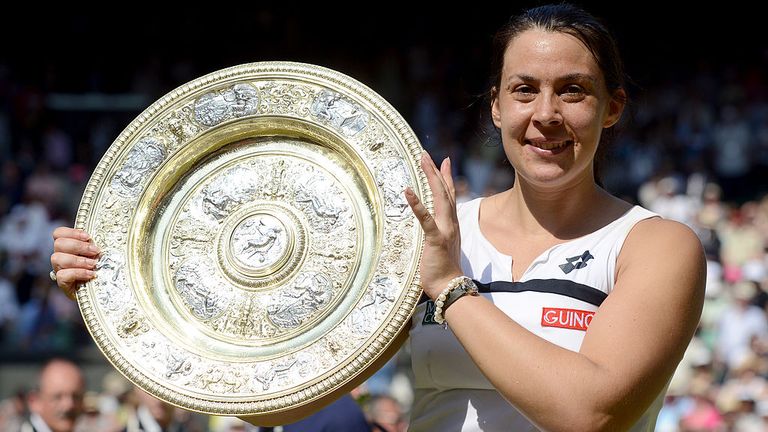
"I've been criticised publicly on national TV after winning Wimbledon. Apparently I didn't look like Maria Sharapova but at the time it should have been more about me winning Wimbledon rather than how I looked, but yet someone on live TV made that comment. So I completely understand those girls who feel that everything is always constantly targeting one thing."
Bartoli, however, has been encouraged by how some of the leading players on the women's tour have been able to rise above the criticism by consistently being their authentic selves and not allowing the haters to win.
"I feel like you should express yourself the way you are," she said. "I'm happy to see Aryna Sabalenka with her massive personality. At the beginning, people were saying well she's too loud, she's too this, she's too that. At the end of the day, she's world No 1 and dominating women's tennis.
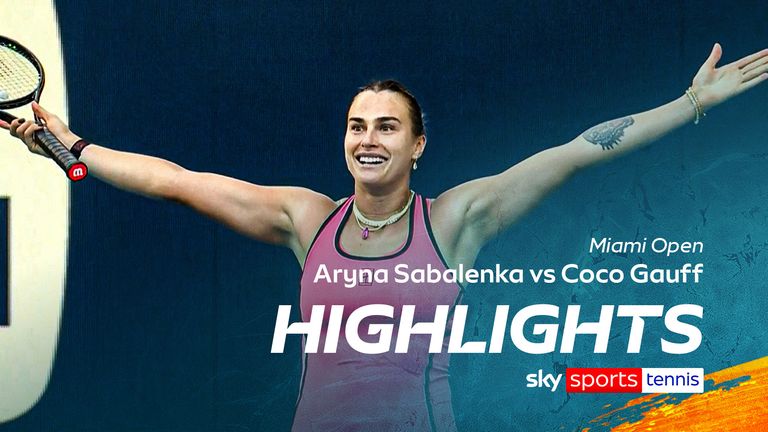
"She just signed with Gucci, so having a massive brand take her on board shows they want to have that kind of personality too.
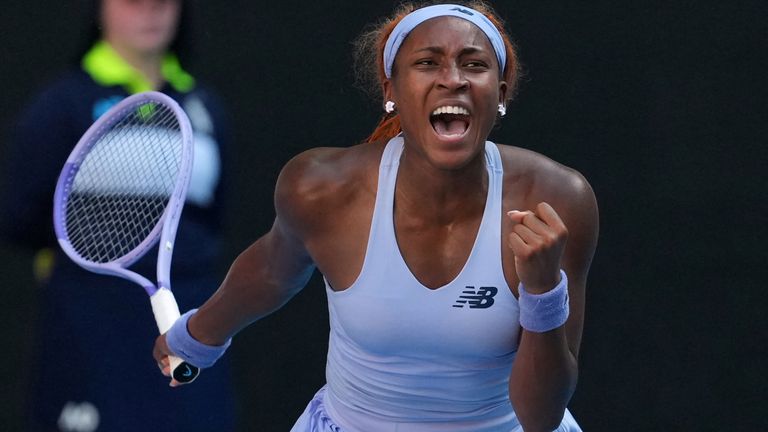
"Coco Gauff said she was inspired by Serena and Venus because they were two black girls who could take on the top of the world of women's tennis and therefore she felt like she was looking like them and she could be there as well and she belonged.
"We want more diversity of personality, style, body shape, anything that makes someone feel more comfortable."
'Obsessive fans will break every rule to get to players'
But what happens when criticism about personal appearances turns into something even more sinister?
A report from the Women's Tennis Association [WTA] and International Tennis Federation [ITF] published last summer revealed 458 players were direct targets of abuse in 2024 while leading players including Britain's Katie Boulter, Elina Svitolina and Jessica Pegula among others have spoken of being sent death threats and explicit pictures by online trolls.
The report found that 40 per cent of social media abuse came from frustrated gamblers.
Shockingly, at the Indian Wells tournament at the start of March, Italy's Lucrezia Stefanini revealed threats to her life sent to her on WhatsApp which included a photo of a gun ahead of a qualifying match.
"I received a WhatsApp message in which I was threatened over winning yesterday's match. They threatened me and my family and named my parents, the place where I was born, and they sent me a photo of a gun," Stefanini said.
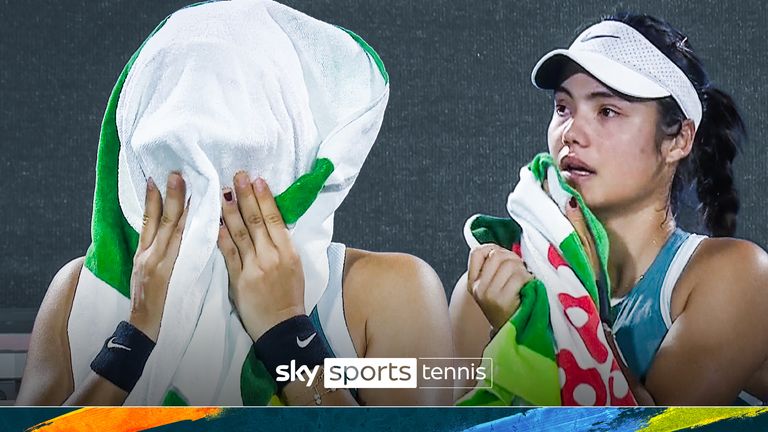
It is not only disgruntled bettors that players encounter online but the physical presence of obsessive fans showing up in sporting arenas, with the sight of a distressed Emma Raducanu cowering behind the umpire's chair at the Dubai Tennis Championship last February due to a "fixated" man in the crowd, one of the most alarming incidents in women's sport in recent years.
Raducanu later spoke of how 'wary' she was to go out after the incident, with the man in question given a restraining order after approaching her in Dubai and following her from Singapore to Abu Dhabi and Qatar.
And is it any wonder that we question why a sportswoman has underperformed when there are all manner of off-court issues our athletes must try to put to one side as they pursue their ambitions?
Bartoli said that it sends "chills in my spine" to see and read the messages that players are being sent and is surprised that they are "ready to send those messages to a 14, 15, 16-year-old girl playing a junior event somewhere in the world" too.
It also brought back memories of her own stalking incident at Wimbledon where a man who pretended to be a groundsperson to get on the same court as her at the 2007 Championships.
"It was scary to see the level those people are ready to go to. I'd seen him follow me since all the grass court tournaments and he was literally right behind me throughout the whole match. I was 22 years old then, attempting to win my first Wimbledon.
"The club did a tremendous job making sure I was safe and gave me extra security for all my other matches. It was more when I thought about it afterwards, the fact you become an obsession for someone that they're ready to break every single rule to get to your court to follow you."
Major tournaments can lead to increased abuse
While major sporting tournaments have put our sportswomen on the map, they also have fuelled toxic conversations online.
A study by FIFA found that one in five players at the Women's World Cup in 2023 saw one in five players receive discriminatory, abusive or threatening messages.
And players at the tournament in Australia and New Zealand were 29 per cent more likely to be targeted than those at the 2022 men's World Cup.
A fresh study by Moonshoot, a UK-based threat monitoring service, found that during the 2025 European Championship final, 3,000 social media posts containing 'hostile or concerning content' were directed at the England team.
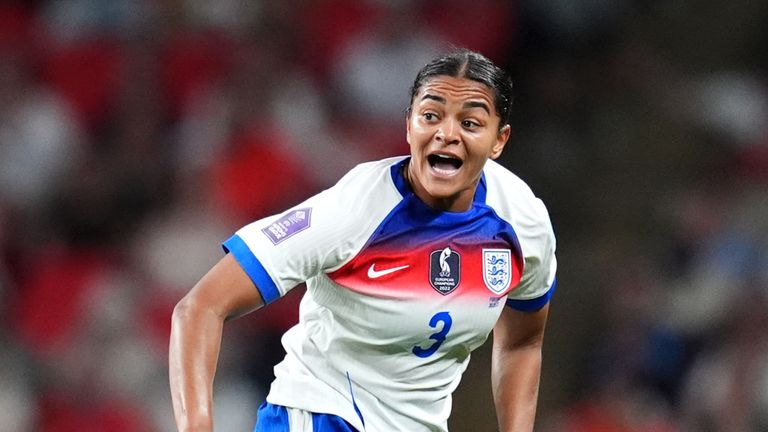
England's Jess Carter stepped back from social media ahead of the final due to a barrage of racist abuse throughout the tournament and last month, a 60-year-old man who admitted sending abusive messages to the defender was sentenced to six weeks in prison, suspended for 12 months.
For Sophia Dunkley, who is expected to be part of England's T20 World Cup squad for this summer's home tournament, staying protected from that outside noise is an important part of maintaining focus on the task at hand.
"Over the last few years, as cricket has come more into the spotlight, it has definitely become a lot more prevalent [social media abuse], in terms of bad performances and bad comments," Dunkley told Sky Sports.
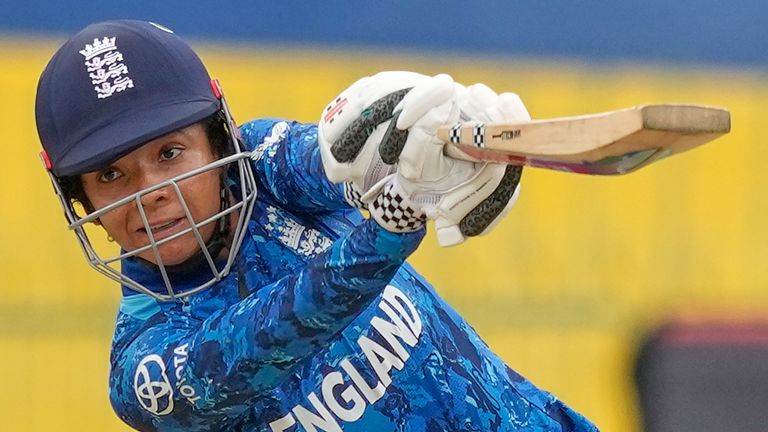
"We're switching on a lot more to how we can just have settings off, so that only the people we follow can comment, or by really making sure we have a close circle around us - and trusting the opinions that matter.
"Sometimes it's really easy to get carried away with thinking about what people think of us, but being really tight knit in our team really helps.
"It's definitely great for people to talk about it more, and normalise that, because it's a transition that women's sport is going through at the moment.
"Social media can definitely be a great tool - for your personal brand, for the team and to promote positive things.
"It's about getting the balance of those things, and also not letting it distract you from what you're trying to do."
Of course for some other sportswomen, they are not fazed by online hate they are subjected to and can ignore the opinions and judgements made by people hiding behind their keyboards.
Charley Hull has long fended off criticism for her actions on the golf course which includes a viral moment of her smoking cigarettes on course at the 2024 US Open.
Currently ranked No 4 in the world, and 10 top-10 finishes in majors - including runner-up at last year's AIG Women's Open - it is not her success that has got people talking online, more her outspoken nature, to which she gives short shrift.
"I don't really care what people think of me. I've always been like that. I've got my opinion, and everyone's in touch with their own opinion. So, honestly, that's just one thing I never really think of, and it doesn't bother me at all.
"I post what I want to post, and I just post those golfing videos as well because I enjoy it. And I just love the game of golf, so if some people don't like it, that's up to them. They're entitled to that, and if not, fair play.
"I just live myself, live my life the way I want to live it. I've always been like that. I do what I want to do, and if people don't like it, they don't like it. And I think a lot of people these days probably end up being unhappy because they always live in an image rather than being true to themselves, where I just want to be true to myself."

For all the momentum behind women's sport, the message from those living it and those closest to it is clear: success should not come at the cost of personal safety, mental wellbeing or identity. As athletes continue to push and perform under unprecedented visibility, the focus must shift from how sportswomen look or behave to what they achieve.
As Evans concludes, it's not about "pointing the finger" and telling people they are "wrong" but: "It's just important to know, we stand together as female athletes and we're not going to tolerate or put up with people saying personal things or people directly commenting on people's appearances, livelihood, how they go about themselves. When you cross that line, that's when we need to bind together."
Hate won't win
Sky Sports is committed to making skysports.com and our channels on social media platforms a place for comment and debate that is free of abuse, hate and profanity.
For more information, please visit: www.skysports.com/againstonlinehate
If you see a reply to Sky Sports posts and/or content with an expression of hate on the basis of race, sex, colour, gender, nationality, ethnicity, disability, religion, sexuality, age or class, please copy the URL to the hateful post and screengrab it and email us here.
Come back on Wednesday morning for the next instalment in the 'Beyond The Noise' series featuring champion boxer Mikaela Mayer.