
Cricket law changes including countdown clock to speed up Tests proposed by MCC
Standard ball for World Test Championship and free hits in Tests also suggested
Saturday 16 March 2019 17:09, UK
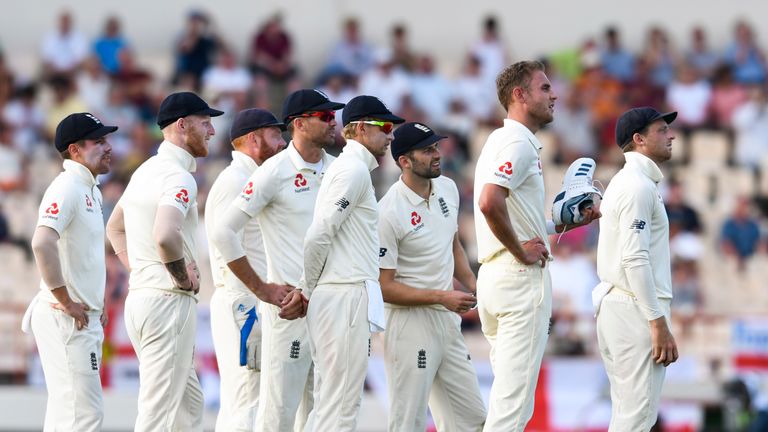
The MCC World Cricket committee has proposed the introduction of a countdown clock to improve over rates and speed up Test cricket.
At a meeting in Bengaluru on March 8 and 9, the committee cited a survey in which 25 per cent of fans from England, Australia, New Zealand and South Africa mentioned slow over rates when asked what the main barriers were for attending Test matches.
Over rates are at the lowest they have been in the 11 years that they have been measured, 13.77 per hour, and in the aforementioned countries, in which seam bowlers dominate, the scheduled 90 overs in a day are often not bowled even after the extra half-hour.
Live Test Cricket


The suggestion from the committee is for the scoreboard to count down from 45 seconds after the umpire calls 'over' with players on both sides expected to be ready to play by the time the clock reaches zero. The time would be increased to 60 seconds if there is a new batsman on strike and 80 seconds for a change of bowler.
If either side is not ready after the time has elapsed, they would be warned in the first instance and incur a five-run penalty every time it happened again during the innings.
The other proposals from the committee included a standard ball for the World Test Championship which will begin after this summer's World Cup. At it stands, the Dukes ball is used in England and the West Indies, India use the SG ball and all other countries use the Kookaburra ball.
They also suggested free hits for no balls in Test cricket, as they are in the one-day and T20 formats, again with the intention of increasing over rates as well as providing extra excitement for the crowd. The idea being that the free hit will provide an added deterrent to bowlers and result in fewer no balls, in the way it has done in ODI cricket.