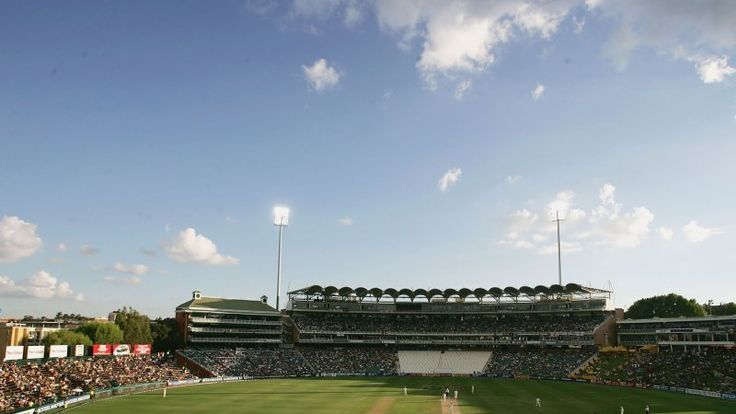
South Africa and New Zealand clash at the Wanderers on Thursday. Tristan Holme gets you right to the pitch.
South Africa and New Zealand clash at the Wanderers on Thursday. Tristan Holme gets you right to the pitch.
Overview
The New Wanderers ground, situated in Illovo, Johannesburg, became the third cricket venue in the city after the Old Wanderers Stadium and Ellis Park (which serves as the city's main rugby union stadium).
The ground was completely redeveloped following South Africa's readmission to international cricket in 1991 and further renovated for the 2003 World Cup, when it played host to the final between Australia and India.
Known as 'The Bullring' for its rotund design and intimidating atmosphere, the Wanderers is part of a greater sporting complex that is steeped in history, although the clubhouse was recently rebuilt after being gutted by fire in 2004.
The new clubhouse is similar in design to the original and contains an excellent stash of memorabilia, while the bar offers some of the cheapest drinks you'll find (R10/70p for a pint).
The ground sports an archetypal South African wicket - hard and dry with plenty of bounce - which often provides lots of seam movement up front. The inclusion of a spinner can be helpful for the second innings but it's rare for a twirler to take five - New Zealand's Matthew Hart and Australia's John Gleeson are the only spinners to do so since South Africa's readmission.
But while the Wanderers is often generous to seamers, the wicket can also be a great batting strip. Undeniable proof of this came in March 2006 when the ground played host to the most remarkable one-day international game in history, as South Africa successfully chased down Australia's world record total of 434 for 4.
While that match was of a freakish nature, it's generally known that if a Test batsman can get past the initial examination provided by the seam and bounce, then there are plenty of runs to be had.
Last time out
In December last year, India achieved their first Test win on South African soil with a 123-run victory in a low-scoring game that was over after just four days.
With play delayed by 90 minutes on the first morning due to a damp pitch, Rahul Dravid's decision to bat first was a brave one. With the groundsman having over-watered the wicket on the previous evening in an attempt to avoid premature cracking in the hot, dry weather, India's old guard of Dravid, Sachin Tendulkar, VVS Laxman and Sourav Ganguly battled conditions with more seam than the hosts knew what to do with.
The result was a first innings total of 249, though it was unclear just how good this score was until Shantha Sreesanth ripped through South Africa's batting line-up, taking five for 40 as the home side were rolled for 84 - their lowest total since England twice skittled them for 72 in 1956-57.
Twenty wickets fell on day two, but the pitch eased on day three and Laxman played a patient innings of 73 that took the lead past 400 and the game beyond South Africa.
Sreesanth claimed three of the first four sticks in the second innings, finishing with match figures of eight for 99 and the man of the match award, before Anil Kumble staved off a late fightback with the wickets of Shaun Pollock, Andre Nel and Ashwell Prince, the latter falling three runs short of his hundred.
New Zealand's last visit
South Africa claimed a four-wicket victory inside three days in early May 2006, chasing down a 200-plus fourth innings target for only the fourth time in their