
Hoy and mighty
Sir Chris Hoy spoke to our Sky Academy Sports Scholars about how he achieved his dream of becoming Olympic champion through hard work, patience and belief...
Friday 24 March 2017 13:55, UK
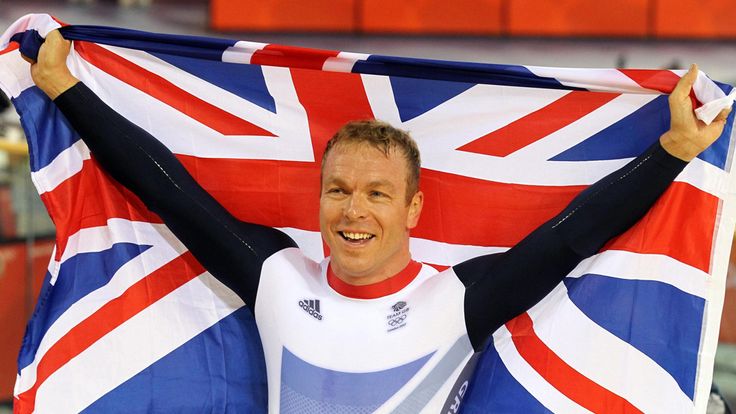
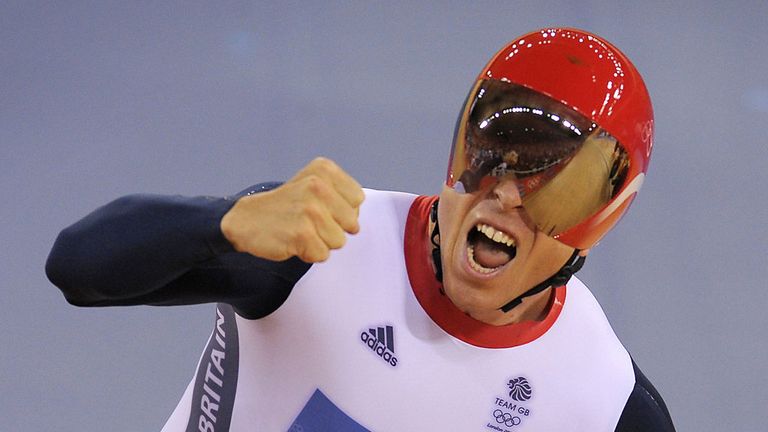
After a career that saw him pick up eleven world championship gold medals, six Olympic gold medals and two Commonwealth gold medals – not to mention the countless silvers and bronze that he also accumulated – there are few people better qualified to try and explain what it takes to get to the very top of your sport than Sir Chris Hoy.
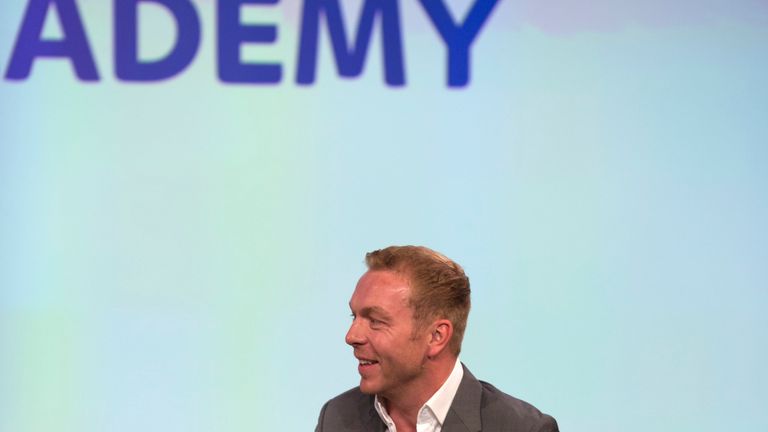
So when the track cycling legend spoke at an event to mark a year of the Sky Academy Sports Scholarships programme, it was no surprise that each of the young athletes were hanging on his every word.
In a question-and-answer session with Sky Sports presenter Di Dougherty, Hoy revealed that he never really envisioned becoming an Olympic champion but rather set it as an ultimate goal - a dream. Now Britain’s most decorated Olympian, that dream came true, but only, he insisted, as a result of hard work, dedication and patience.
“I remember at my old cycling club in Edinburgh, when I was 14, I was one of maybe 10 athletes," Hoy recalled. "My coach Ray Harris wanted to introduce the process of goal-setting and asked each of us to write on a piece of paper our long, medium and short-term goals.
“Your long-term goal could be anything you want, your ultimate dream in the sport, medium term for the next four years and short term was the aim for this season. So we all went away and wrote these down and I was the only person who wrote down that I wanted to be Olympic champion.
“I wasn’t even the best in my group at the time, so when we read them out I think I got mocked at the time by my team-mates. But the point was I didn’t think I was going to be Olympic champion, but I thought if you get the chance to set a dream or a goal, why not aim high?
“Ray took me seriously and he said that if it was what I truly wanted to achieve, I needed to write a plan of stepping stones from where I was to where I wanted to get to.
“Then once I’d done that, I didn’t have to worry about how far off the ultimate target was, all I needed to do was focus on the short-term target, the interim target, and look at the next step. As long as you have a solid plan, a good programme and the people to support you then that is all you need to worry about.
“It’s like a hurdles race - you don’t worry about the last hurdle when you’re approaching the first hurdle, and likewise, once you’ve cleared that hurdle you don’t worry about what’s behind you.”
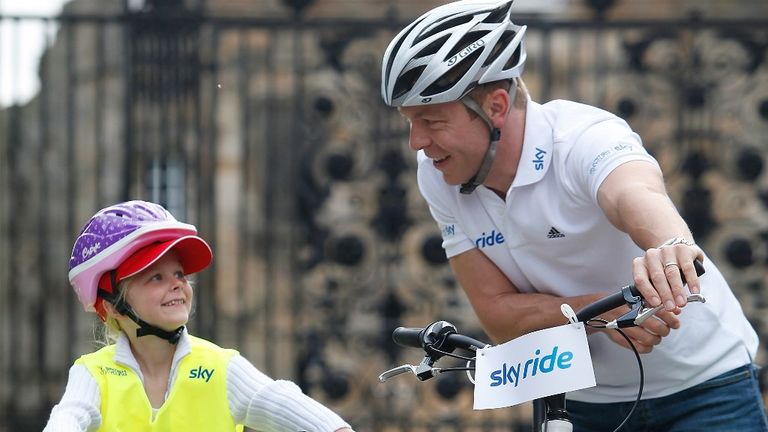
One thing that Hoy believes can help the Scholars to clear those initial hurdles that bit quicker is having a mentor, something each of the athletes benefit from as part of the programme.
“It’s fantastic just to think of the opportunities that the Scholars have,” he said. “I was very lucky in my career to have a number of people who fulfilled the role of mentor, from my dad in the early years to my team-mates Craig MacLean and Jason Queally.
“They were people who I believed in, who I trusted their opinions, who I listened to and sometimes when you need a telling off or a clip round the ear, they’re there to do it and you respect them for that. You listen to them.
“Some people can say things that are negative and might make you question yourself but I think as long as you’re listening to people that matter to you, they’re the opinions you take notice of.”
Hoy also revealed that his approach saw him pay little attention to his rivals as he prepared for competitions. Instead the 38-year-old from Edinburgh remained focused on the aspects under his control.
“I always tried to approach every target, every goal, every race with the aim of arriving on race day feeling that there was nothing else that I could have done, within my powers, to be in the best possible shape on that day,” he said.
“I never worried about my rivals because I had no control over what they were doing and if somebody asked if I was confident I was going to win then I’d say, ‘I don’t know’, because I didn’t know. All you know is what you are ready to do, so my aim was to have no regrets, knowing that I’d trained as hard as I possibly could.”
The person Hoy credits with helping him to be at his optimum mentally each time he competed is psychologist Dr Steve Peters, who worked with British Cycling while the Scot was at the peak of his powers.
However, when it comes to the person he believes most helped him to become an Olympic champion, there is no hesitation as he names Shane Sutton. The Australian was recently promoted to technical director at British Cycling, but in Hoy’s time he held the position of head coach, and was unique in the way he went about fulfilling that role according to Hoy.
“Shane Sutton is a one off," Hoy enthused. "He is unique, you’ll never meet two Shane Suttons. I would say he is a mix between Rocky’s coach, Micky I think it is, and Crocodile Dundee. He’s always in your face, he’s your best mate, he’s your worst enemy, he is always on at you the whole time - he’s always looking out for you, but he is always on your case.
“His attention detail is incredible, he demands 100 per cent of you - that is all he wants. If you are giving your best, truly your best, not 99.9 per cent but 100 per cent in every second, then he will support you and he will back you, but if he thinks you’re not doing that then he will be all over you. We’ve had arguments over the years, we’ve had ups and downs, but I firmly believe that without Shane’s support I wouldn’t be an Olympic champion now.”
Despite the genius of Sutton, it is clear that Hoy himself was an incredible talent, not that he would describe himself as such and it was only after seeing a team-mate win Olympic gold that he believed he could reach that level.
“I didn’t think I was going to become an Olympic champion, I didn’t think that I was special or had a unique talent,” Hoy said. “I always thought Olympic champions were a different breed or born into greatness and I never saw myself being in that sort of bracket.
“It was only when I saw Jason Queally, my team-mate, winning gold in Sydney in 2000 that the penny dropped. That was just Jason, my team-mate, I’d been training with him for five years, he’s an ordinary bloke but he’s worked very hard and he’s become an Olympic champion. No matter what happens for the rest of his life, he has got an Olympic gold medal to look at and I thought, ‘If he can do it, maybe I can do it'.”
The message to the Scholars was clear: there is no magic formula to becoming an Olympic champion and there are no guarantees, but if you put in the hard work and believe in yourself, the chances of success are far greater.
The Sky Academy Sports Scholarships scheme is helping 11 young athletes fulfil their potential through a tailored programme of support including funding, media coaching, mentoring and wider developmental support.