
Master class in touring car racing
Gordon Shedden coaches our reporter around Silverstone
Monday 20 October 2014 17:08, UK
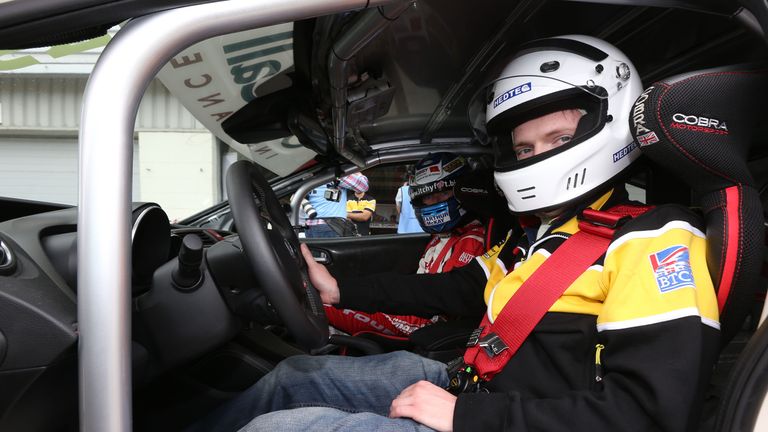
Everyone learns to drive at some point in their lives. My first licence letting me take a tractor onto the road just after my 16th birthday, followed by a car a year later.
Over the last 12 months I've been going through the learning process again after starting my journey into motorsport by passing my ARDS test and gaining an MSA National B licence at the tail-end of 2013.
Track time, though, has been limited in 2014 due to the one thing that affects drivers from bottom rung of motorsport all the way up to F1 itself – budget!
With a tin-top seat being eyed for next year, Dunlop offered me a masterclass in touring car racing with 2012 BTCC Champion Gordon Shedden of Honda Yuasa Racing. It was an opportunity not to be missed - and an invaluable eye-opener from start to finish in the art of touring car racing.
“Sometimes the common misconception is that to go fast is either flat-out or fully on the brakes,” the Scot explained as we awaited the greenlight at the end of the Silverstone pitlane.
“It is more about feeling what sort of grip level you have available and ultimately it is back to day one at race school – how you can carry the most amount of exit speed.”
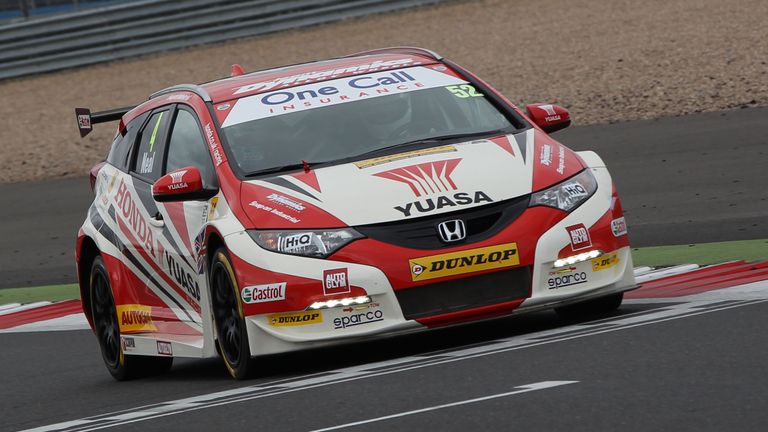
Around the Silverstone National Circuit exit speed is critical with the track essentially forming a triangle of long-straights. The constant temptation is to maximise your time at speed on the straights by leaving your braking as late as possible. But get it a fraction wrong and the time loss by running too deep is much greater than having braked too early. It sounds counter-intuitive but according to Shedden it is almost better to be slow in as long as you are fast out.
“There is a happy balance, you’ve still have to carry plenty of speed in, but I think to get it right is how you blend that middle part of the corner,” the Honda driver explains.
“You have to a lot going on, you have to carry as much speed in as you can, you’ve got to change direction, and you’ve got to get it out. So it is using all the tools that are available to you, the brake isn’t just a switch – it is not full brakes or nothing – and it is the same with the throttle as well, there is a lot in between and that is where the driver can make a difference.”
That is something that can is particularly useful to utilise as you can control the pitch and yaw of the car through a corner and it also has a dramatic impact on oversteer and understeer.
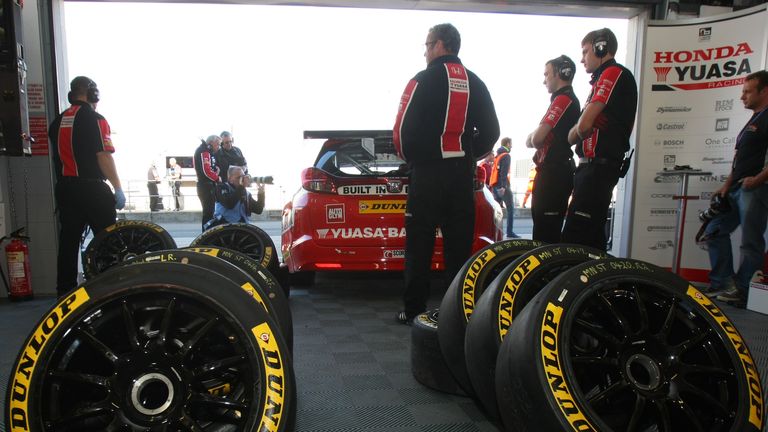
We are out on Dunlop’s slick BTCC tyre – a new experience for me having only previously driven a saloon car on road tyres around a race track.
“There is a very big difference,” explains Shedden. “In terms of learning I think the road tyre is probably better as the grey area is that bit bigger – on a road tyre you have grip and then there is quite a big grey area where you start to lose some grip, but not all grip, before you lose everything.
“But on the slick tyre the margin for error is much smaller, so okay ultimately it has more grip, but the grey area is a bit smaller so it is easier to get it wrong.”
A key thing to manage with the slick tyre is getting them up to temperature. Thankfully some autumnal sun was breaking through at Silverstone with air temperatures edging towards 20c making my task slightly e