
Three-car teams? F1 has had them before, but things were different back then
It's an option on the agenda after Caterham and Marussia entered administration. But what does it say about the sport?
Thursday 30 October 2014 12:46, UK
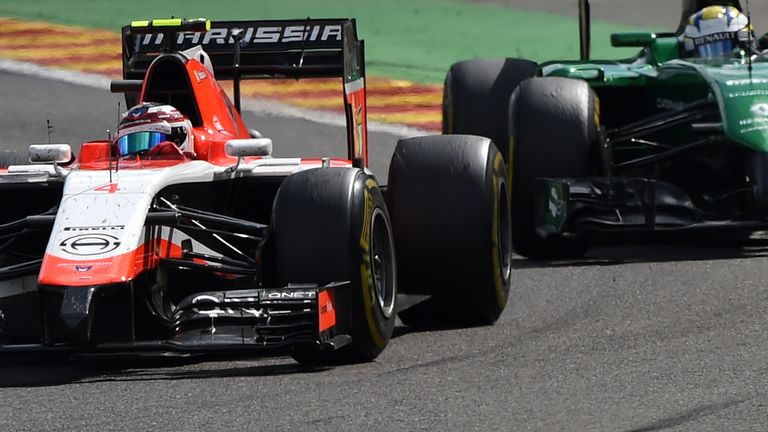
Three-car car teams? Customer cars? They’ve appeared on the agenda for a good few years now, but they’ve never really stayed there too long. Yet when two teams go bust in the space of four days and it’s seen as a solution, then all of a sudden you’ve got to take the idea rather more seriously.
Both are nothing new. Sixty years ago, Mercedes were entering as many as four cars per race while BRM stretched as far as five in the early-1970s. Meanwhile, the sale of customer cars produced some real ‘David and Goliath’ moments: Stirling Moss beating the might of Ferrari in an old, underpowered Lotus at the 1961 Monaco GP, for example.
That car was entered by Rob Walker, who was also the last private entrant to win a grand prix in 1968. Fields were low around that time too, but the answer came via the simple expedient of bolstering the grid with Formula 2 cars.
Live Formula 1


F1 was a marginal sport then, with less money floating around and so fewer vested interests. Looking back, the people with most to lose were the drivers themselves: in 1968, four were killed between April and July alone. The arrival of sponsorship that year signposted the future but, as we’re currently seeing, commercial imperatives create different sorts of problems.
The template for two cars-per-team came with the signing of the first Concorde Agreement at the start of 1980s, which also brought an end to the use of customer cars. Of course, the ensuing period has seen F1 turn into a money spinner but a good chunk of its revenues (estimated in total at around $1.5 billion per year) aren’t re-invested in the sport.
That fact has exacerbated a situation prompted by the arrival of manufacturers in the last decade. Those teams best-placed acquired massive resources during this era and they’ve fought tooth and nail to hold on to them, even though the recession triggered by the 2008 banking crisis prompted the likes of Honda, BMW, Renault and Toyota to withdraw from F1.
Red Bull (who took over Jaguar in 2005) are an exception thanks to the deep pockets of Dietrich Mateschitz while, after Brawn GP’s glorious season in the sun, Mercedes moved into Honda’s former HQ in Brackley. Yet with sponsors struggling to take up the slack others, like Sauber, haven’t been quite so fortunate.
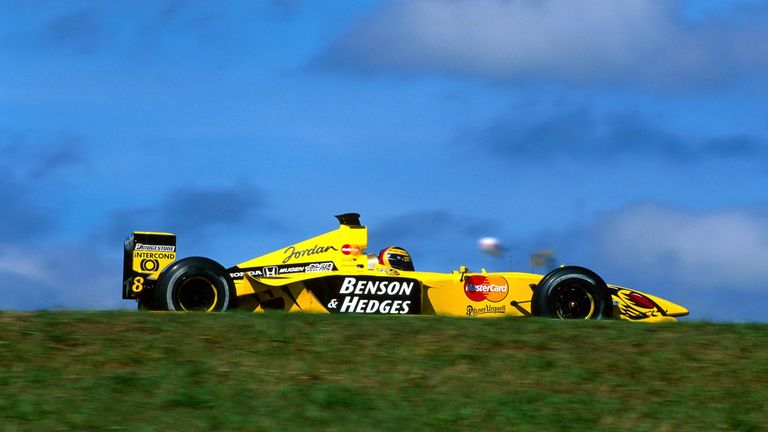
With such a big gap forming between the haves and have-nots, F1 now has its own social mobility problem. As recently as 1999 a team like Jordan, which was formed eight years previously, could take on the big boys and win races. Force India's successes don't compare.
In this context, Caterham and Marussia have always been on a hiding to nothing. Along with HRT (who disappeared at the end of 2012) they appeared in 2010 having been promised they could compete to a £40 million budget cap, suggested by then FIA President Max Mosley.
The other teams saw it off, however, and instead agreed to police costs themselves. But they always had far more money to spend than the newbies and anyway, once their rare display of unity – as FOTA – started falling to pieces, spending levels started climbing again as the economy started to recover.
Times are still tough for most, though, and with that in mind the FIA announced its intention to introduce a budget cap in 2015. But those plans didn’t get far: the big teams vetoed them in April.
It’s an outcome that demonstrates just how F1 can’t seem to help itself: that the biggest teams, under the guise of the Strategy Group, have the power to block rule changes they don’t agree with.
The Strategy Group was formed last year as a result of a deal between the FIA and Bernie Ecclest