
Houston Rockets have defensive concerns that must be addressed
Thursday 7 November 2019 11:09, UK
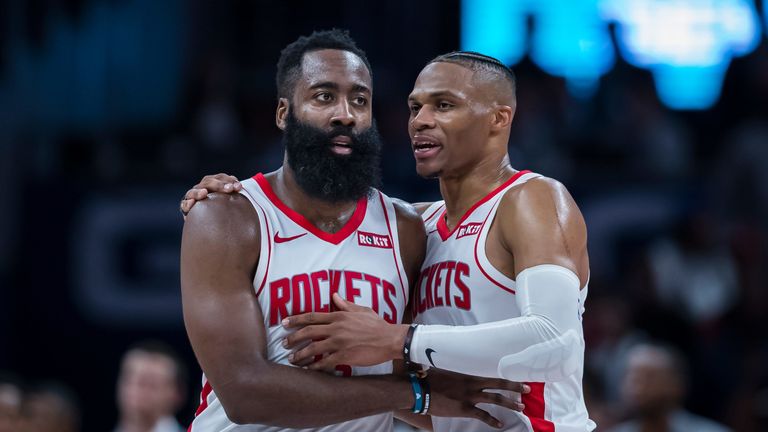
The Houston Rockets own the NBA's fifth-best offense and the third-worst defense. Mark Deeks identifies three defensive areas that have contributed to their unconvincing start to the season.
With their big move to acquire Russell Westbrook from the Oklahoma City Thunder over the summer, the Houston Rockets staked their claim to the soon-to-be-vacant Western Conference title, and aimed to separate themselves from the chasing pack with the sheer superstar power of their backcourt.
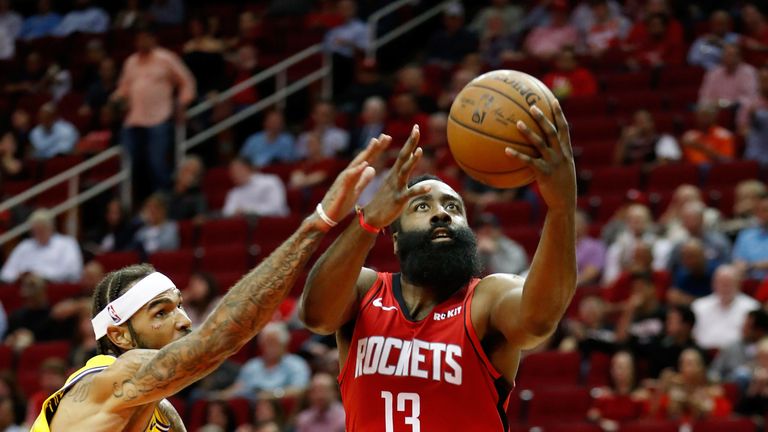
Westbrook and James Harden had played together at Oklahoma City for some years, albeit admittedly some years ago now, and it was hoped that their superior cohesion when compared to the Harden and Chris Paul pairing of last season would see the team find the extra gear that was lacking last year, as well as reduce the very heavy reliance upon Harden's individual production that eventually ground him down.
Eight games into this season, the Rockets now sit with a 5-3 a record after last night's victory over the same Golden State Warriors team that have left the door open in the West. That is enough for a share of the provisional fifth seed in the conference, tied with the Utah Jazz and LA Clippers, half a game back of the upstarts Dallas Mavericks and Phoenix Suns.
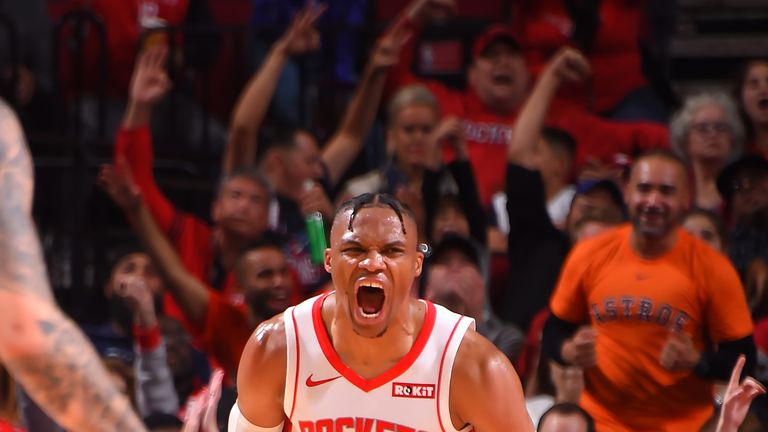
Not a bad start, results-wise. However, process matters, and it has not been the most convincing 5-3 start.
A comfortable win over the short-handed Warriors has been offset by a loss to the competitive Milwaukee Bucks, and an impressive season-opening win over a strong Miami Heat team was offset by a 29-point drubbing in the return fixture.
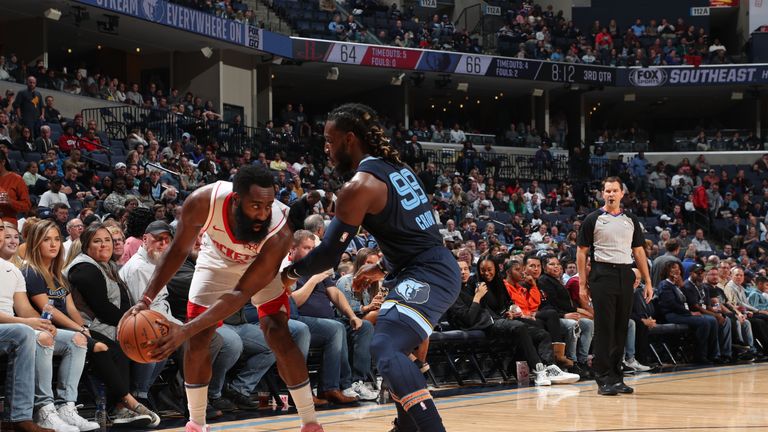
Narrow victories over lottery teams in the forms of the New Orleans Pelicans, Washington Wizards, Memphis Grizzlies and the Thunder have not hugely impressed, and in every game thus far, the Rockets have conceded at least 100 points, normally much more than that.
Defense has without question been the end of the court on which their concerns lie. The Rockets are third in the league in points scored but second-last in points per game, are ranked fifth in the league in the more advanced offensive rating category but are third-last in defensive rating, and although they are second in pace, that goes both ways. They take a lot of good field goal attempts early, but they give a lot of them up, too.
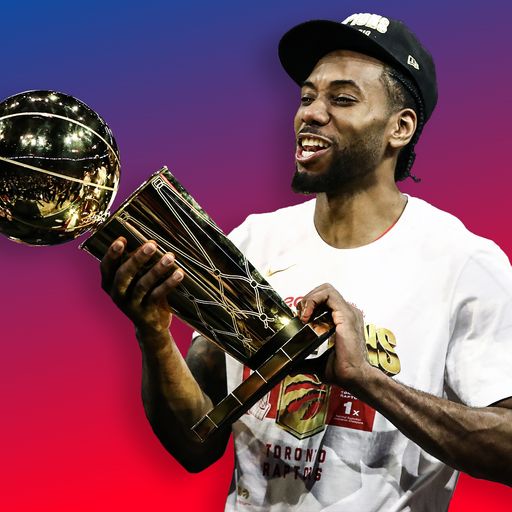
There thus follows three observations about the Rockets' defense and what has seen them get off to such a slow start on arguably the more important end.
Harden and Westbrook
It has long been known that both the star guards are imperfect defenders. Harden has done work in recent seasons to repudiate his reputation for being a particularly lazy defender, but getting better has not made him particularly good. While his man-to-man defense has improved remarkably, he still is prone to lapses and does not exhibit the same positional Instincts on this end like he does on offense.
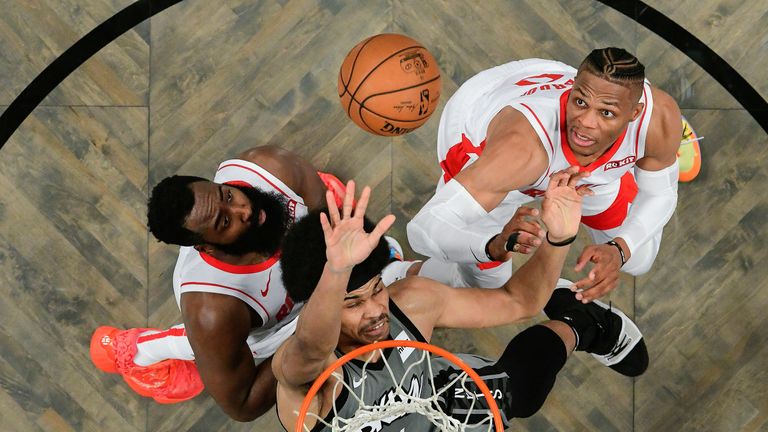
Meanwhile, Westbrook is a known gambler. His basic numbers of 1.8 steals and 0.7 blocks per game look good from the point guard position, but they come about due to his large volume of attempts at jumping the passing lanes, shooting the gaps and forgoing sound positional defense in pick-and-roll and ball-reversal situations in favour of trying to win live ball turnovers.
When it goes well, it can mean two easy points in transition. When it doesn't, it can very readily mean an open three-point shot to the opposition. And this has been happening a lot.
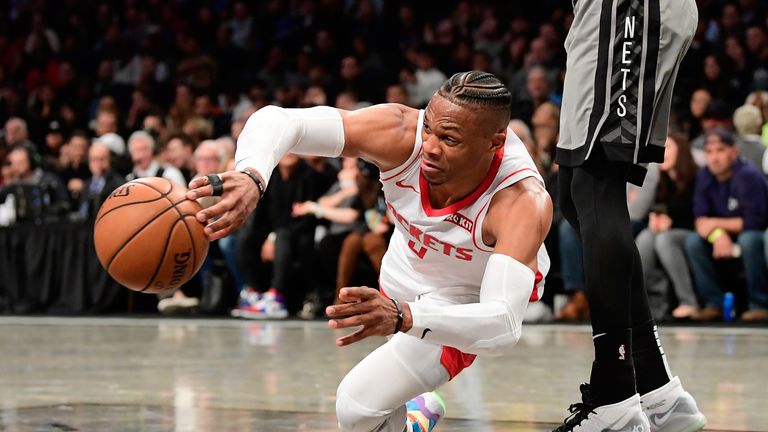
Westbrook also gets caught on the perimeter, be it with his positioning and footwork in defending opposing ball-handlers or in being caught one step slow by cutters to the rim off the ball. His ability to catch up to the play and chase them back down for a block, while impressive for his position, only occasionally works.
Given that the pairing average 35.3 and 33.2 minutes per game respectively, this means that the majority of every game is spent with a defensively sub-par backcourt, and primary reserves Eric Gordon and Austin Rivers (who somewhat impressively has not recorded a steal or block all season yet) are not bucking the trend either.
Defending the three
By far the biggest area of concern in the Rockets' early-season defense so far has been their opponent's three-point shooting.
Houston are giving up a league-worst 40.3 per cent from outside, and although the particularly cyclical nature of shooting should see that number progress to a more normal one over time it is not as though they have simply gone up against white-hot opponents for two weeks, or players hitting everything over outstretched arms.
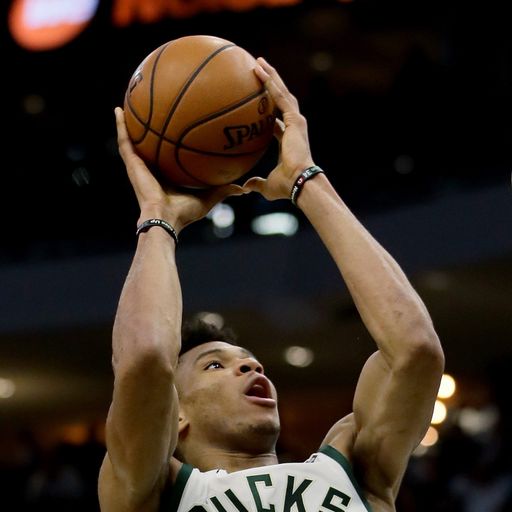
Instead, the last-placed positioning in the league is a fair representation of quite how many open shots they have given up from the perimeter.
Successfully contesting three-point shots is more of a function of strong team defensive play than individual efforts, and it is the Rockets' problematic rotations, switching and communication that have cost them thus far. All too often, a simple pick-and-roll action has led to an open three-pointer one pass away as team-mates fail to communicate who goes where.
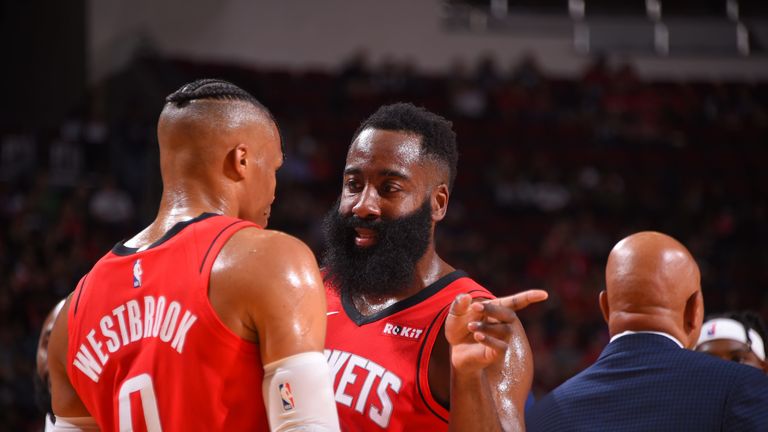
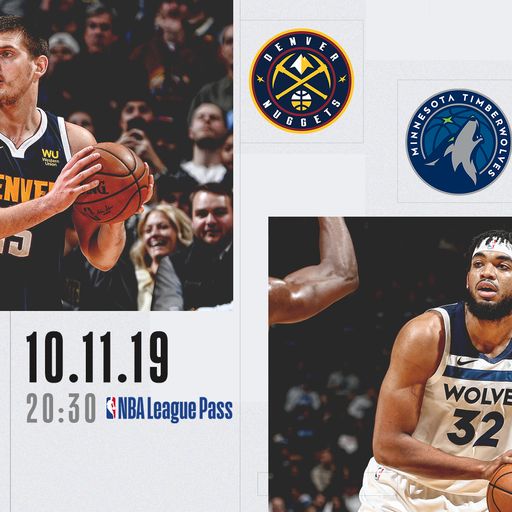
Particularly jarring in this respect is that, of the seven leading minute recipients on the team so far this season, only Westbrook is new. It would therefore follow logically that because of the value of continuity in an era of high roster turnover, as explored in our pre-season look at the Denver Nuggets, the Rockets should not have played with such an apparent degree of unfamiliarity like they have to date.
But they have, and having given up 20 three-pointers to the Wizards and 18 to the Heat, they have shot themselves in the foot.
Personnel
Assembling a veteran bench unit of Thabo Sefolosha, Tyson Chandler and Nene, to go along with promising second-year defender Gary Clark, was supposed to add defensive options to the team in anticipation of some of the above. Yet the impact any individual can make is limited, especially when those players are not even heavily featured in the rotation.
Sefolosha has averaged only slightly over 11 minutes per game plus far, and Chandler has barely averaged over six. Clark and Nene meanwhile have not played at all, and as above, every minute in the backcourt is being taken up by a below-average defensive player, something particularly highlighted by the defensive decline of Eric Gordon.
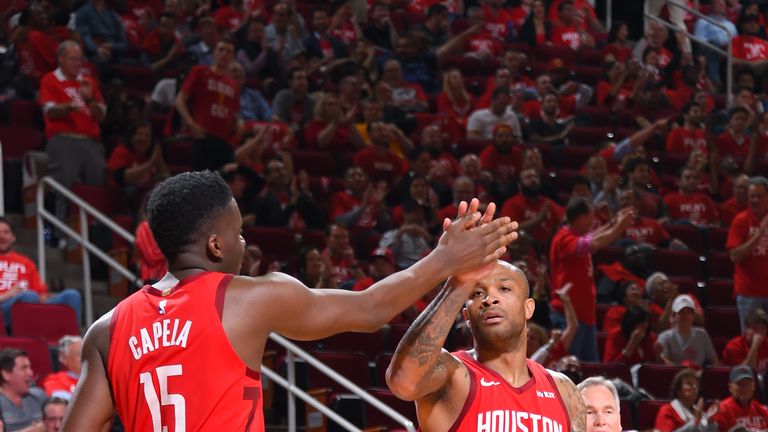
PJ Tucker remains the second-leading minute recipient and primary frontcourt option, able to play across the front line with an enviable versatility, and Danuel House is doing fairly well as a Trevor Ariza replacement alongside him.
Yet only being able to play three decent-to-good defenders at any one time, combined with Clint Capela's role in the rotational breakdowns that is proving particularly costly at the center spot so integral to the switching scheme they are looking to operate, is proving particularly problematic for the above.

The shooting given up will almost certainly revert to closer to the mean, at least slightly. Harden and Westbrook should cohere better as a pairing on both ends of the court more over time as well, particularly in late-game situations. Defensive communication and cohesion should also develop as the long regular season goes on.
Yet this Rockets team is not built for defense, and, with an average age of 30.2 years that is the oldest mark in the NBA, they do not figure to handle the inevitable wear-and-tear well either, particularly if they are having to chase around to cover for each other so much.