Dallas Mavericks are firing on offense despite three-point inefficiency
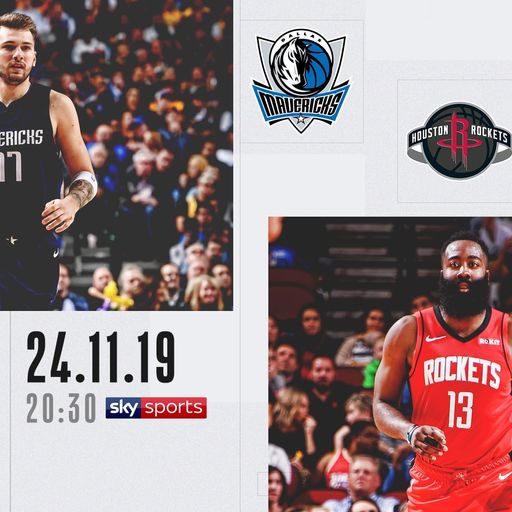
Watch Mavericks @ Rockets via a free live stream on Sky Sports' website, app and YouTube channel on Sunday at 8:30pm
Sunday 24 November 2019 10:26, UK

The Dallas Mavericks have struggled with three-point shooting thus far yet own the NBA's top-rated offense. How have they achieved this and can they get even better?
Live NBA: Dallas @ Houston


On the season thus far, the Dallas Mavericks have an 8-5 record and the best offensive rating in the NBA. They made two big splashes last season, one at its outset and the other halfway through, in order to put together a pair of unicorns in the form of Luka Doncic and Kristaps Porzingis. And even after only 13 games together, the potential of that duo is fast becoming a highly palatable reality.
Having missed as-near-as-is a year and a half of action, Porzingis is still looking rusty on the court. His basic averages of 18.1 points, 8.9 rebounds and 2.3 blocks per game still impress, but he is averaging only 40.7 per cent shooting from the field, being particularly inefficient from the mid-range areas.
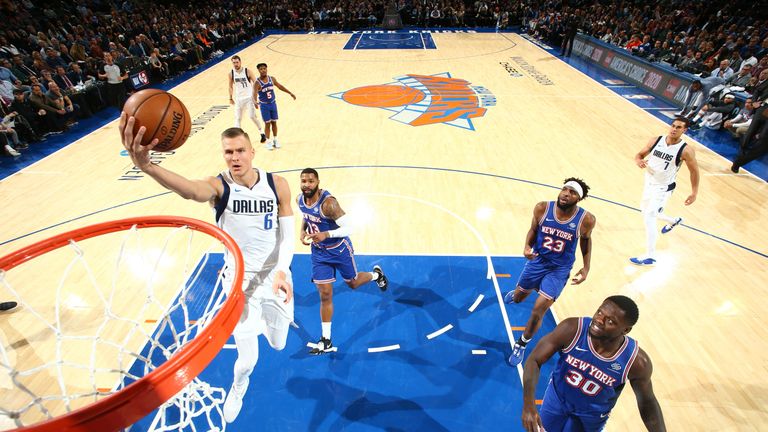
Porzingis is not being asked by the Mavericks to create from the elbow areas nearly as much as he was with the New York Knicks prior, instead being asked to finish that which Doncic creates for him from either above-the-break three-point range or right at the rim, yet his rhythm on the court seems not to be quite there yet, which is understandable after such a long absence and such a serious injury.
Doncic, by contrast, is doing historic things. The fact that Russell Westbrook has averaged a triple-double for three consecutive seasons should not mean this benchmark - once considered almost impossible to achieve - can now be taken for granted.
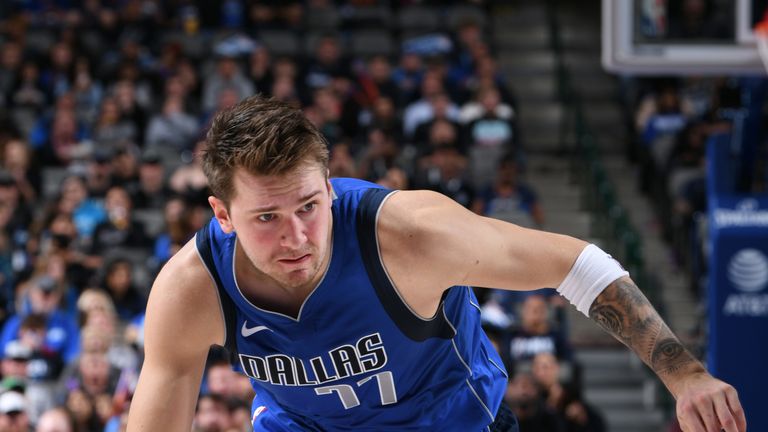
With averages on the season thus far of 29.9 points, 10.4 rebounds and 9.7 assists per game, with seven triple-doubles in 13 contests, Doncic is almost there himself. He is doing all this at the age of only 20. For comparison's sake, when Westbrook was 20, he averaged 15/5/5 and was not the tour de force he subsequently became.
Discounting the 11 points per game average by veteran reserve point guard JJ Barea - who has only played one game - only one other Maverick averages double figures; young veteran wing Tim Hardaway Jr, who averages 10.2 points on 10.1 shots per game, shooting a .463 true shooting percentage (TS%) that is amongst the league's worst. Volume-wise, the Mavericks' offense and the protagonists within it are not the league's best.
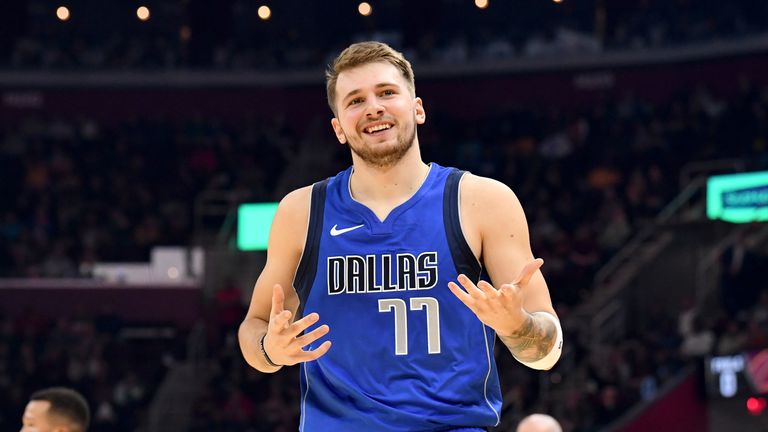
In terms of efficiency overall, though, they certainly are. Seven rotation players (Dwight Powell, Delon Wright, Doncic, Justin Jackson, Maxi Kleber, Seth Curry and Dorian Finney-Smith) are shooting a. .584 TS% or better; for the sake of comparison, the league average is .555.
The Mavericks are doing all this despite not being a good three-point shooting unit. They are only 23rd in the league in the category normally most associated with efficient scoring in modern basketball, and despite having the world's second-best passer to the corners in Doncic, behind only LeBron James.
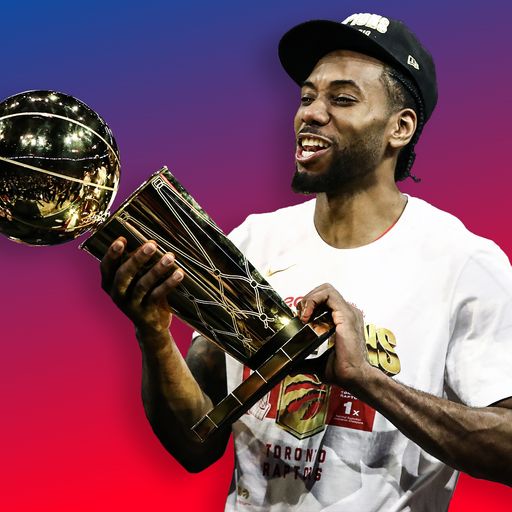
It is not through a lack of trying. Dallas takes the third-most three-pointers per game in the league behind only the Houston Rockets and Milwaukee Bucks, two pioneering offensive units with MVP talents. The quality of those three-point looks, however, has not always been the best.
With 12.0 of them a game, the Mavericks take the fifth-most three-pointers off the dribble in the league, but hit them at the fifth-worst percentage (only 28.2 per cent). Conversely, they hit 36.5 per cent off their catch-and-shoot opportunities from outside, a league-average 15-best mark.
Doncic as an individual has been taking a lot of these more difficult attempts; his step-back jump shot has always been a trademark weapon, but never a particularly efficient one, even back in his European career, and although his desire to kick to the open man when faced with the double and triple teams he is now getting on the perimeter remains the primary option, his own shooting when that option is not available to him has not been there.
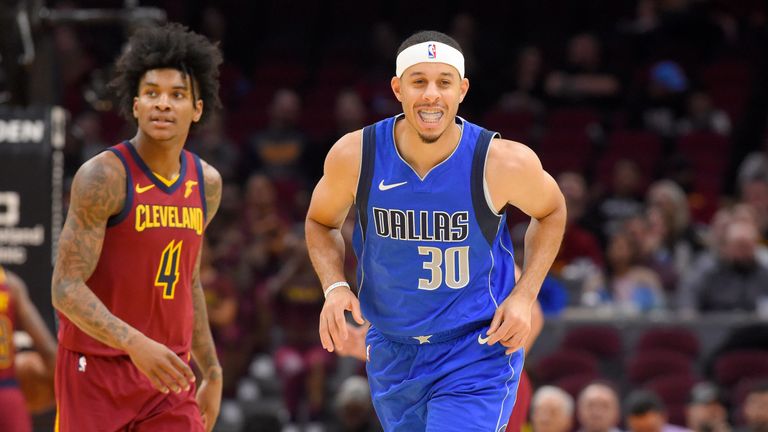
Alongside him on the wing, Hardaway Jr is gunning up attempts in any slither of space, despite having never been a good outside shooter in his career. He has always been a volume scorer with mediocre efficiency, and with that efficiency now in the tank, his offensive aggression is hurting the team.
In anticipation of the need for shooting and the lack of it on the incumbent roster, the Mavericks brought back Curry this summer, who has been decent if streaky, and Kleber continues to improve his range in the frontcourt.
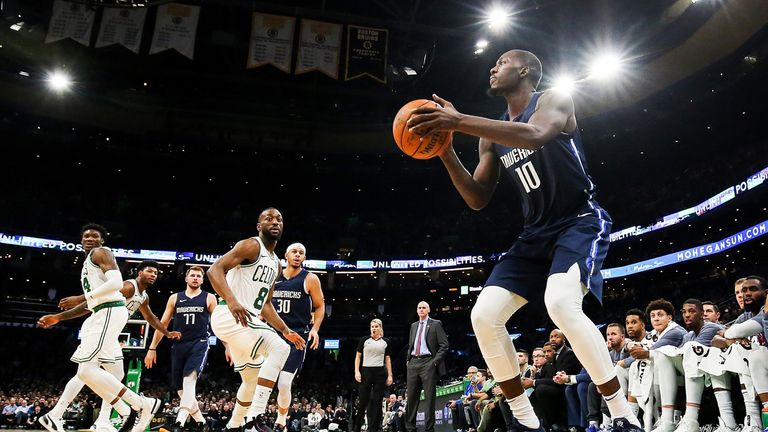
But with Wright (a player specifically targeted this offseason due to his ability to cover the positions defensively that Doncic plays offensively) always being a below-average shooter in the backcourt, Finney-Smith still being limited to streaky corner attempts, Jalen Brunson being the rare type of point guard who prefers to operate on the baseline than from the three-point line, man-mountain Boban Marjanovic best suited to living in the paint and Powell never having realised his own stretch shooting potential yet, it is not a roster ideally constructed for outside shooting.
Which is somewhat at odds with the fact that the offensive schemes are designed for it.
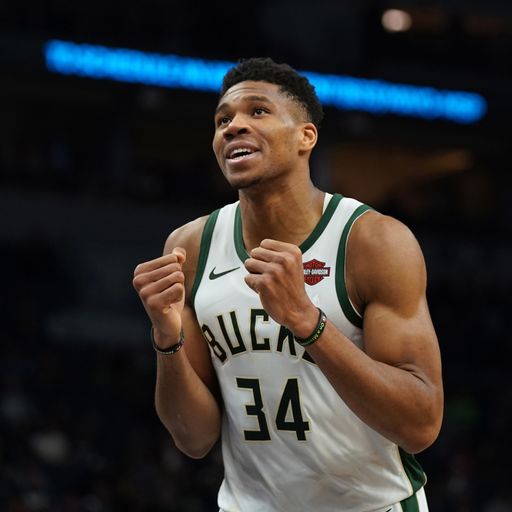
Several successive seasons of high roster turnover combined with the endless line-up tinkering of head coach Rick Carlisle - in their 13 games thus far, the Mavericks have started 10 different players, and Hardaway and Justin Jackson will surely get their chance soon - have not led to the kind of continuity around which consistent offensive principles are usually found.
What the Mavericks do want to do however is move the ball, set screens, attack defenders in space and kick to the perimeter from there.
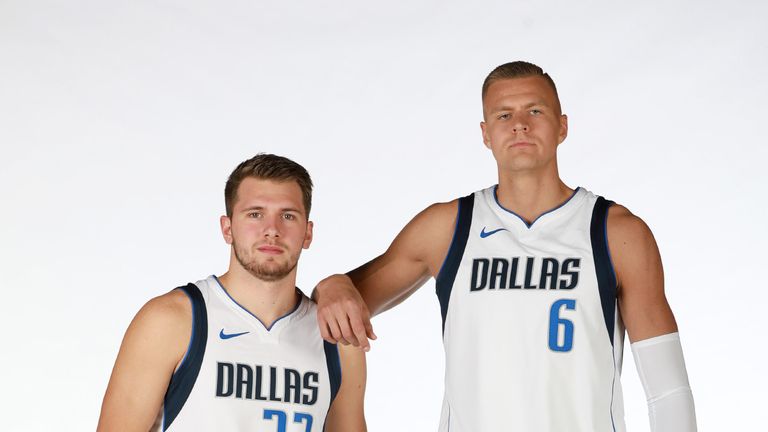
This should, in theory, chime well with the pairing of Doncic and Porzingis, both of whom play a spread game facing the basket. Porzingis will never have the core strength to be a post player, nor seemingly does he have the mentality to want to be one, and he should be catered for accordingly. With Doncic as the ideal modern shot-creating forward, the pieces are in place for a modern spread offense of some calibre.
While the three-point shooting has not yet been there, the rest of it has. The Mavericks lead the league in field goal percentage on drives, and in also being fifth in the league in potential assists, they (and Doncic in particular) are passing incisively off those drives where required.
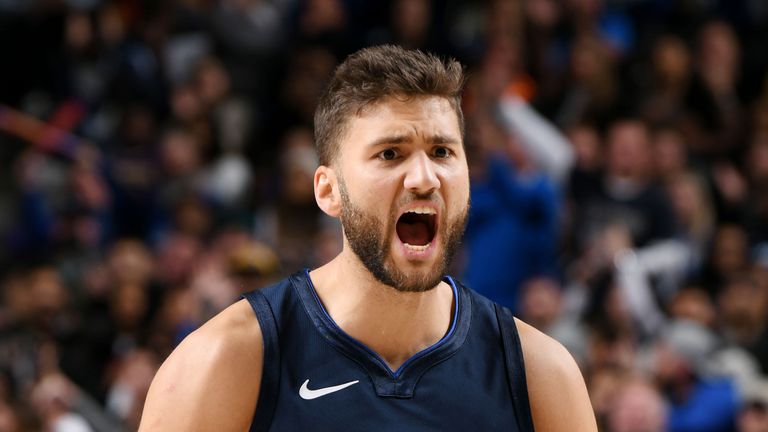
Driving befits spacing, and spacing befits driving; the volume of three-point shots and the fact that the team are always running at least four-out line-ups - and at times a full five-out with either Porzingis or Kleber at center - means opposing defenses have a lot of areas of the court to cover.
With such an excellent playmaker on the move as Luka, the pieces of the puzzle bode well offensively, so long as they can find enough shooting on the wing. Thus far this season, that has not been the case, but there should be no great urgency.
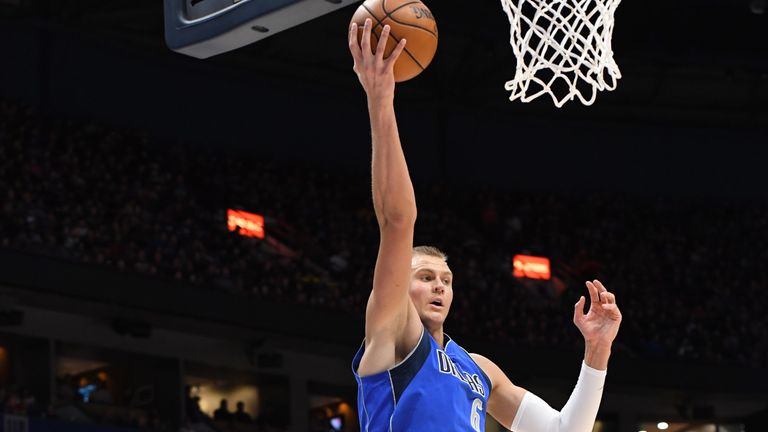
Even if the Mavericks as constructed this season do not realise their shooting potential and thus do not hit the 50-win mark that might otherwise be possible, this is now a shooting league, and players around the NBA will have taken note of the looks that Doncic is creating.
Despite their two big moves over the last 18 months and the relative lack of assets it has left them with, the Mavericks as constructed are far from the finished article; there is work to do with the roster, particularly at the swingman spots. They may not have elite spot-up shooting threats other than Seth Curry and the very rarely-used Ryan Broekhoff. But if they continue to play with such great offensive efficiencies as they have done this season, they will put themselves in the minds of three agents the world over.
In tandem, the Mavericks have both embodied and run counter to modern orthodox principles. The NBA today is about playmakers with size, shot creation and spacing at all positions rather than being reliant on post-up muscle or point guard ball dominance, and no pairing has better size than Doncic and Porzingis.
In taking a high volume of three-point attempts, the Mavericks require every area of the court to be defended. As constructed, they have not hit those shots.
And yet they have the NBA's best offense anyway.