
Exclusive
It’s a game-changer: How inclusive kit and athlete action are breaking down barriers for girls and keeping them in sport
In final part of our 'Beyond The Noise' series we look into how a lack of kit options has opened our sportswomen to unprovoked social media abuse but now things are changing to ensure athletes' voices are heard and one big barrier is being broken down to keep girls in sport
Thursday 16 April 2026 15:29, UK
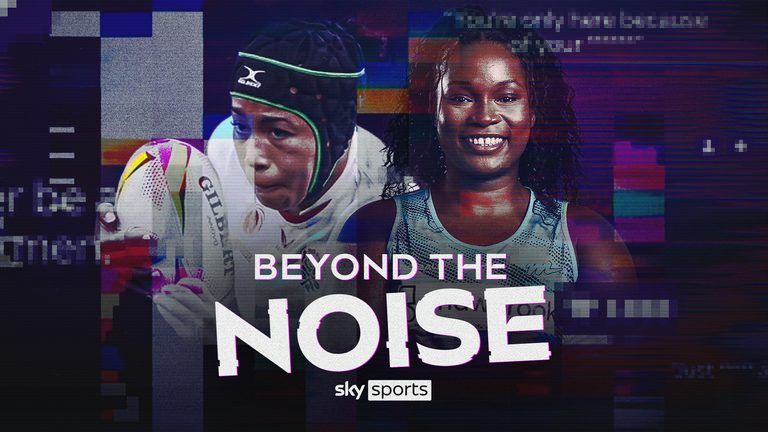
Nearly two thirds (64 per cent) of girls quit sport by the age of 16. It's a stark statistic - and one that raises an uncomfortable question.
When so many sportswomen are still expected to compete wearing kit that doesn't fit, doesn't flatter and doesn't make them feel comfortable, is it really any surprise young girls are opting out?
For female athletes, the issue goes far beyond aesthetics. Ill‑fitting kit can magnify insecurities, fuel anxiety and, in some cases, trigger online abuse - criticism aimed at bodies, not performances, and over clothing choices they have no control over.
- Social media abuse, stalking and death threats: The dark side of women's sport
- Mikaela Mayer: People feel they have the right to trash talk to you
- 'It shouldn't matter how you look' - The impact of body image pressures
- Beau Greaves has shifted darts beyond tired 'Battle of the Sexes' narrative
But change is finally gathering pace.
Athletes' voices are now being heard and manufacturers and governing bodies are moving with the times. Inclusive kit choices are being introduced, traditions are being challenged and the hope is that the troubling drop-off highlighted by Women in Sport research just two years ago can be reversed.
For England Netball international Razia Quashie, the impact of those changes is already clear - both for herself and the next generation.
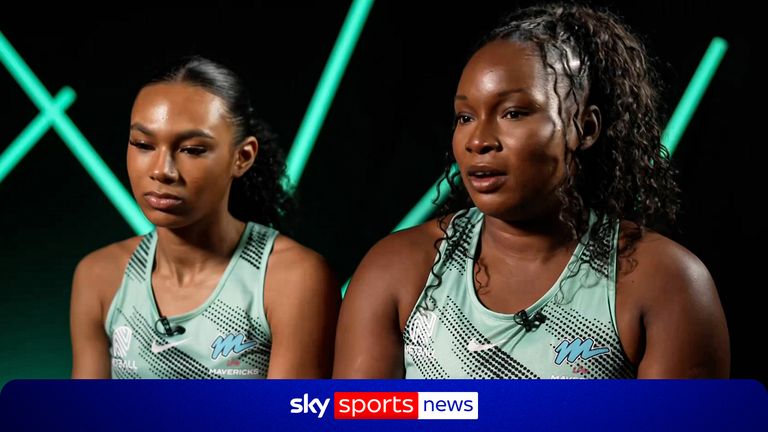
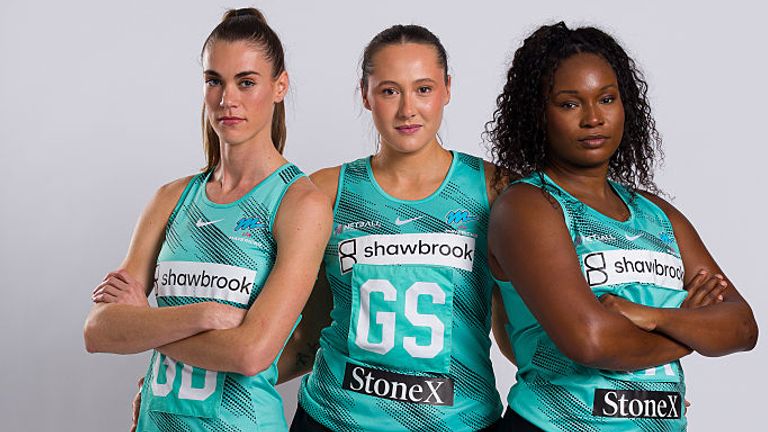
This season, London Mavericks became the first Super League team to introduce a range of kit, offering players choice beyond the traditional netball dress.
Now leggings, varied-length shorts, skorts and longer vests are all options players can select to wear in both training and competition and for defender Quashie, it has been transformative.
"What's good for me, as one of the bigger girls, is that comfortability of knowing I don't have to wear a dress when I don't feel comfortable," Quashie, who has won 29 caps for England, told Sky Sports.
"Apart from match day, I don't wear a skirt, I wear leggings throughout the year. I'm a leggings girl through and through, no matter the weather.
"Also working in a school where you see the girls playing, 58 per cent of those girls want better kit in their PE kits, some girls aren't comfortable wearing skorts, so it's good for us to be a role model for them."
Quashie knows only too well how restrictive kit can affect confidence. In previous seasons, ill‑fitting dresses left her exposed - and a target on social media.
"I've had seasons where my undershorts showed the majority of the time and some of the views I got online weren't nice. But I didn't have a choice in that. That was a kit that I was given," she said.
"For me, as someone who's a bit bigger, I didn't like seeing that out there. I know for someone who wants to take part in the sport and maybe they are big like me or even bigger, when you have to wear something that's not fitting to them, or exposes a lot more on some of the insecurities that you're not proud of, It can be a nasty place to be."
Her team‑mate Izzi Phillips, just 20 and already one of England's brightest prospects, wants to make sure that doesn't happen.
"We know that 64 per cent of girls drop out of sport by the age of 16 and we want to keep them in for as long as possible and take away any anxieties that come around that," she said.
"When you're playing sport, we do it because that's what we love and you shouldn't have to think of anything apart from going on to the court, how do we beat our opposition, or how are we being the best athletes we can be rather than thinking about how do I look?
"We will know the anxieties or insecurities that we may go through as girls at any age and it's really just removing that as an obstacle or a barrier and encouraging people to do it for the love of the sport."
London Mavericks are not alone. Ahead of the new campaign, Loughborough Lightning followed suit, introducing greater kit choice of their own - a move welcomed across the squad.
Lightning captain Nat Panagarry summed up the issue succinctly, telling Sky Sports: "In netball there's so many different body shapes. Everyone's different so, to just put a dress on everyone, some people get it and it's so short, some people get it and it's like a tent.
"It's important that people are able to just go out and feel comfortable in what they're wearing and not have that on their mind. You're going to play netball. You don't want to worry about having to pull your dress down. If you get photos back and you see that your shorts are all out and you think 'Oh God'. So I think it is really important that people are feeling comfortable in what they're doing."
Panagarry's Lightning team-mate Beth Durant agrees, admitting tight kit can "get in my head".
"We get given netball shorts that are tiny and I love long shorts to feel happy when I'm playing," Durant said.
"So it's that comfort piece for me, not just training but in general including the kit you wear at the gym or when you're on a run. I think I always want to feel good and feel confident in it and that's what a lot of girls and women probably feel as well."
As well as inclusive kit, England Netball's 'I Wish I Knew' campaign was launched last September to tackle the female health knowledge gap, breaking down stigmas and empowering girls to ask questions about female health in an open and honest way.
For Mavericks' Kira Rothwell it has been a real eye-opener and can provide the education that young girls need to ensure they do not drop out of sport.
"There's been a big drive on things around pelvic health, period care, menstrual cycle and learning about it as athletes," Rothwell said.
"And even though I'm training to be a doctor, I haven't learned much about that in my training as yet. To have that when I was younger would've been amazing because I know so many girls when we were going through the junior pathways who have to miss time for being in so much pain because of their periods and there was not really any support around what to do about that other than go on the pill, for example.
"It's really important what we're learning, especially some of us that are younger in our team. We're still learning our bodies as it is. And I think it just shows how important female health is because we are people before athletes."
With more than 120,000 affiliated members and 1.3 million people playing netball in England, it is no surprise the sport is leading the way. But change is happening elsewhere too - from female‑specific football boots to adjustable sports bras and shorts replacing skorts in hockey.
'I don't have to worry about little things in my head'
In rugby union, England international Sadia Kabeya is pushing innovation from the ground up.
The back row, who was named Player of the Match as the Red Roses ended an 11-year wait for World Cup glory again last autumn, has produced a satin-lined scrum cap to protect hair on the playing field.
As Kabeya explains: "I'm a girl from South London, I'm big on, keeping my hair neat, having it look good and within the kind of afro curly hair community wearing a satin bonnet or a satin headscarf to protect your curls has always been a huge thing.
"So I thought how can I combine those two things by putting a simple satin layer in a scrum cap and I spoke about this idea and Gilbert [manufacturer of rugby balls and equipment] said let's do it."
The difference, she says, is total freedom.
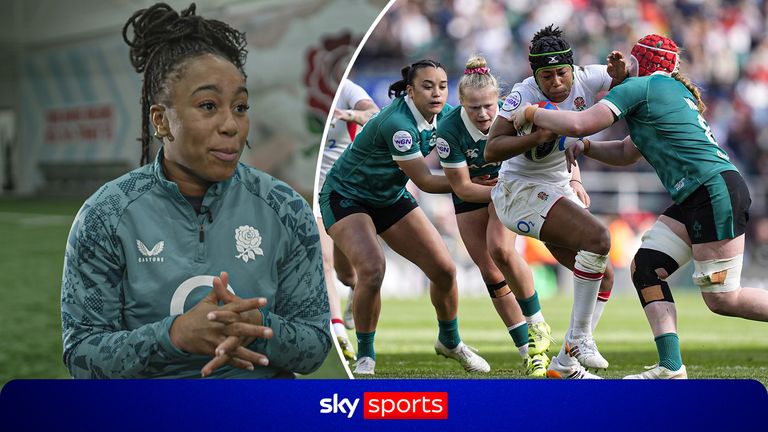
"When I have that scrum cap on I'm completely focused. I don't have to worry about little things that might be in my head. So I think for people coming into the game, already in the game, I think it's a huge thing that can just make it a lot easier.
"Everyone wants to be at their most comfortable when they're playing a sport they love or being able to join a new sport. The worst thing about picking up a new sport is having to wear something 10 sizes too big. And when we're talking about wanting to keep girls in sport, we want to make it easier for them.
"And I think for young black girls, especially when there's already a gap in terms of people they can see and, you know, the typical saying is if you can't see it, you can't be it. Being able to provide them with kit can make them feel part of a team which is huge in keeping them in the sport."