Skip to content

It's all Goodison

Jamie Casey catches up with 2008 Olympic gold medal winner Paul Goodison, who talks of kinetics, kilos and why he can't go snowboarding anymore..
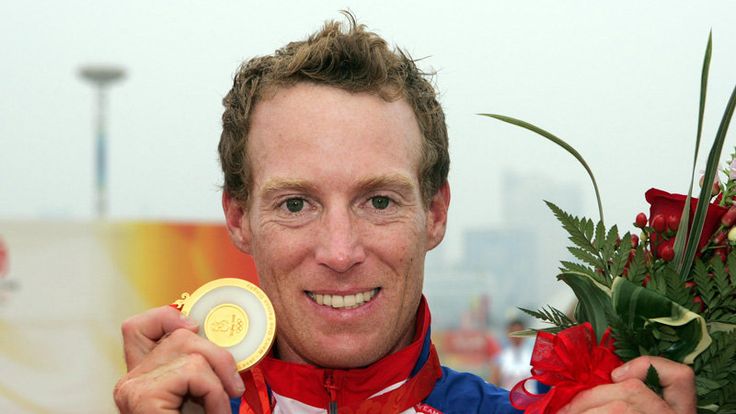
Sailing star Paul Goodison talks of kinetics, kilos and why he can no longer go snowboarding.

Latest Olympics Stories

Sipping a can of Diet Coke and offering his optimistic thoughts on Sheffield United's promotion hopes, Great Britain's Olympic sailing hopeful Paul Goodison paints a picture of the utmost serenity as he awaits his first interview with skysports.com. Not that a brief chat about his chances of landing a second Olympic gold medal in Laser sailing this summer is anything to be fazed by, but Goodison appears remarkably stress-free despite preparing to give a motivational speech to a triple-figure audience of Volvo employees in his hometown, the car manufacturer being one of British sailing's key sponsors over the last decade. It's not all plain sailing, though, as the conversation soon turns to Goodison's gruelling regime this time four years ago, when the 2009 Laser World Champion was busy shedding 10 kilos of weight ahead of what ultimately culminated in "the most amazing feeling in the world" as he took gold in Beijing. But the 34-year-old shakes his head as memories of a broken wrist are unearthed, an injury which threatened to derail his involvement in China. Goodison speaks of the measures he has gone through to prevent such trauma in the build-up to London 2012, where he is expected to be among the frontrunners in the men's Laser class event in Weymouth, where Paul has resided for the past eight years. Skysports.com got deeper into the mind of the man nicknamed 'Golden Goodie.' Right Paul. You were punished for "illegal kinetics" in the Audi Laser World Championship in Germany earlier this month and subsequently finished a disappointing 20th, is that something you feel you need to work on ahead of the Olympics or do you expect a more lenient approach from the jury in Weymouth? Each jury has their own interpretation of the rules. The jury who were out there in Germany are not the same guys who are going to be at the Olympics. In the last two or three years I haven't been penalised for such infringements, so it puts a little bit of doubt in your mind, like 'am I doing the right things?' But then, the guys who've been on the jurys at previous Olympic events haven't seen a problem in what I've been doing. Although it was a major setback and it caused a little bit of doubt - I think we're on track. I'm pretty positive in the techniques that I've developed over the past four years and they are what I deem to be legal. We've analysed the video and shown another jury the video and had their feedback. So there are slight changes that need to be made, but only slight and I'm confident going forward that we have the right package and that it won't happen again. Let's hope not. Now, Australia's Tom Slingsby has just clinched his fifth Laser world title in Germany, is he the man you need to beat at London 2012 or are the other contenders being underestimated? I think Tom is the man to beat in 2012. I thought he was going to be in 2008 - he went in there as double World Champion - but he came undone and didn't finish in the top 20. But I really think that there are seven or eight guys that can win at the Olympics, or are at least capable of winning medals. I think it'd be very naive to think that you're up against one man, because you're not. But I think I've got the overall package in all the conditions to win the goods. Tom's obviously amazingly strong in the strong winds, but he does have his weaknesses. Some of the other guys are really strong in windy conditions but not in others. So if you see a week with just one condition, it could be some opportunist that's up there. However, with the venue being Weymouth, I think we'll see a variety of conditions and then it's going to be the guy that's best all week that's going to win. On your blog you recently put: "The sailing's been going awesomely well out in Palma. One of my main rivals said to me the other day that I had been impossible to sail against, and that is exactly the sort of thing you want to be hearing from the guys you are looking to beat every time." - Who were you referring to and can you reproduce that form in Weymouth? [Chuckles] That was one of the Swedish sailors I was training against in Palma, and it's quite nice to hear those things come back to you - It's when you're at the top of your game and sailing faultlessly, which it seemed I was doing out in Palma. Germany was a different kettle of fish - once your confidence has been knocked and you're not in a position to win anymore it's hard to perform how you normally would. But I feel very comfortable with the conditions in Weymouth. I've lived there now since 2004 and I've been training there ever since, so I know them well. Physically we're in the right place, it's once you get yourself mentally in the right place that you can perform. I'm happy with where we're at and hopefully we can have a repeat of those quotes from my competitors during the Olympics. But you relinquished your 2009 world title on home soil the following year, is that something you might dwell on if you don't get off to a good start at London 2012? I think the key things are to have a very consistent and safe regatta. If you look back on the regattas in that I've done well in in the past - I opened with a 16th last time and I don't think I was in the top 10 after the first day. But, slowly, as the regatta progresses I think consistency shows and the guy who performs every day shows through. So, I'm not too worried how the start goes. Obviously, if you start well you're ahead right away, which is fantastic, but you need to be very focused - there are 10 races and you need to count 9 of them. Ideally, you want them all to be counters come the final day.You were pretty gutted to have missed out on bronze by a single point in Athens 2004. Could you ever have predicted that you'd be one of the first Team GB athletes to be selected to compete at the Games some eight years later? Coming fourth in Athens was pretty tough. I remember coming in and I was so distraught, I felt so empty and that I'd let so many people down that had helped me along the way. Although they were very supportive, saying 'it's an amazing result, you've just finished fourth at your first Olympics' I just couldn't see that. All I could see was that I'd failed because I hadn't done what I'd set out to achieve. I came home thinking I never want to put myself in that position ever again. The initial thought was to walk away from sailing and go do something else so I wouldn't ever be in that position again. But there's something in your mind that keeps you going. I never wanted to be the guy to say 'I could've done that, if only I'd done this'. I'd much rather be the guy that can say 'I tried, I didn't get there' but knowing that I gave it my all. I don't ever want to be a person that has excuses for not doing something. I guess, at that point, there's no way I thought I'd win in Beijing and no way I'd be at the forefront for London with another very good chance of winning. So, I think things have gone quite well over the last eight years. You make no secret of your thirst for extreme sports and you've been doing a bit of cycling in Palma recently too. Has that wrist injury you sustained when mountain-biking in the build up to Beijing made you tone down your thrill-seeking ahead of London 2012? I gave myself a month to go and do the things I love doing, so I didn't become too bored of training hard and wanting to do something else. This time I had a similar temptation and I stopped. I think it was in January that we went to a cross-country ski camp and there was the option to sneak off and go snowboarding one afternoon. It was pretty hard to do, but I resisted that. You usually only get one shot at the Olympics and do your best, but I'm quite lucky - this is my third and we're in with a very realistic chance of winning and I don't want anything to get in my way, so I have been a little bit more sensible. It [the mountain bike accident] was a reminder that you've got to look after yourself because you can't risk losing even a day's training. For all your childhood dreams of playing in a Sheffield United team, it's as an individual athlete that you've excelled. Sailing legend Sir Robin Knox-Johnson once said of single-handed events: "There's a great satisfaction in doing it all yourself", can you relate to that? Yes, for sure. That's why I love the Laser - it's you against the rest. It's a level playing field in a boat that's all the same and the buck stops with you at the end of the day. The reason I've gone on to do what I am doing is because it's frustrating to be in team circumstances and somebody else is the weakest link, and that can be the reason why you don't succeed. For me, having full control in my own hands is good because I can look at myself at the end of the day and, if I don't win, it's my problem. Then again, I've been doing a little more sailing in a team in a different environment - yacht sailing - and I really enjoy working as a team and working with others. But at the end of the day it does get frustrating when things don't go your way, although I think the time has come to do more team stuff after these Olympics, because you can only go on so long beating yourself up. Indeed. Now, there's been a lot made of the Court of Arbitration for Sport's decision to overturn the British Olympic Association's lifetime ban for drugs cheats. Which side of the divide do you stand on - does the decision send the wrong signals to younger athletes or do drugs cheats deserve a second chance after serving their punishment? Drugs isn't a big issue in my sport, but if I was on the start line and I finished second at the Olympic games, then the winner got disqualified for taking drugs, I just feel the guy who effectively becomes the Olympic champion has missed out on the most amazing feeling in the world - and that is standing on that top shelf. I'm very much against drugs in sport and I think that if you do slip up, you don't deserve a second chance, but that's just my feeling. What's the most extreme measure you've ever taken to prepare for any event? I guess the most extreme thing I ever did was lose 10 kilos in time for China in 2008. The winds were forecast to be light and, after breaking my wrist, I had 10 kilos to lose in eight months. That was pretty miserable and pretty hard work. Can you tell us a potential aspect of your life that you would perhaps have made a habit of that you've had to deny yourself? It's difficult not to spend the time I want to with friends and family. I've got a lot of friends who go down the pub and enjoy themselves at the weekend, it's pretty tough to say no to all that and to realise that, if I go do that kind of stuff, the next day I'm losing a day's training. I sometimes feel a little bit sad that I haven't got these relationships with some of my school friends but at the end of the day I've chosen what I wanted to do and there's a reason behind that. I still have got some amazing friends who are involved in the sport and they understand. They're all great mates and they've all achieved very high levels through a similar attitude. I'm not very good at sitting still. I always want to be active, which my girlfriend can find quite frustrating after we've both been away. She wants to come back and relax, but I love to be out on the tennis court or hitting balls on the golf course, or windsurfing. I find it difficult to sit back and relax, but now that I'm getting older it's getting a little bit easier. I love to hang out with my friends, but I do tend to play sport with them, wherever we are there's some sort of race or some sort of competition involved, so it always comes back to sport - I think that sums me up. You can follow me on Twitter @caseyja and Paul @paulgoodisongbr