IAAF president Lord Coe accused of misleading doping inquiry
By PA Sport
Last Updated: 05/03/18 9:52am
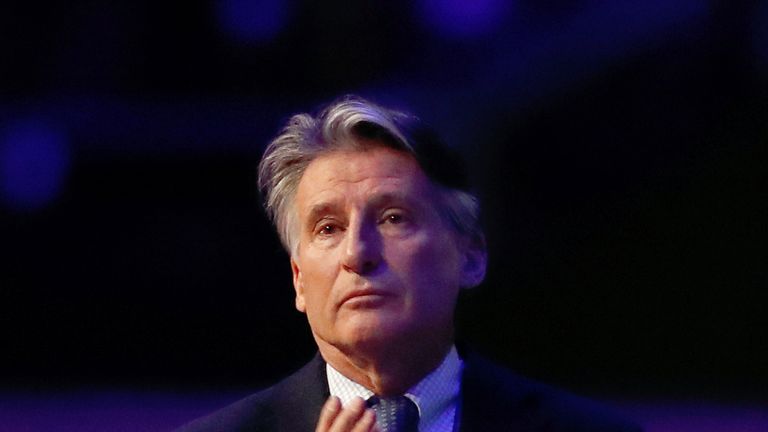
Lord Coe has been accused of misleading a parliamentary doping inquiry in an explosive report published by the Digital, Culture, Media and Sport select committee.
The 52-page document, the product of an investigation that lasted two and a half years, criticises some of the biggest names in British sport, including Sir Dave Brailsford and Sir Bradley Wiggins from the world of cycling.
But its assessment of Coe's appearance before the committee in December 2015, and subsequent written response, is particularly scathing.
One of Britain's most famous athletes, Coe is now president of the International Association of Athletics Federations (IAAF), a body he joined in 2007 as a vice-president before taking the top job in 2014.
The committee's criticism is based on what Coe knew about his sport's appalling problems with doping before they were revealed by investigative journalists and whistle-blowers from late 2014 onward.
The MPs acknowledge the efforts he has made to restore the sport's reputation and protect clean athletes since late 2015 but make it clear they believe he should have done something about it much sooner.
The committee, chaired by Conservative MP Damian Collins, is also unconvinced by his claim he knew nothing of the role played by his predecessor as IAAF president, Lamine Diack, until the Senegalese administrator was arrested in November 2015, three months after Coe succeeded him.
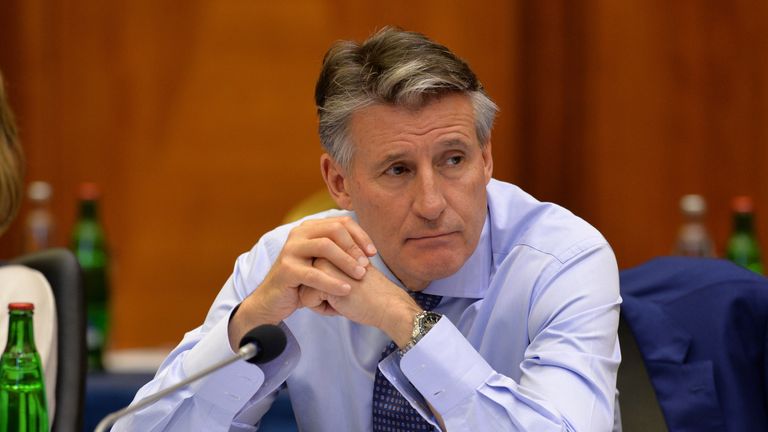
The report said when Coe appeared before them he "sought to distance himself from any knowledge of the allegations of doping", most notably in Russia, until they were exposed by a German documentary in December 2014.
This is despite former British distance runner and London Marathon director Dave Bedford phoning him in August 2014 to tell him about senior IAAF officials planning to hush up a Russian doping case in return for large sums of money.
Bedford, who spoke to the committee last January, followed up this call with an email to Coe containing attachments that outlined the plot.
The existence of this email emerged six months after Coe's appearance before the committee but he declined its invite to return and explain what had occurred in person.
Instead, Coe wrote to them and said Bedford had not discussed the details with him on the phone and he simply forwarded the email to the IAAF's ethics chief Michael Beloff QC, without opening the attachments.
The report describes Coe's answers to the committee on the issues of Russia's doping and the IAAF's complicity as "misleading".
It said: "Lord Coe may not have read the email and attachments sent to him by David Bedford, whose actions we commend, but it stretches credibility to believe that he was not aware, at least in general terms, of the main allegations that the ethics commission had been asked to investigate.
"It is certainly disappointing that Lord Coe did not take the opportunity, given to him by David Bedford, to make sure he was fully informed of the serious issues at stake.
"These are matters of the greatest seriousness and affect the reputation of both the IAAF and Lord Coe."
Collins was asked to expand on why the committee felt Coe had misled them and he said it was based on the IAAF president's attempt to "downplay" what he knew of the sport's precarious position before the whole world knew.
But Collins said there is a "broader point to Coe's answers not being good enough" and that is the impression the IAAF gives of being "defensive" when evidence of doping is presented.
Examples of this, cited in the report, are the IAAF's handling of a database of alarming blood-test results from athletes between 2001 and 2012, and an academic study based on anonymous interviews with athletes in 2011 that revealed shocking levels of cheating.
The blood-test database was eventually leaked to The Sunday Times in 2015, which Coe described at the time as "a declaration of war" on athletics. The report calls this a "very ill-judged statement" and criticises the IAAF for not sharing this database with national anti-doping agencies.
The 2011 study, conducted by Germany's Tubingen University, was meant to be published for peer review but was repeatedly held up by the IAAF's refusal to grant permission for publication, although it was released in 2017 but only after the DCMS committee had published it on its website.
The report dismisses the IAAF's excuses as "entirely spurious" and describes Coe's assertion there was no need to publish it after the committee had done so as "frankly risible".
Coe has been asked for a response and in a statement, the IAAF thanked the committee for recognising the work the federation has taken to combat doping in the last two years but said it would be writing to the panel "to explain some of the more complex aspects of anti-doping that have been misunderstood".