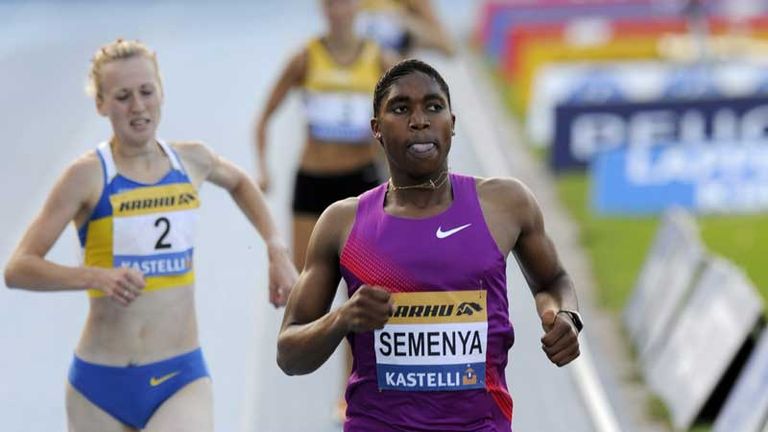
The IAAF has approved new gender rules for governing the eligibility of female athletes to take part in women's competitions.
Athletics chiefs introduce new gender regulations after Semenya saga
The IAAF has approved new gender rules for governing the eligibility of female athletes to take part in women's competitions, as a result of a review into the Caster Semenya saga.
The governing body of world athletics has now become the first sports-rulers to introduce a policy for females with excessive amounts of male testosterone - a condition known as hyperandrogenism.
The decision is the culmination of an 18 month-long review by an IAAF expert working group who have studied issues relating to the participation in athletics of female athletes with hyperandrogenism.
This group has worked in close co-ordination with the IOC Medical Commission and taken part in a series of international expert meetings held on the subject in 2010.
The new rules and regulations will come into force for all international competitions on May 1.
Semenya saga
The rules will aim to avoid a repeat of the gender row which engulfed 800metre runner Caster Semenya.
The South African won the World Championships at Berlin in 2009 and was subsequently sidelined from running as the IAAF looked into her high levels of testosterone but has since returned to competition.
Athletics will continue to be divided into men's and women's competition, recognising that there is a difference in sporting performance between elite men and women predominantly due to higher levels of androgenic hormones in men.
A female with hyperandrogenism who is recognised as a female in law will be eligible to compete in women's competition in athletics provided that she has androgen levels below the male range.
A pool of international medical experts has been appointed by the IAAF to review cases referred to it under the regulations as an independent expert medical panel and to make recommendations to the IAAF in such cases to decide on the eligibility of female athletes with hyperandrogenism.
Medical process
The medical process may include, where necessary, the expert medical panel referring an athlete with potential hyperandrogenism for full examination and diagnosis in accordance with best medical practice at one of the six IAAF-approved specialist reference centres around the world.
The medical process under the regulations will be conducted in strict confidentiality and all cases will be referred to the expert medical panel on an anonymous basis.
A female athlete who declines, fails or refuses to comply with the eligibility determination process under the regulations will not be eligible to compete in women's competition.
The International Olympic Committee last week admitted the need to draw up clear rules to deal with cases involving female athletes with excessive levels of male hormones.
The IOC's executive board said its medical commission had put forward several principles on which rules regarding hyperandrogenism, a condition involving overproduction of male sex hormones, should be based.