
BHA under fire over jockey Matthew Hopkins ruling
Wednesday 5 August 2015 16:52, UK
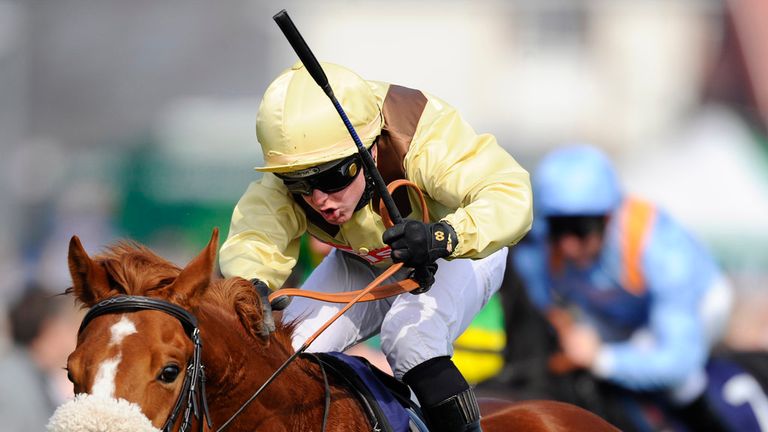
To allow suspended jockey Matthew Hopkins the opportunity to work in racing during the period of his disqualification would at this stage give out the "the wrong message", said the British Horseracing Authority.
To allow suspended jockey Matthew Hopkins the opportunity to work in racing during the period of his disqualification would at this stage give out the "the wrong message", said the British Horseracing Authority.
Hopkins was banned for three years at a BHA inquiry on June 25 after he was found to have placed nearly 1,000 bets in a year.
The jockey, who has sought professional help for a gambling addiction, applied for dispensation on July 10 to continue work in a racing stable, even though he was warned off two weeks earlier.
A BHA disciplinary panel rejected that request, with "a future substantial amount of time" needing to have passed before another application could be considered.
In its reasons on the matter, BHA disciplinary chairman Philip Curl stated: "The restriction of jockeys betting is fundamental to the integrity and good reputation of British horseracing and these were serious breaches, justifying a three-year ban.
"This application on behalf of Mr Hopkins was made only two weeks after the disqualification was imposed and thus Mr Hopkins had barely begun to serve the penalty.
"To allow the application at this early stage would risk sending out the wrong message, not only to Mr Hopkins but also the racing community, that Mr Hopkins' conduct was not as serious as the penalty imposed on him would suggest.
"The panel further considers that a substantial amount of time needs to elapse before the panel is likely to be satisfied that Mr Hopkins has been thoroughly tested out as to his ability to abide by the rules of racing and not relapse in respect of betting on horses."
Professional Jockeys Association chief executive Paul Struthers accepted Hopkins' punishment was "absolutely necessary", but strongly questioned the BHA's decision to reject his application to carry on working within the sport.
He said in a statement: "We cannot condone what Matthew did. He placed nearly a thousand bets on horseracing and needed to be penalised. It is sacrosanct that jockeys cannot bet on horseracing and we accept that a sanction was absolutely necessary, both as a punishment and as deterrent.
"However, his bets were overwhelmingly small - his average stake was around #5 and many bets were smaller than that. He didn't bet against himself, he didn't lay horses as initially implied by the BHA (he placed one lay bet accidentally), he didn't bet using inside information and he was spectacularly unsuccessful."
Struthers went on: "There can be little doubt that jockeys are subjected to harsher treatment than others regulated by the BHA and we have little confidence or trust in the BHA's ability to regulate fairly and proportionally.
"The BHA may have recently announced a review into its integrity function, but our concerns go much further than that and the challenge the BHA face to rebuild this trust and confidence should not be underestimated.
"We are bitterly disappointed that the disciplinary panel have refused this application, although it is hardly surprising given the vehemence of the BHA's objection.
"Matthew is obviously disappointed, too, but he is being positive and, given that he is passionate about racing and it is the only vocation he has known, he is looking forward to resuming a career in racing once he is allowed."
He added: "It is particularly disappointing that the BHA's stance is in complete contradiction to racing's policy on addiction, launched by the BHA in 2008, which clearly advises that employees should consider 'whether it is appropriate to approach the presenting issue as a supportable health matter, and not solely as a disciplinary matter'."
In response to the statement issued by Struthers, BHA chief executive Nick Rust said: "A fundamental aspect of regulation is to find the appropriate balance whereby penalties are both fair and proportionate and also an effective deterrent to other potential transgressors.
"To allow an individual straight back into a working role in the sport would seriously undermine the deterrent aspect of such a penalty and send out a message that even if Rules crucial to the sport's integrity are broken you can still earn a living from the sport. The BHA is pleased that the disciplinary panel shared the view that in this case Matthew Hopkins has forfeited that right for now.
"In his statement Paul Struthers and the PJA refer at length to Matthew Hopkins' gambling addiction and racing's policy towards addiction, and we agree that it is part of the BHA's responsibilities to consider not only the appropriate disciplinary action, but also to act in their best interests of the individual from a mental health and well-being perspective.
"In addition, it is the responsibility of the BHA to regulate and protect the sport's reputation.
"It is for both of these reasons we do not believe, and the disciplinary panel agreed, that it would be appropriate to allow someone who has committed breaches of integrity-related rules on such a scale, and who may have a gambling addiction, to work in a racing stable and be faced with regular exposure to the temptation of betting immediately after having been disqualified from the sport for three years.
"The disciplinary panel has outlined that there will be opportunity for Matthew Hopkins to make a similar application in the future, once a substantial period of the disqualification has been served. The success of such an application would depend on Hopkins being shown to have been rehabilitated and also that a sufficient proportion of the penalty had been served."
Rust went on: "There are means of assisting Matthew Hopkins' rehabilitation and the BHA and the racing industry will support this process. Having worked in the gambling industry for over 25 years, and from time to time having to deal with issues of gambling addiction, I have great sympathy for the personal issues Matthew Hopkins is facing.
"However, I also know that rehabilitation requires time and individual action if it is to succeed. I sincerely hope Matthew Hopkins can successfully complete his journey of rehabilitation, but this journey has only just begun.
"In committing the extensive breaches of such a fundamental rule, Matthew Hopkins not only let himself down but also his colleagues, respective employers and the sport as a whole. Consequently, he has to earn the right to be entrusted again with an active role in the sport - something which takes time."
Rust added: "Finally, Paul Struthers himself references the ongoing integrity review. A key objective of this review is to build and increase the levels of trust between the sport's participants, the wider public and the BHA's Integrity Department.
"We have invited Paul and the PJA to play an active part in this review and this would be the forum to raise topics such as the proportionality of penalty rather than in an emotive public statement about an individual case such as that of Matthew Hopkins."