
Wimbledon: Why electronic line-calling is causing controversy as Emma Raducanu and Jack Draper question system
Wimbledon was forced to issue an apology after its electronic line-calling system malfunctioned at a potentially-costly moment during Anastasia Pavlyuchenkova's win over Sonay Kartal; Follow scores, reports and our dedicated live blog from the All England Club over the next fortnight
Wednesday 9 July 2025 13:03, UK

Emma Raducanu and Jack Draper have been among the players to question Wimbledon's use of electronic line-calling for the first time, but a flash point came on Sunday when an embarrassing malfunction forced the tournament to issue an apology.
Missed calls and system failings have marred the introduction of technology at the All England Club, inciting criticism from players and a heightened spotlight in light of a potentially-costly outage.
While marking a new, logical and inevitable era for the tournament in-keeping with other events, the maiden use of electronic line-judging has also made for an unwelcome sub-plot.
- How Raducanu is rediscovering spark in face of unrivalled pressure
- Wimbledon news | Latest scores, results and schedule 📝
- Wimbledon: Order of Play I Men's Draw I Women's Draw I Dates and full schedule
- Not got Sky? Get Sky Sports or stream with no contract on NOW 📺
- Choose the sports notifications you want! 🔔
Should Wimbledon revert to tradition?
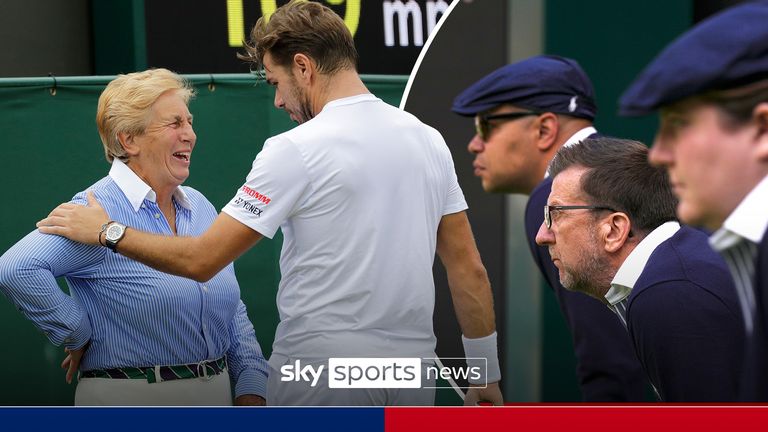
Wimbledon courts have traditionally been decorated with exquisitely-dressed line judges, but after 148 years the tournament elected to follow other Slams into a new technological chapter this summer.
Line judges have been replaced for the first time at SW19 by electronic line-calling created by Hawk-Eye, which uses 18 cameras set up around the courts to track the ball while producing automated voice calls of 'out!', the delay on which can often make for chuckles in the crowd.
Both the Australian and US Open tournaments have already previously moved across to electronic line-judging, while the French Open is yet to make the switch as it continues to see the benefit of its clay surface when it comes to assessing a ball's landing spot by the dusted mark.
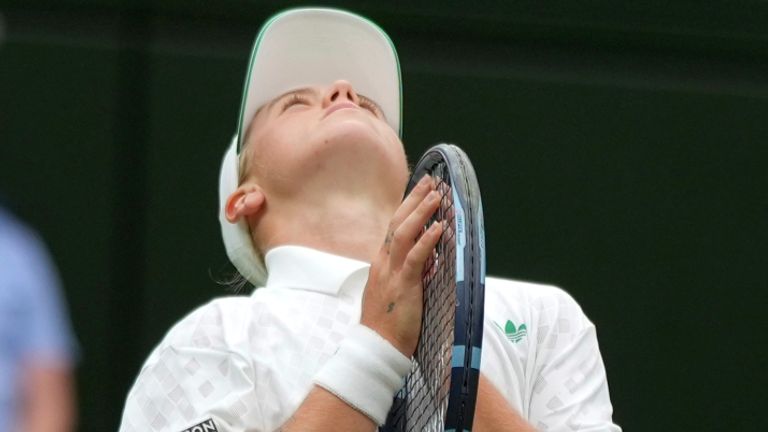
It has been used on all courts during ATP Tour events since the beginning of 2025, while the WTA Tour has also implemented it on an increasing number of its events.
Having previously used 300 line judges, Wimbledon now uses around 80 as 'match assistants' in the event of the technology failing.
The use of the technology has also marked the end of the popular challenge system, though players are still able to ask for a replay on the screen.
Why has it been controversial?
Certain players have admitted a lack of trust in the system, some say they miss the theatre of the 'challenge', and others have alluded to the loss of the aesthetic tradition in the line judges whose absence now makes for an emptier court.
But a flash point arrived on Sunday when a system malfunction resulted in the technology being switched off for a game during Anastasia Pavlyuchenkova's victory over Britain's Sonay Kartal.
Only did it become apparent that the system had not been working when a shot from Kartal clearly landed beyond the baseline without being ruled out, denying a bemused Pavlyuchenkova a 5-4 lead in the first set.
Umpire Nico Helwerth instead brought the game to a halt and insisted the point should be replayed, paving the way to Kartal breaking her opponent's serve for a 5-4 advantage.
"You took the game away from me... they stole the game from me. They stole it," said Pavlyuchenkova upon returning to her chair.
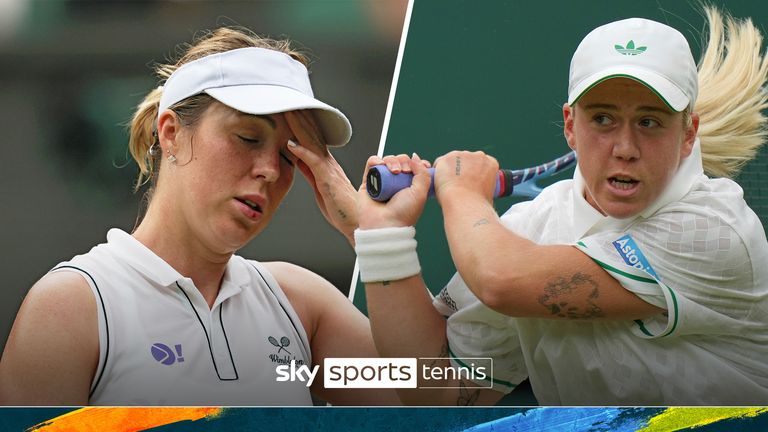
Fortunately for Pavlyuchenkova the incident did not prove costly as she went on to beat Kartal 7-6 6-4 to set up a quarter-final clash with Amanda Anisimova.
"It was very confusing in the beginning because the ball looked very long to me," Pavlyuchenkova added in her press conference.
"It was a very crucial moment in the match. I expected a different decision. I just thought also the chair umpire could take the initiative. That's why he's there sitting on the chair. He also saw it out, he told me after the match. I don't know if it's something to do because she's local.
"I think we are losing a little bit of the charm of actually having human beings. Like during Covid, we didn't have ball boys. It just becomes a little bit weird and sort of robot orientated.
"They're very good at giving fines, though, and code violations. This they don't miss because every time any little thing, they are just right there on it. I would prefer they looked at the lines and call the errors better."
Helwerth, who had officiated at matches on each of the first seven days and is one of the sport's leading umpires, was notably absent on Monday, although organisers insisted it was a regular day off rather than a reaction to Sunday's events.
The technology endured a further malfunction during Tuesday's quarter-final between Taylor Fritz and Karen Khachanov.
A call of 'fault' was incorrectly announced after a Fritz forehand landed inside the baseline, with umpire Louise Azemar-Engzell subsequently stopping the opening game of the fourth set.
Wimbledon organisers later explained that the system had not reset due to the ball from Fritz's first serve being retrieved by a ball boy or girl as he was lining up for his second.
What the players think...
British No 1 Jack Draper has been among the players to query the performance of the technology in its debut year at Wimbledon, suggesting calls were missed during his second-round defeat to Marin Cilic.
"I don't think it's 100 per cent accurate in all honesty," he said in his post-match press conference. "A couple of the ones today, it showed a mark on the court.
"There's no way the chalk would have showed that. I guess it cannot be 100 per cent accurate - it's millimetres."
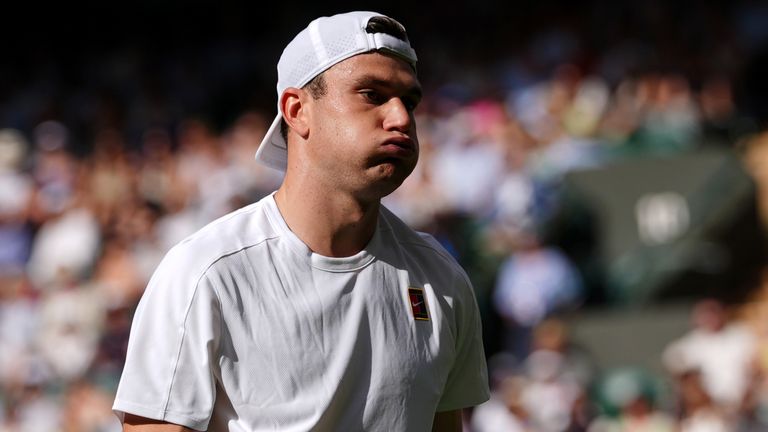
Emma Raducanu similarly questioned the system's accuracy after what she deemed to have been a missed call on a shot by Aryna Sabalenka during the world No 1's win over the Brit.
"That call was for sure out," she said. "It's kind of disappointing that the calls can be so wrong, but for the most part they've been OK. I've had a few in my other matches, too, that have been very wrong. Hopefully they can fix that."
The former US Open champion went on to admit she did not trust the technology.
"No, I don't," she added. "I think the other players would say the same thing, there were some pretty dodgy ones but what can you do?"
Both Raducanu and Sabalenka also suggested the automated calls were occasionally difficult to hear amid the crowd noise on court.

Swiss player Belinda Bencic echoed the uncertainty over the system and pointed towards a common outlook among players in the locker room.
"I also don't trust it," she said earlier in the week. "Of course, you feel a little bit stupid questioning an electronic line call, but of course it always depends how it's installed and how accurate it is.
"It's not only me, you know. I feel like I'm watching other matches too, and I see players like saying the exact same thing, complaining. Or even on TV, you can see clearly some balls are out or long or something.
"We players talk about it and I think most of us have the same opinion."
Asked for his thoughts on the malfunction during his own match, Fritz brushed off the incident and underlined his faith in the electronic system.
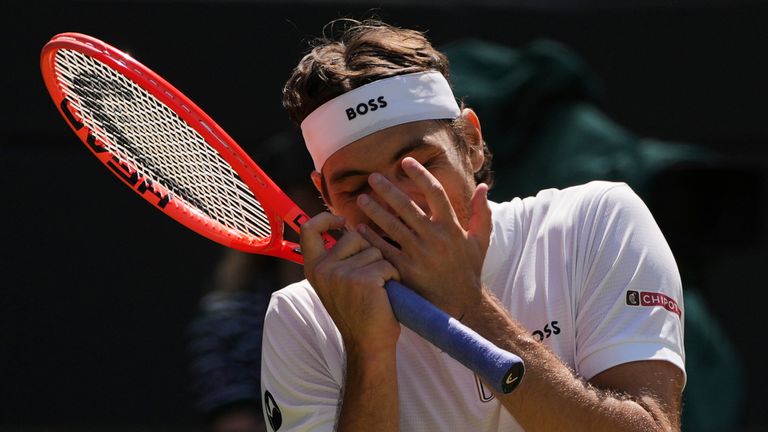
"It happens sometimes," said Fritz. "In that situation it - I think I lost the point anyways, but in that situation it helped me because I got a first serve out of it. Yeah, I mean, there's going to be some issues here and there.
"To be honest, I still think it's much better to just have the electronic line calling calling the lines as opposed to the umpires because - I said it earlier in the week - I do like not having to think about challenging calls in the middle of points.
"I do like that we don't have to argue about calls and all this stuff. The ball gets called, and we know, and that's it. I think it's a better system."
Earlier in the week the fifth seed had recalled a similar incident to that of Pavlyuchenkova's in which he was forced to replay a point after the electronic line calling failed to call a ball out in Cincinnati.
"At the time I was told by the chair umpire I needed to stop the point, and I had to stop the point if I wanted to win the point. I said, 'Why would I?'
"I go, 'Listen to what you're saying. You want me to stop the point when there's electronic line calling, because I thought the ball was out. It's insane'.
"There should be situations where the umpires can obviously step in and make a call. If it's obvious, it's ridiculous."

While yet to experience a similar error in one of his own matches, Novak Djokovic conceded errors were possible while relying on technology.
"It was really bad, really bad mistake," he said following Monday's win over Alex de Minaur. "It was a system error, obviously. Yeah, I guess since we made the introduction of this technology for the line calling, I guess you have to heavily rely on the technology.
"I think that technology's probably more accurate and making less mistakes than, I guess, a lines person. But yeah, you're going to have this kind of particular instances where you're going to have a system failure and then it happens in an awkward time of the match, like yesterday in her match. That's not good.
"Yeah, I mean, I didn't feel in my matches so far I had some really bad calls from the system, to be honest. I don't have any complaints in that regard."
How Wimbledon has reacted to criticism
Wimbledon subsequently issued a statement detailing the system's wrongdoings while apologising to both Pavlyuchenkova and Kartal for the incident.
"It is now clear that the live ELC system, which was working optimally, was deactivated in error on part of the server's side of the court for one game by those operating the system," the statement read.
"In that time, there were three calls not picked up by live ELC on the affected part of the court. Two of these were called by the chair umpire, who was not made aware that the system had been deactivated.
"Following the third, the chair umpire stopped the match and consulted with the review official. It was determined that the point should be replayed. The chair umpire followed the established process. We have apologised to the players involved."
The All England Lawn Tennis Club later confirmed in a statement to Sky Sports that they had made changes to the Hawk-Eye system in light of the error.
"Following our review, we have removed the ability for Hawk-Eye operators to manually deactivate the ball tracking," the statement read. "While the source of the issue was human error, this error cannot now be repeated due to the system changes we have made."
Kartal admitted due to her height she occasionally loses vision on where shots land at the opposing baseline, and therefore wasn't certain as to whether the ball had landed out at the time.
"That situation is a rarity," said Kartal. "I don't think it's really ever happened, if it has. What can you do? The umpire's trying his best in that situation. I think he handled it fine.
"I think the system just malfunctioned a little bit and I think the fairest way was what he did, to replay the point. I think obviously it was just a bit unlucky that happened. But I think it's... there's hardly been any of them."
Wimbledon chief executive Sally Bolton reaffirmed that the technology had been deactivated in error while maintaining 'absolute confidence' in the system having made the 'appropriate changes' in light of the situation.
"It was important for us to to explain as much as we could at that point in time what we believed had happened, and to apologise to the players for it happening in the first place," said Bolton.
"We're deeply disappointed that this has happened in the Championships. It was a human error. The ball-tracking technology is working effectively."
Speaking ahead of the tournament, Bolton described the technology as 'sufficiently robust' and explained that it was the right time to move towards electronic line-calling order to enhance the accuracy of officiating during matches.
She added that Wimbledon remained committed to a balance of 'tradition and innovation' in its decision-making.
Watch the ATP and WTA Tours, as well as the US Open in New York, live on Sky Sports in 2025 or stream with NOW and the Sky Sports app, giving Sky Sports customers access to over 50 per cent more live sport this year at no extra cost. Find out more here.