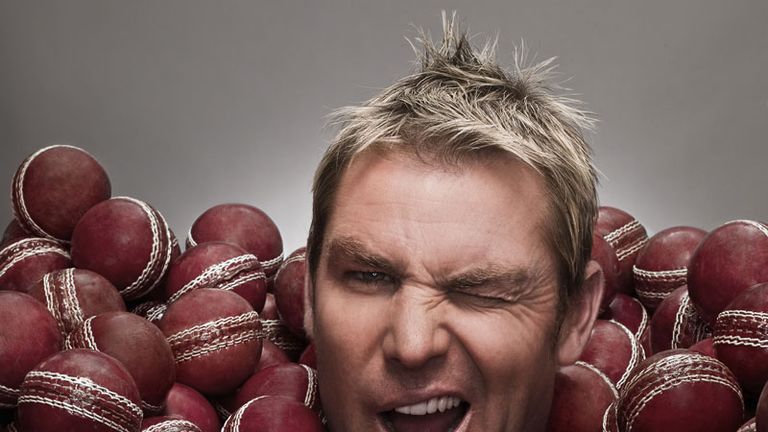
Shane Warne talks exclusively about the game's future, his life after cricket and of course The Ashes.
Warne talks exclusively about his life after cricket and The Ashes...
Shooting Shane: gallery
Shane Warne has rarely looked better. Deeply tanned, the hair and teeth worked over, his face slimmer now than when he burst onto the Test scene in 1993 with his 'ball of the century' against Mike Gatting, never has his nickname of 'Hollywood' seemed more apt.
Warne is at home in the heat and frenzy of India. As captain and coach of the Rajasthan Royals IPL franchise, he's revered. On the streets outside, he requires security at all times, such is the country's apparently limitless passion for cricket and its stars.
He loves it all, of course. He's a man who has always come alive with the buzz, wherever it's happening.
Warne has long seemed a mass of contradictions, yet now, at 40, and as his giant career edges towards its close, the whole person is emerging. The player who still 'gets goose bumps' whenever he walks through the long room at Lord's has emerged as a shaping force behind Twenty20, the format that is driving the game towards new and lucrative horizons.
The sharp and natural intelligence that manifested itself in the guile of his bowling has slowly edged into other areas of his life. He's a businessman, a networker, a broadcaster, an empire builder. "Yeah, it's a pretty full book," he admits. "But I like that."
Triumph
Twenty20 cricket has allowed the world to see the last of Warne as a player. It's an arena where his tactical brilliance, his skill at reading the game and his ability to inspire his team have come to the fore. In the competition's first year, Rajasthan were viewed as the whipping boys, the least expensive franchise with the least starry roster of players.
They won, a triumph Warne holds close to his heart. He called it the highlight of his career, a statement that caused incredulity among those who remembered his part in seven Ashes series wins, the 708 Test wickets, the 1999 World Cup, and Wisden voting him one of the five greatest 'Cricketers Of The Century'.
"A few people thought I was exaggerating, but I do stand by it," he says. "To build the confidence of the young Indian players after losing the first game, bearing in mind we hadn't spent the most money or bought a lot of superstars. Nobody fancied us. We were the first winners of an amazing tournament and I was captain and coach. It was very satisfying.
"I thought Twenty20 was a gimmick to start with, who didn't?" he goes on. "But the more we all played, the more you could see the innovation and tactics. It is a simple idea with so much potential and we have only just started tapping into it. All of cricket will benefit. Change takes time, words like 'franchise' take some getting used to, but in the next couple of years everyone will be talking the lingo."
"We are at a crucial time right now," he says. "It is vital that the right decisions are made over the next 12 or 18 months. I think between 10 and 12 Tests a year and maybe 20 ODIs or Twenty20s is enough, and every country should be the same.
There is a danger of overkill - two Twenty20 World Cups in a year is crazy. It should be one in two. And Test cricket should always be the ultimate. There should definitely be a window for IPL, so the best players in the world are available," he urges. "People have to lose their egos