
Opinion
Lewis Hamilton: Has trust broken down between Ferrari driver and team's pit wall after Singapore GP issues?
Listen to the latest episode of The F1 Show podcast as Simon Lazenby, Bernie Collins and Karun Chandhok look back at all the big talking points from the Singapore Sprint weekend; watch every session of the United States GP in Austin on October 23-25, live on Sky Sports F1
Wednesday 14 October 2026 17:28, UK
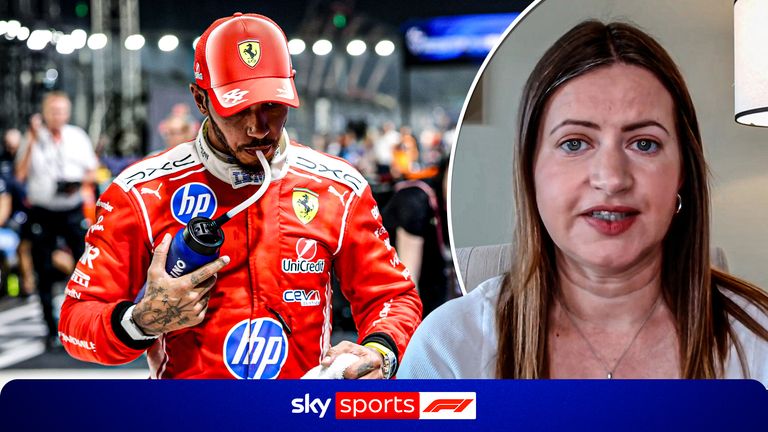
Ferrari's strategy decisions and communication with their drivers came under fresh scrutiny at the Singapore Grand Prix after Lewis Hamilton overrode a call to pit.
Hamilton finished finish sixth instead of a likely third in last Sunday's race after not heeding a call from the team's pit wall to stop under a lap-39 Virtual Safety Car.
On team radio after the race following his struggle on worn tyres, Hamilton apologised for "my call" around the strategy, a position he subsequently reiterated on social media when he admitted he had learned a "painful lesson" by choosing "a strategy that ultimately didn't deliver".
- How Kimi Antonelli could win F1 world title as soon as the next race
- F1 2026 Calendar | F1 2026 Standings | F1 Gossip Column
- Download the Sky Sports app for expert analysis, best video & more📱
- Not got Sky? Latest Sky Sports deals or stream F1 with no contract 📺
It was the second weekend in a row that post-race debate around Ferrari had centred on race strategy.
At the Bahrain Grand Prix in Malaysia the week before, Ferrari's drivers slipped to the back of the field in the twice-delayed race's early stages after the team had been among those to make the mistake of starting on slick tyres when the track was too wet.
Hamilton later said the process around that call, which he had questioned at the time, had prompted a "huge discussion" after the race.
Hamilton eventually fought back to an impressive third place at Sepang after deciding to stay on the slicks longer than team-mate Charles Leclerc, a gamble aided by the timely appearance of the Safety Car as the track dried.
So after further issues in Singapore, this time with Hamilton overriding Ferrari's request to pit under the VSC, the latest edition of the The F1 Show podcast included analysis on the situation at the Scuderia...
Has trust broken down over strategy calls?
Sky Sports F1's Bernie Collins, a former head of race strategy at Aston Martin, was first asked whether Singapore was evidence that the trust between Hamilton and the Ferrari pit wall had broken down.
"Lewis started on the medium tyre, which is one of the things he actually came out and said he thought in hindsight was the wrong decision, but was his decision," said Collins.
"He decided to go that way strategically at the beginning of the race.
"He stops earlier than everybody else so instantly when we're watching at home, we're thinking, 'okay, he's probably on a two-stop here' because he's the first of any of the cars really to stop.
"He puts on that soft tyre. Then they get this perfect opportunity with the virtual safety car to stop again, take another set of soft tyres. You could see the soft was a better tyre and you could see that it was going to be much faster to put a new set on.
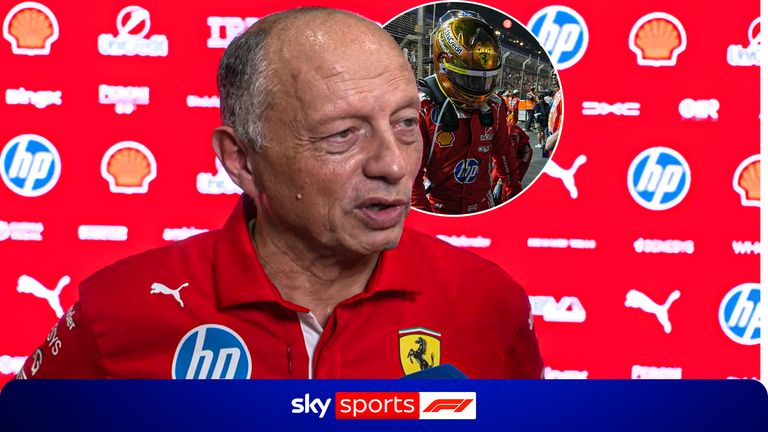
"On the coverage at home, we didn't hear any call from Ferrari to box Lewis, but we don't hear a lot of the calls that happen. Fred [Vasseur] obviously came out afterwards and said, yes, they did call him, Lewis missed the entry or ignored the call, whichever way you want to think about it.
"But someone of Lewis's stature doesn't forget to do a pit stop. So let's say it's a decision to not take the pit entry or the call didn't come in time or whatever. But that was crucial, I think, to the race at that point.
"If we go back a week, we had the same sort of lack of trust, for want of another word, in Malaysia."
After Ferrari's tyre choice at the start in Malaysia saw their drivers fall more than a minute off the lead, Hamilton's decision from the car to cut their losses and wait it out on the slicks ultimately paid dividends.
Collins added: "That shows, more globally, that Lewis isn't trusting that Ferrari team.
"He's questioning their decisions and in this sort of quick-decision VSC moment, there's not the time to have all the back and forth about what he thinks or why he thinks it or doesn't think it.
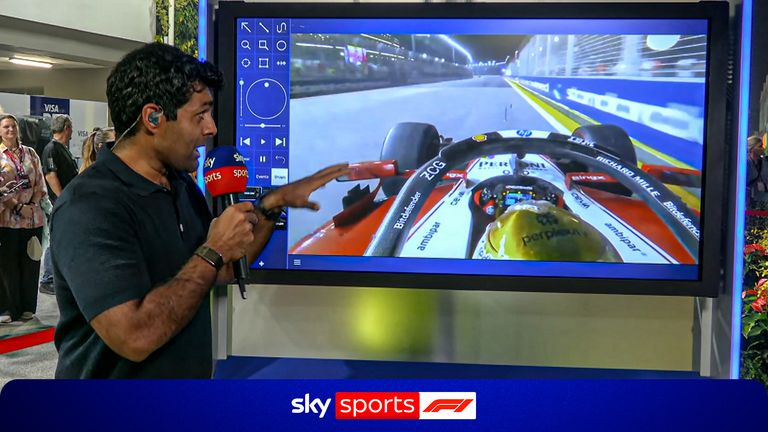
"But it's very difficult from a pit wall and Lewis's side to then think, 'okay, last week I questioned them. I think I was correct. This week I'm going to question them, maybe I'm correct or incorrect.'
"And then there was opportunity later on, I think, even after they missed the VSC, to do a full pit stop and still be able to beat Piastri and they didn't take that either.
"There was the decision then to string it out and hope for another safety car.
"There were lots of decisions that should have been done differently and they should be having a very difficult conversation between Lewis and his engineers, or the strategy team or Fred [Vasseur], whoever needs to be involved, to say, 'where is the trust?
'When we make these decisions, what is the protocol for how that decision is taken and why?'"
Do Ferrari need to give Hamilton more information in the car earlier?
Collins believes that, generally, drivers do need to defer to the pit wall around such decisions given a team's strategists have a fuller picture of what is going on in the race.
However, she used an example from her time at Aston Martin with four-time world champion Sebastian Vettel as showing how teams can also give drivers more information leading up to pit stops.
"In my opinion, yes, [drivers] should [defer to the pit wall]," said Collins. "They're the people with the most information. They're the people with the big picture.
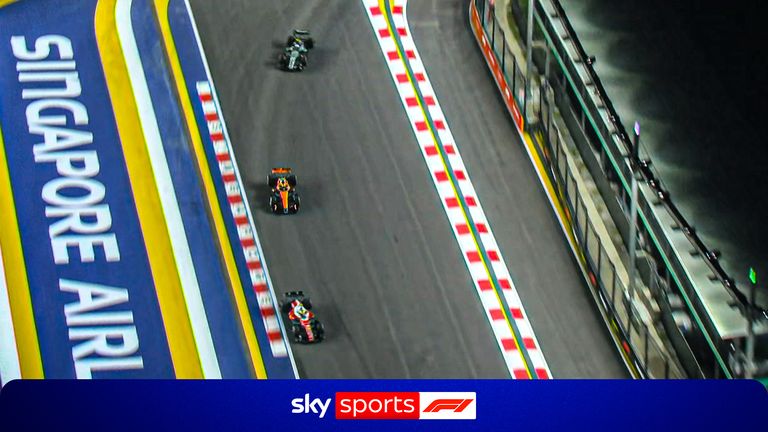
"However, there's another band of thought that says the driver is the most expensive sensor in the car. And I often had situations with Sebastian Vettel, who was very strong strategically, where we ended up starting to give him pit stop information earlier than we would give another driver in order to give him a sort of right to reply.
"If your driver regularly questions strategy, then you need to maybe give them the information.
"Many teams, lots and lots of teams in the situation that Ferrari were in, five laps before the safety car would have said, 'if there's a safety car now, we will take it and double stack the cars'. And that gives Lewis a chance to say, 'I think that's right, I think that's wrong'.
"You've a bit of a discussion about it. Yes, you're giving away information to other teams, which people don't want to do, but you're making the right decision for you and that is your P1 goal. So they need to bring the conversation forward if there's going to be a back and forth."
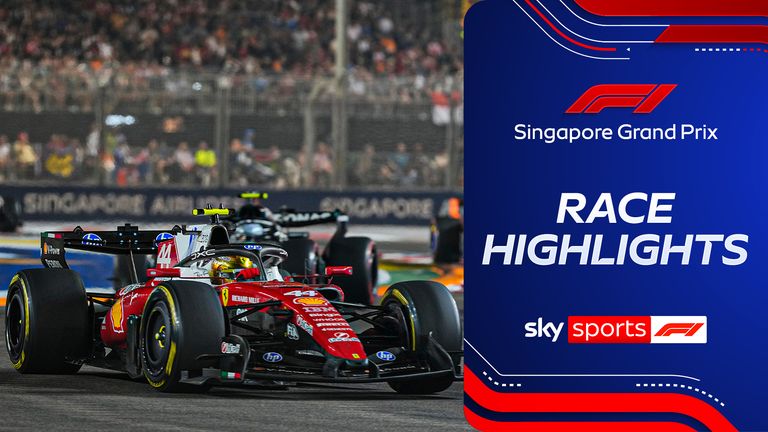
What are the lessons for both Hamilton and Ferrari?
Fellow Sky Sports F1 pundit and former driver Karun Chandhok believes "they've got to have some sort of reset" in terms of how they approach strategy discussions and decisions at Ferrari.
"Lewis was annoyed with the way Ferrari played that whole race," said Chandhok.
"If you look at it, he started on the medium tyre. Of the top-seven finishers, he was the only one to start on the medium tyre, yet he pitted first. They were clearly unhappy with his pace on the medium. We know it was a less preferred tyre, so they tried to get him off that tyre quickly. Fine.
"But then you have to look at the overall race time and they didn't look at that. They put him out behind Leclerc and then he sat there getting annoyed [at] the fact that he's not getting past Leclerc, and they didn't explain to either driver, that they need a swap. They didn't do a good job in that phase of the race.
"So then you've got Lewis who's now three seconds behind Charles annoyed that he's not been allowed to get in front. The VSC comes out, Charles boxes and he thinks, 'well, I'm going to have free air. I'm going to go for it.'
"He's not thinking of the big picture of the race and that's why I think the strategy team needed to say to him, 'Lewis, your tyres are 21 laps old now, you are going to get passed. You're going to drop like a stone when it comes to pace with all these people.'
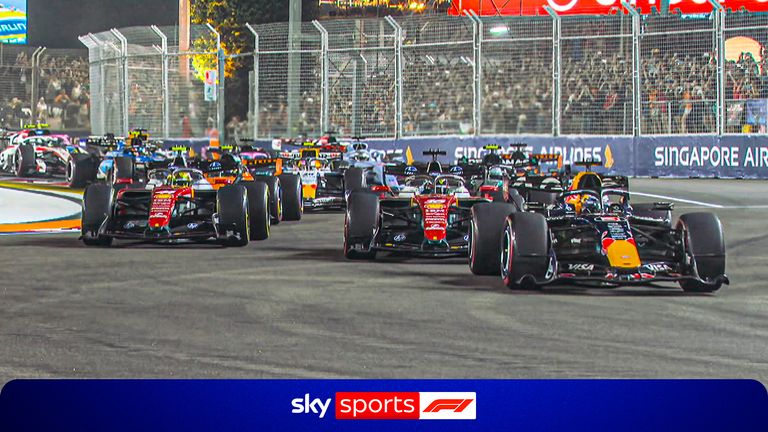
"Leclerc didn't have new soft tyres but he had a set that had done one run in qualy, and you could just see, he came out of the pits and was two seconds a lap faster than Lewis when the VSC cleared.
"And that's where any driver has to trust and believe their strategy team and take the inputs and make that decision. But, equally, it's on the team to explain the big picture to the driver and navigate the whole thing and I don't think Ferrari did a good job across the whole race there."
Formula 1 next heads to The Americas for another triple header with the United States Grand Prix in Austin up first on October 23-25, live on Sky Sports F1. Stream Sky Sports with NOW - no contract, cancel anytime