Darren Clarke: Europe's new Ryder Cup captain's past record
Last Updated: 18/02/15 12:37pm
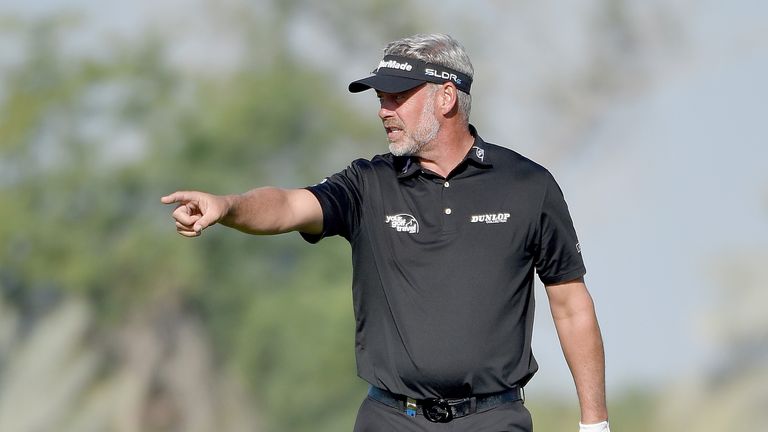
New Ryder Cup captain Darren Clarke will have experience behind him when he leads Europe at Hazeltine next Autumn.
Clarke has been at the forefront of most of Europe’s Ryder Cup successes over the last 20 years, and he will forever be remembered for the emotional scenes at the K Club in 2006.
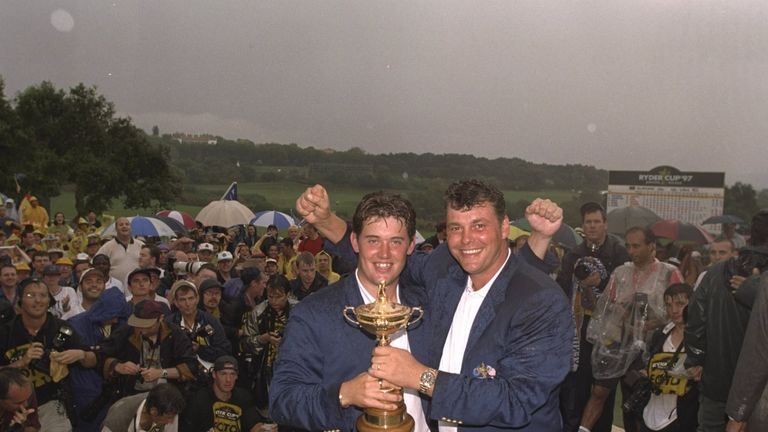
The 44-year-old was a frustrated figure on his debut at Valderrama in 1997 as he was overlooked by captain Seve Ballesteros for both opening sessions, but he enjoyed a win in his first match alongside Colin Montgomerie in the day two fourballs.
Clarke made the team comfortably for the Battle of Brookline two years later, when he began an impressive partnership with close friend Lee Westwood that would go on to yield six points from the eight matches they played together.
Their two defeats both came in Boston, and Clarke’s disappointing 4&2 defeat to an inspired Hal Sutton in Sunday’s second singles match set the tone for the day as the United States mounted a remarkable fightback that would be shrouded in controversy.
Order was restored at the Belfry in 2002, where Sam Torrance opted to pair Westwood with Sergio Garcia and put Clarke out with Thomas Bjorn – the latter pair beating Tiger Woods and Paul Azinger before losing their next two matches.
Clarke then partnered Paul McGinley to a halved fourballs against Scott Hoch and Jim Furyk, and the Northern Irishman then picked up another valuable half against an in-form David Duval as Europe clinched a tense victory.
The Clarke/Westwood partnership was restored by Bernhard Langer at Oakland Hills in 2004 after Clarke and Ryder Cup captaincy rival Miguel Angel Jimenez had teamed up to thrash Davis Love and Chad Campbell in the opening session.
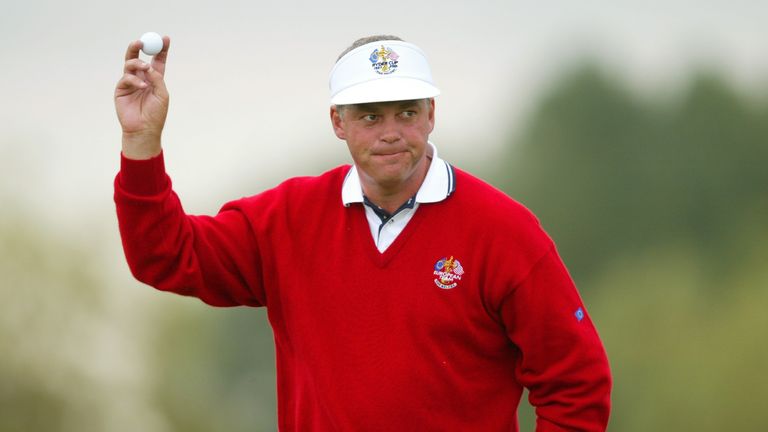
Clarke partnered Westwood to two victories, including a last-hole win over Tiger Woods and Phil Mickelson, although Woods atoned in tandem with Chris Riley in a thumping 4&3 win over Clarke and Ian Poulter on Friday morning.
A singles victory again eluded Clarke as his six-foot putt to beat good friend Love horse-shoed out on the final green, but it mattered little as Langer’s troops coasted to a comprehensive nine-point victory in Detroit.
One last hurrah
Clarke’s final Ryder Cup appearance as a player in 2006 was also his most significant. His wife Heather lost her battle with cancer just six weeks before the contest at the K Club, and many doubted if he would be mentally tough enough to take on the Americans while grieving.
But he assured Ian Woosnam he would be ready to play, and the Welshman duly named Clarke and Westwood as his two captain’s picks – a decision which prompted a furious outburst from Thomas Bjorn for which the Dane later apologised.
The ovation that greeted Clarke’s arrival on the opening tee on the first morning was one of the most memorable moments in Ryder Cup history. Paired with Westwood in the final fourballs match of the session, Clarke's emotional resolve would be tested to the limit once the cheers and tears had eventually subsided.

The noise echoed around the K Club and beyond when Clarke was introduced by Ivor Robson, but any questions over his ability to perform under the spotlight were soon negated by one magnificent swish of the driver.
Despite the majority of the players before him opting for a three-wood or hybrid off the tee, Clarke reached for the big furniture, wiped the remaining tears from his eyes and unleashed an almighty drive which travelled over 300 yards straight down the middle of the fairway.
A flick with a wedge set up an almost inevitable birdie which put Clarke and Westwood on course for victory over Mickelson and Chris DiMarco, and Clarke again stole the show on day two as his stunning chip-in for birdie at the 16th closed out a 3&2 win over Woods and Jim Furyk.
It looked likely that he would hole the overall winning putt for a dominant European team in Sunday’s singles but, although he was beaten to the honour by Henrik Stenson, Clarke still managed to earn the loudest cheer of the day when he finally earned his first singles win against Zach Johnson.
The floodgates opened, and Clarke was understandably the centre of attention during and after the celebrations that followed. He had provided one of the most enduring and heartfelt stories in Ryder Cup history that was appreciated on both sides of the Atlantic.
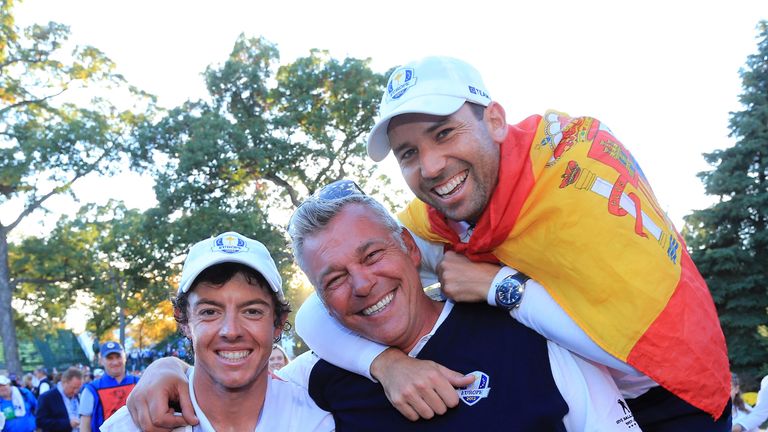
Freed from the stresses of the competition, Clarke’s form took a nosedive over the next year and, although he won twice in 2008, he had left himself with too much to do to make Sir Nick Faldo’s team in Valhalla.
Clarke was also missing from the 2010 European team at Celtic Manor following two consistent, but winless seasons, but he then ended his long quest for a major title when he scored a sensational victory at the 2011 Open Championship at Royal St George’s.
He was unable to build on his form at Sandwich when qualifying for the 2012 Ryder Cup began, but he was a crucial member of Jose Maria Olazabal’s backroom staff as Europe defied the odds with an astonishing final-day comeback in the Miracle of Medinah.
Clarke will now spearhead Europe’s defence of the trophy at Hazeltine next year, with his previous Ryder Cup experience and popularity in the United States certain to be vital attributes for the role.