NBA Europe: What is it? How does it work and which UK teams are involved?
Everything you need to know as the NBA launches it own European basketball league, with two British cities targeted for franchises
Wednesday 22 July 2026 12:06, UK
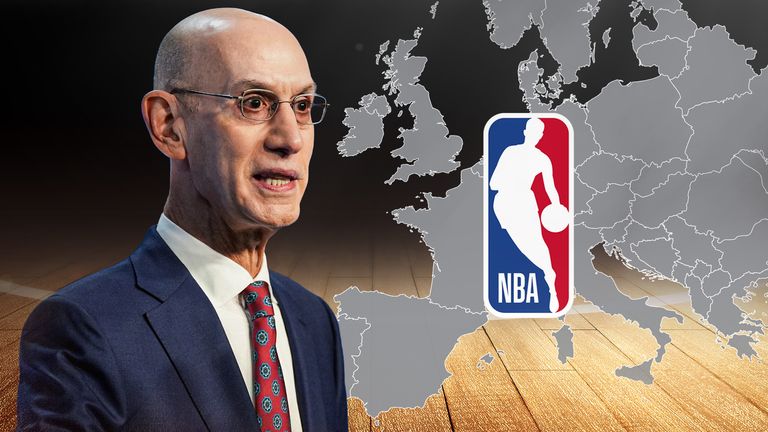
The prospect of the NBA launching its own league in Europe is the biggest talking point in European basketball right now.
The NBA and the International Basketball Federation (FIBA) announced in December that they would move forward with a "joint exploration of a new pan-European men's professional basketball league, engaging prospective teams and ownership groups in the process of joining the competition."
- Jokic, Doncic, Wembanyama? Amaechi insists UK can produce NBA superstar
- Magic guard Black reveals how Man City striker Haaland inspires him
- Download Sky Sports app for analysis, video and more
- Get Sky Sports or stream with contract-free with NOW
Since then, exploration has become a full-blown race. A formal bid process opened in February, more than 120 investor groups registered interest, and by the time final offers landed at the end of June every one of the league's 12 target cities had attracted bids - multiple ones above $1bn (£750m) in the most sought-after markets, with London leading the way.
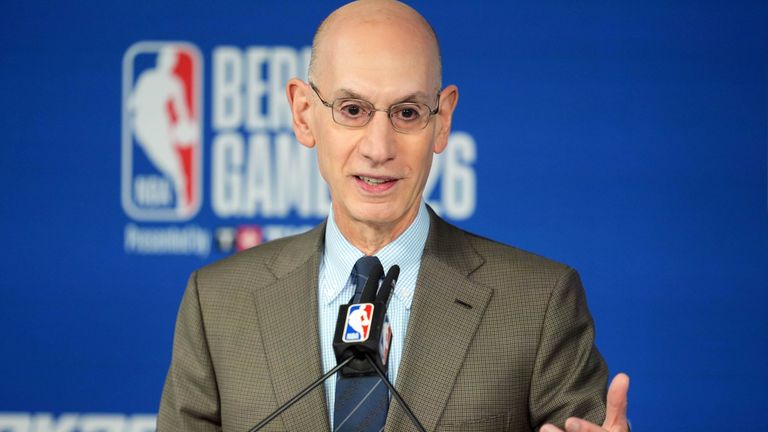
Commissioner Adam Silver says the first franchise deals should be wrapped up "over the next several weeks", after he and deputy Mark Tatum spent the weekend of the World Cup final in New York meeting bidders.
So what exactly is coming, who is paying for it, and what does it mean for basketball in Britain? Here is everything you need to know.
NBA Europe explained - everything you need to know
What is it?
A new professional basketball league in Europe, built in partnership between the NBA and FIBA, the sport's global governing body. It will launch with 16 teams, 12 of which will be permanent franchises and four places filled each year through a merit-based qualifying system, with routes via FIBA competitions such as the Basketball Champions League.
It will aim to compete directly with the existing EuroLeague as the top platform for club basketball on the continent, unless a compromise can be found which sees the competing organisations come together.
Why is the NBA doing it?
Because Europe is the biggest basketball market the NBA does not properly monetise. The continent produces many of the league's best players - including the likes of Luka Doncic, and former league MVPs Giannis Antetokounmpo and Nikola Jokic.
The NBA is looking to tap into the European fan culture which left NBA stars very impressed on their most recent European sojourn.
When does it start?
The league is targeting an October 2027 launch, which Adam Silver said in June is very much "on schedule". FIBA secretary general Andreas Zagklis flagged the date when the two bodies set out their plans in December.
Which cities are in the running?
There are 12 target markets for the permanent franchises: London and Manchester, Paris and Lyon, Madrid and Barcelona, Milan and Rome, Berlin and Munich, plus Istanbul and Athens. Silver has said interest has also come from cities the league did not ask to bid.
Who is running it?
Deputy Commissioner Mark Tatum is leading the project for the NBA, working alongside FIBA, with George Aivazoglou serving as managing director for Europe and the Middle East. JPMorgan and the Raine Group are advising on the franchise sales. Silver and Tatum are the two taking this weekend's meetings in New York.
What about the EuroLeague?
The elephant in the room. The EuroLeague remains Europe's established top competition and talks between the two sides have so far produced no compromise.
Rather than wait, the EuroLeague is pursuing its own expansion and chief executive Chus Bueno has confirmed talks with the London Lions about an expansion franchise, setting up the prospect of two rival top-tier teams in the capital. Bueno has, though, publicly ruled Manchester out for EuroLeague.
How much is being bid?
More than 20 groups submitted finalised bids after the process opened in February, with offers of $500m (£370m) or more reported in every one of the 12 target cities and multiple bids above $1bn (£750m).
In London, multiple bids have been made over the $1bn (£750m) mark for what is the most sought-after franchise destination.
Who wants to own the London and Manchester teams?
In London, Sky News has reported bids or interest from Liberty Global, a consortium involving Daniel Levy and Jahm Najafi, and the Reuben family. City AM has credited Saudi Arabia's Public Investment Fund and Todd Boehly with interest and reported that Marshall Glickman, the former EuroLeague acting chief executive, is attached to one of the London bids.
In Manchester, the owners of the city's Super League Basketball team have told City AM they are in talks over a bid backed by private equity or sovereign wealth, while the owners of Manchester City and Manchester United have been credited with interest. The Athletic reports that Buss Sports Capital has bid in both British cities.
Who is bidding elsewhere in Europe?
RedBird Capital - owner of AC Milan - is reportedly working closely with the NBA and is seen as frontrunner for the Milan franchise, with Qatar Sports Investments expected to pursue Paris. The Athletic reports a Rome bid fronted by Luka Doncic and former Dallas Mavericks executive Donnie Nelson which Buss Sports Capital (the group connected to the family which previously owned the Los Angeles Lakers) could yet join, with the Buss group also bidding in Lyon alongside its London and Manchester offers.
Where does the UK fit in?
Two of the 12 target cities are British, and the NBA's UK footprint has grown fast. In September the NBA and the UK government announced a joint £10m investment in basketball, £5m from government under its Community Sport Facilities Programme matched by £5m from the NBA into grassroots programmes running to 2028.
The O2 staged the NBA London Game in January, which was the 19th game involving an NBA team in the UK since 1993 and the 10th regular-season game in the capital. Manchester's Co-op Live hosts the city's first regular-season game in 2027.
Earlier this month, Trafalgar Square staged the Jr. NBA 3v3 Finals and an NBA 3X creator tournament for a second year.
What does it mean for British basketball?
Both the London and Manchester NBA Europe teams could field sides in Super League Basketball, it has been reported, which would plug the new franchises directly into the domestic pyramid rather than sitting above it.
British former NBA start John Amaechi believes it will give the UK the chance to build basketball communities and infrastructure which is lacking currently for the game in this country.
NBA Europe and EMEA chief George Aivazoglou has previously described the UK as the single biggest untapped opportunity in European basketball. The league's belief is that permanent franchises in marquee cities, backed by NBA-grade venues and production, can unlock basketball's full potential in the UK.
What happens next?
The NBA's Board of Governors and FIBA will work through their process to select the winning bids with franchises announced on a rolling basis and long-form agreements to be finalised.
Silver says he hopes to wrap up some of the deals over the next several weeks, with announcements to follow and the first names landing, potentially, before the autumn.