
Conspiracy theories
Tuesday 26 January 2010 11:51, UK
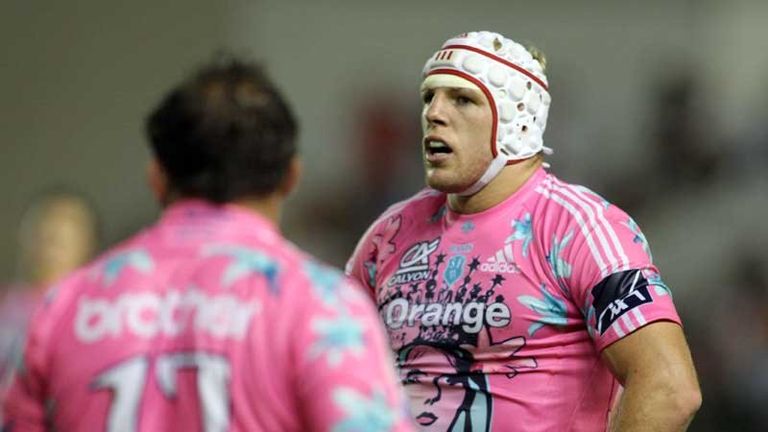
Stuart Barnes sifts through the excuses to discover why English clubs failed to perform in Europe.
Evaluating the English game
Apologies to the many gentlemen who emailed on the heated subject of the English club performances in this season's Heineken Cup. From grave English concerns and clutching excuses to gloating Irish missives the whole spectrum of possibilities has been considered and the vast majority has come up with a single reason, one way or the other. But that's the problem with most of the evaluations; they all tend to be absolute. Rugby analysis - like most other forms of modern day analysis - has become too Manichean. It has to be black or white. It takes me back to my teens when because I didn't like conservative politics I had to be communist. A few years later and I shrivel at the unnecessary absolutism of that naive opinion. Extremes, like political utopias, just aren't the answers and the debate on English club failures revolves mainly around extreme positions. The extreme English position has it that the Celtic League teams have an edge because the slightly less constant combat of the Magners League enables these sides to prepare accordingly for the Heineken Cup while the English teams are beating seven bells of the proverbial out of one another in some muddy scrap against a limited but powerful Worcester or Saracens team, for example. Exhaustion and an inability to experiment are proclaimed, with that most scarlet of herrings - relegation - the stop on developing a style requisite with the demands of the Heineken Cup. Newcastle's bold playing style when faced with the threat of relegation last season dismisses that one out of hand. But as for the prolonged rests and delicate management of players in the Magners League, well, much as the Celtic League hates the accusation, it has to be a considerable advantage but not the one and only differential some English defences would have you believe.Budget buffer
France has four of the eight contestants in the knock-out stages and that is explained by the advantage of the uncapped wage salary. The French Top Fourteen is a match for the English equivalent in terms of pure power but the sheer scale of budgets possessed by teams like Toulouse, Clermont, Biarritz and Stade Francais (yes, the four qualifiers) enables them to freshen up players in a way the English clubs, all of whom have cut back wage bills due to extraneous economic circumstances cannot. Caught between the devil of French budgets and the deep blue sea of the softer Magners League, the English have slumped to a European low with only Northampton qualifying as eighth seed. Looking at this from the historical perspective the answer to the question of why only one English qualifier is a Gallic shrug and a 'so what?' English clubs have a fine record and one six-week period shorn of swallows doesn't lead to an endless winter. London Irish had plenty of chances to progress against the champions of Europe and failed as much for individual reasons as any innate theory of either superiority or inferiority. And the Tigers were so close to the try line when Ben Youngs threw a pass at the feet of Aaron Mauger instead of his chest...who knows what might have happened. These games are fine margins and to apply some daft absolute theory won't do. If we accept the English clubs do have a disadvantage compared to the Celtic and French teams for a variety of reasons we also have to consider the technical reasons for failure. The English clubs have played a fairly barren hand to date in the domestic leagues. Laws, referees, relegation, you name it but there a one hundred and one reasons why the attacking game is so often bereft and not once have I heard a club admit that unimaginative and negative coaching is a factor. It IS a factor and a reason why so few bright young talents are emerging onto the scene. English rugby is creating athletes rather than rugby players. That is not the case in Celtic countries or France where players are clearly better physical specimens than ever but not wholly at the expense of technical expertise. That is a problem in England but if the English absolutists claim the teams failed to progress because of one dimensional French, Irish and Welsh advantages, they will be doing the future of the English club game irredeemable harm. I don't know if 'poetic justice' means anything except a waste of ink but the fact that the most ambitious attacking team in England, Northampton, qualified, might mean something.The game according to Geech
Ian McGeechan thought the main reason for English failure and French success was based upon the consistent quality of the rugby being played and the ability, therefore, to come up with the big plays when it counts. He is right to emphasise a fact that others have reasons to keep quiet. Yes, English rugby has disadvantages and yes, it is enduring a year of low quality but there is no great black and white here, there is no single explanation for what has occurred throughout these compelling pool stages. Lots of factors have come into play; there is nothing to suggest English rugby is entering a slump period and no proof Ireland and France are entering Golden Ages. It seems to be a damn good year for these teams and my advice would be to enjoy the pleasure they bring supporters rather than spend time concocting an absolute theory for success and failure.Stuart answers your emails...
Got a question for Stuart? Email him at skysportsclub@bskyb.com or use the feedback form below...Time to fit the crime
Hi Stuart, I was wondering what your view was around the 70 week ban of the Stade Francais prop David Attoub. I have seen some of the TV evidence but not the photo used, so I presume it does look terrible and I would never condone such an act as it is the worst form of violence on a rugby field. My query is the length of the ban as it does seem extremely harsh if you compare that with other similar cases such as Schalk Burger and even Julian Dupuy. If other players were given consistent bans, based on the degrees of the offence, then no problem but this doesn't seem consistent. Also, players are bound to appeal, as is the case here, and if they get the ban significantly reduced then it makes a mockery of the system.Paul Arista STUART REPLIES: Paul, David Attoub would not have received 70 weeks had he been a high profile international. Had Julian Dupuy been Attoub, conversely, he would have received a longer ban although Attoub's past record and Dupuy's (not to mention the usually fair Schalk Burger's) is a factor that has to be taken into consideration. I'll have a look at the prop's CV later in the week; until then I'll cautiously concur with your concerns re consistency.
Ban the choke holds
Hi Stuart, would you welcome new laws banning contact from players arms below and including the elbow on opposition players above the shoulders? In recent months I have noticed the forearm choking technique being used around mauls, rucks and tackles to bring players down and it seems to have taken over from the old fashioned fisticuffs when an incident occurs. Personally I find seeing someone attempt to close another person's airway disturbing and feel it is a result of judo going too far in rugby. It would also encourage players to tackle properly or not at all which would help attacking teams and also make it easier to deal with eye gouging.Keith STUART REPLIES: Keith, Good point and one linked to the issue of the borderline high tackle that is so hard to referee. We need to bring the top end of the tackle height down and certainly address the 'choking' issue which is legal but clearly out of the same school as the gouge... not intended to actually harm but designed to frighten opponents into concessions. Right now we are obsessed with the gouge but unless we have some proactive thinking by the IRB the forearm choke will eventually become a headline act when it could be stamped out while it remains in its relative in fancy.... great mail, thanks.
Celtic League is top heavy
On last week's column, Paul Morris says the Magners League has little importance in the rugby world? This comment gets the award for most breathtakingly arrogant/ignorant/misinformed of the year so far. Three of last years semi-finalists were Magners teams, most of the best players in Ireland and Britain play in it. How do you think Munster and Leinster would do in the Premiership if theyn were in it?Malcolm Dell STUART REPLIES: Malcolm, The Irish giants could quite easily finish first and second in the Premiership but they would not achieve those heights if fourteen of their squad were rested on a relative basis. And that is the point. The top end quality of the Magners League eclipses the Guinness at the moment but the guts of the Celtic League is very flabby in comparison and with play offs introduced in the Magners the potential for less intense rugby, more often grows. The Ireland, Wales and Scotland team benefits at the expense of weekly excellence. It boosts international and Heineken hopes but does not meet the regular demand for excitement as the Premiership does (despite some pretty average quality the supporters seem to love close games). The situation as it stands is a strength and weakness in both leagues but for different reasons.
Overhyped?
I'm sick of listening to English fans giving out about an unfair playing field in regards to the Heineken Cup, the fact of the matter is Ireland only has at most 20,000 people playing rugby, England on the other hand has over 200,000, it all boils down to poor training & development of younger players, plus the good players you have are over hyped, an example of this is Lawes from Northampton, Quinlan at 36 made bits of him.Michael O'Neill STUART REPLIES: Alan Quinlan did teach Courtney Lawes a lesson on the night but hey, Lawes outplayed Paul O'Connell in Northampton and few claimed the Munster captain was purely the beneficiary of a good press after one bad night. And the Heineken Cup is more suited to Celtic teams but that isn't the only reason why Irish teams are excelling and English teams are not. I try and address this constant sniping between national fans in the column.
Stealing the win
Stuart, I'd say Northampton are kicking themselves after that defeat. They bullied and harrassed the Munster pack all night, and had them on the ropes on a few occasions. This Munster 15 is not as imposing as previous teams. They are weak in the front and back-rows (in the absence of Dennis Leamy). There are only one or two angry men left in the squad, and it has to be said that many of Munster's recent success's were attributable to the inherent bitterness and fury of the local players. The are far from invincible at the moment, and if opposition teams play without fear against Munster, they can beat them.Fergus Gallagher STUART REPLIES: Fergus, Yes, but they won and you can argue that the Saints lost because they did not know how to win and Munster did. The Saints, I think, could have won that game had they convinced themselves it was another Premiership match but on the flip side had they taken the lead would they have held it? Munster have played badly and won before. I wrote them off before their visit to Perpignan and then saw a might display. I won't dismiss them again even though they did not play like winners Friday night. Oh and on that point a big thanks to the Munster stewards and fans, the vast majority of whom thought gentle mockery was the order of the night and all done with lovely grins. It might be a spanking new stadium on two sides but the place oozes old fashioned rugby and remains a delight to visit - even after a whopping miscall. I am counting the weeks off until the quarter final decider between Munster and Northampton.