Mahlatse 'Chiliboy' Ralepelle gets two-year doping suspension
Thursday 10 September 2015 20:18, UK
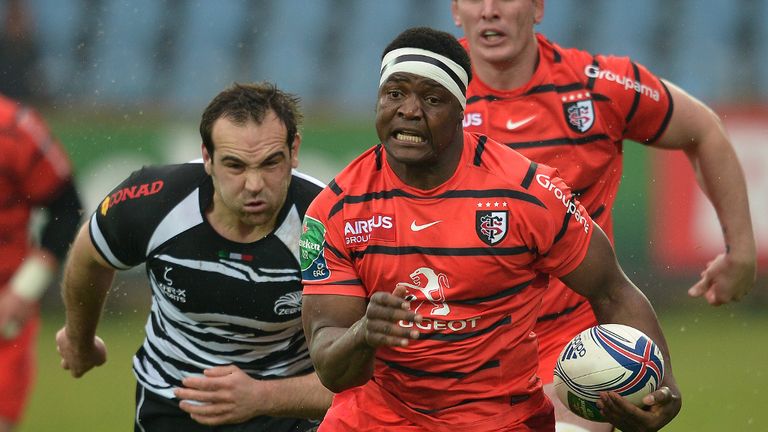
Former South Africa player Mahlatse 'Chiliboy' Ralepelle has been suspended for two years for a doping offence after abandoning an appeal against the charge.
The 28-year-old hooker returned a positive test for banned anabolic steroid drostanolone after an out-of-competition doping control on March 19, 2014, while recovering from an operation on an anterior cruciate ligament.
The op followed a knee injury he had suffered while playing for French Top 14 side Toulouse against Biarritz in February of that year.
Ralepelle, who played 22 times for South Africa, was provisionally suspended in April last year but his case was only heard on June 2 this year by an independent World Rugby Judicial Committee chaired by Christopher Quinlan QC.
The committee found he had violated anti-doping rules and on Monday, World Rugby confirmed Ralepelle's two-year suspension, reporting that the player had last week decided to discontinue his appeal to its independent Post-Hearing Review Body.
Ralepelle's suspension is taken as having started last year and he will be free to play again on April 10, 2016, although his contract at Toulouse was ended earlier this year.
World Rugbychief executive Brett Gosper said: "World Rugby operates a zero-tolerance policy on doping and players are responsible for any prohibited substance found in their body.
"Rugby is founded on fair play and the promotion of a level playing field for all players. This particular case illustrates the rigorous anti-doping programme World Rugby implements in conjunction with WADA, both in and out of competition.
"Along with our testing policy, World Rugby's Keep Rugby Clean initiative is designed to educate players of all ages and grades about the dangers associated with taking banned substances."
It is the second time that Ralepelle has tested positive for a banned substance. In 2010, he was found with methylhexanamine in his system, but was cleared by the South African Rugby Union because the stimulant had come from a supplement provided to the players.