
Chris Robshaw - the captain's dilemma was England's grizzly choice
Tuesday 29 September 2015 16:17, UK
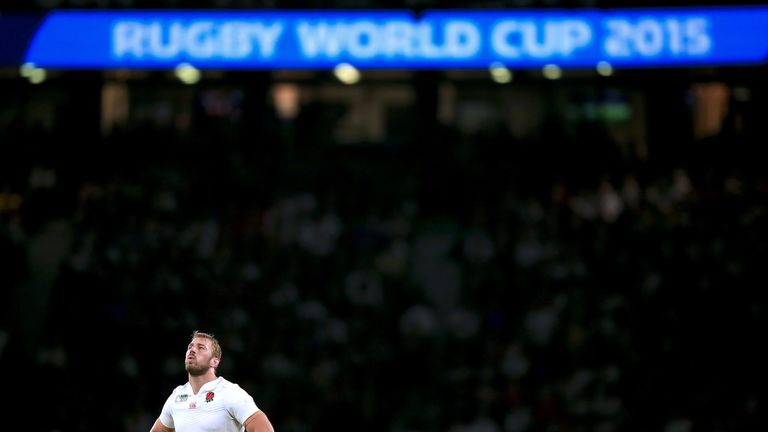
What do you do if you're walking through the backwoods of British Columbia and you bump into a bear? Graham Simmons on Chris Robshaw's choices.
Do you scream? Not a good idea, apparently, especially if he's in a grumpy mood: bear with a sore head and all that.
Okay, do you run? Not recommended either. He might think you've got something to hide, get inquisitive and give chase. So how about climbing a tree? Yes, well, only one winner there, I'm afraid; indeed, climbing a tree to get away from a bear is nature's equivalent of trying to reason with a traffic warden.
In fact, you have just two plausible options. Option One is to play dead or, to quote the Canadian National Parks' website, 'lie on your stomach with legs apart and position your arms so that your hands are crossed behind your neck and remain still until you are sure the bear has left the area.' Ballsy call, if you ask me.
Alternatively there's Option Two which, to quote the same page of the very same Canadian National Parks' website, invites you to (their capitals, their exclamation mark) FIGHT BACK! 'Intimidate the bear: shout; hit it with a branch or rock, do whatever it takes to let the bear know you are not easy prey.' Stone me, are they serious? Frankly, that sounds like an even dumber choice than Option One. And how the hell are you supposed to know which bear suits which call?
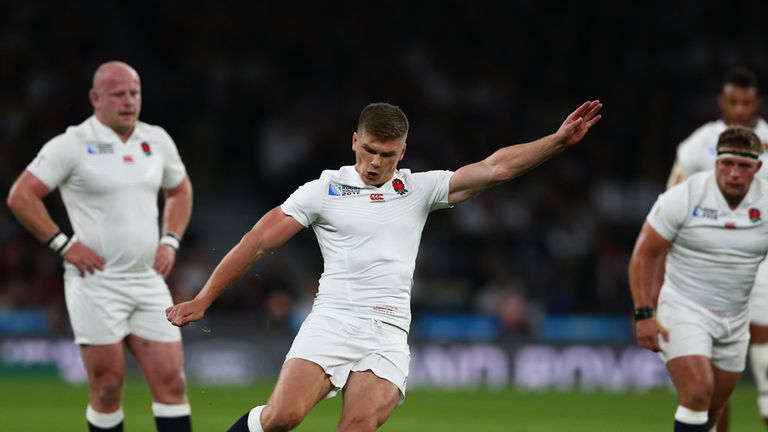
Thus was Chris Robshaw confounded last weekend against grizzly Wales. What do you do? Do you back the so-and-sos into a corner, gather your meanest mates and try to maul them to death with your bare hands? Or do you call forward the feisty Farrell and trust that 'Faz' can kick them in the slats with his laser-guided right boot; thereby stunning them sufficiently for the rest of you to regather and finish them off? Yes, well, Christopher, rather you than me.
In fact, much, much simpler to be a journalist. One week, you can watch Japan topple South Africa with a last-gasp, nuts-out, all-in power play and then write twelve hundred well-chosen words about captain Michael Leitch's colossal 'cojones'. And then a week later, you can watch England come up five yards short with a last-gasp, nuts-out, all-in power play and then write twelve hundred well-chosen words about what a muppet Chris Robshaw is. And do you know what, across the sweep of the seven days, hardly anyone will spot the difference.
Let's just suppose for a moment that Robshaw didn't do what he actually did and instead - never mind the angle and the fact that the kick's on the 'wrong' side of the pitch - let's suppose he tosses the tee to Farrell. Let's also suppose that Farrell misses and England lose leaving Robshaw branded an idiot for not having the nuts to chase the win and go to the corner a la Michael Leitch. Alternatively let's suppose that Farrell - heroically - lands the kick and England scramble a measly draw leaving - hey, ho - Robshaw branded an idiot for not having the nuts to chase the win and go to the corner a la Michael Leitch. What's a boy to do?
Hindsight
In a world plagued with twenty-twenty hindsight, everyone - certainly in sport - seems conditioned to believe that it's the right decision only if it works. Indeed Stuart Lancaster - strangely - suggested as much in the immediate aftermath of the Wales debacle. Excuse me? So if I'm playing Black Jack and the house deals me a ten and a two and I twist and I get another ten, then I made the wrong decision? Really? Or if I insure my house and contents against damage and disaster, does that only count as a smart move if an eighty mile-an-hour wind dumps my conservatory in next door's back garden? Puh-leese.
And since when is - in Stuart's words - 'nailing it' the criterion for the legitimacy of any decision? In the First Test between New Zealand and England at Eden Park in June last year, Aaron Cruden - bless him - tapped and went from an eminently kickable penalty with two minutes to go and the scores tied at fifteen apiece. As it happened, Conrad Smith went over in the corner and won the game but Cruden's decision was, per se, not just wrong but leaden-headed and the fact that Smith scored didn't make it any less so. To go back to the Black Jack analogy, Aaron twisted on nineteen and got a deuce. Brave? Absolutely. Bonkers? No question.
In a world plagued with twenty-twenty hindsight, everyone - certainly in sport - seems conditioned to believe that it's the right decision only if it works.
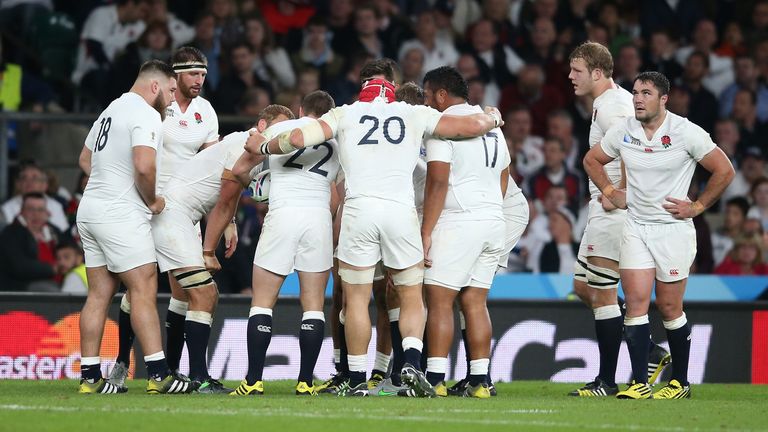
So did Chris Robshaw get it right? Either call - properly executed - could have got the job done and therein lies your answer. Logically, certainly, there was nothing wrong with going for the knockout punch. The angle to the sticks was acute and the kick was only enough to draw even. Besides, there were three minutes to go, there was plenty of time to drive the maul from the line-out - perhaps sneak a much more kickable penalty, maybe even draw a sin-bin - or indeed, to attack with some sustained width against a team with scrum-halves on the wing, fly-halves at full-back and all hands to the pump. It was a perfectly reasonable call, assuming, of course, that England weren't dumb enough to throw the ball to the front of the line-out and give Wales the chance to drive them straight into touch. Ah, now there's the rub.
Execution

More often than not it's the execution as much as the outcome of a decision that defines its worth and in that regard, England were several stations beyond Daft Junction. But even then there are no guarantees. Back in the backwoods of British Columbia, you could play deader than a possum in a post-mortem and still find the bear taking you at your word and dragging you home for supper. Alternatively you could stand and FIGHT BACK! and get yourself cuffed to kingdom come in three seconds flat. As the Canadian National Parks' website puts it at the bottom of the page, 'it's very difficult to predict the best strategy to use in the event of a bear attack. That is why it is so important to put thought and energy into avoiding an encounter in the first place.'
Or, in other words, have the courage to pick a team that isn't just an 'arms race' reaction to the opposition fifteen; or don't give away eight kickable penalties in your own half; or don't get caught in no man's land in the thirteen channel; or don't leave your opposing wing unshackled - even if he is a replacement scrum-half - when you should be trusting to the defenders inside you; or don't throw a catch and drive to the front of the line-out when the touchline's five metres away.

And please, if you're a journalist - and even if you're not - don't assume you can have your cake and eat it. If you're praising one captain for taking Robert Frost's 'road less travelled by' wherein lies 'all the difference' then please be consistent. Or at the very least, when you're asking the question of Chris Robshaw, give an honest man an honest break.