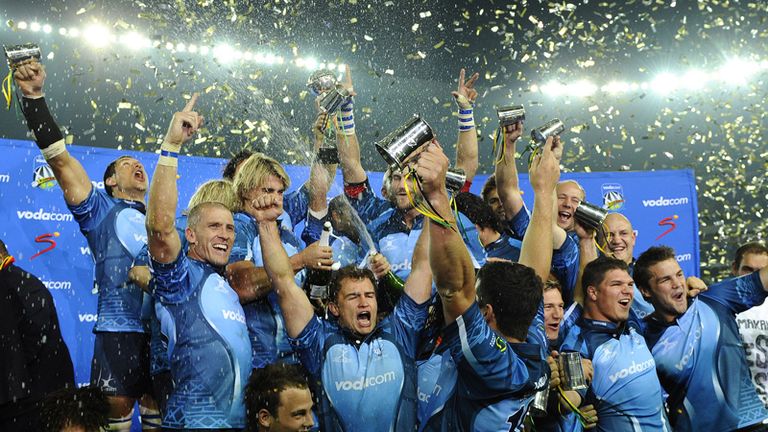
The best rugby from the southern hemisphere is back with one more team and a new format!
Find out how the Super Rugby competition has changed for 2011!
The Super Rugby competition has not only expanded to 15 teams in 2011, but it has also made some significant changes to its format.
Not interested in what happens south of the hemisphere? Well you should be as the biggest names from Australia, New Zealand and South Africa go head-to head.
This year's competition has added heft as players have a chance to impress their respective national coaches in a World Cup year.
Sky Sports is the only place to watch Super Rugby with some selected games also available to watch online.
Click here and choose Sky Sports Xtra to view our online games.
The new Super Rugby format
There will be three pools/conferences which are based on geography:
| Australia | New Zealand | South Africa |
| ACT Brumbies | Blues | Bulls |
| Melbourne Rebels | Chiefs | Cheetahs |
| NSW Waratahs | Crusaders | Lions |
| Queensland | Highlanders | Sharks |
| Western Force | Hurricanes | Stormers |
| | |
*Each team will play the other teams in their conference home and away - that is eight local derbies.
*They will also play four of the five teams in each of the other two conferences home or away for another 8 games. Each team will therefore play 16 games during the regular season
*There are six final spots up for grabs.
*The winners of the Australia, New Zealand and South Africa conferences will automatically go through as the top three teams ranked in order of the number of points they accumulated.
*The last three remaining spots will go to the three teams who have accumulated the most points without winning their respective conferences.
*In the first week of the finals the two teams who won their respective conferences with the most points during the regular season will get a bye.
*The conference winner with the lowest amount of points will go into a sudden death qualifier with the sixth ranked side.
*In a second knock-out qualifier the team placed fourth on the ladder at the end of the regular season will face the fifth placed team.
*The winners will progress to the second week of the finals where the team who topped the table at the end of the regular season will take on the lowest ranked winner of the previous week in the first semi-final.
*The team that finished second on the competition table at the end of the regular season will play the highest ranked winner of the previous week in the second semi-final.
*The two winners of the semi-finals will contest the final.
The season will run from February to July in a World Cup year and from February to August in a non World Cup year