
January transfer window: Why do some signings not work out?

Thursday 4 January 2018 19:30, UK
With the January transfer window now open, it will be a very busy time for clubs as they seek out that short-term fix that can help turn their season around. Shortlists will be checked and agents will be called. Can a deal be done before the window shuts? And will any prospective signing be able to hit the ground running and make an immediate impact?
Rob Mackenzie is very familiar with the stresses and strains that come with an impending transfer deadline. He was Leicester's head of technical scouting, Tottenham's head of elite player identification and Derby's head of recruitment. For him, assessing the psychology of a player can be even more important than evaluating their statistics.
"One of the most difficult aspects of the scouting process is to gain an insight into a player's personality, character and mind set," Mackenzie tells Sky Sports. "In my experience, however, it is these psychological aspects that are the biggest factors in whether a well-scouted player turns out to be a success or failure."
Here, he sets out some of the key factors that clubs must consider when identifying whether that target is really worth pursuing in a frenzied transfer market this January…
Adaptability
The issue of adaptability is an easy concept to grasp but correctly judging a player's ability to adapt to life in a new country is crucial to the success of any signing. A good way of doing this is to put yourself in the place of that player and trying to work out how they really feel about making a move to your club. Why would they want to be there?
Typically, players who stay in the same country for a prolonged period do so for a reason. They enjoy the lifestyle and feel at home there. Perhaps they appreciate that their skills are better suited to playing there than elsewhere. In my opinion, the older a player is without having tested themselves in a different culture, the riskier that signing becomes.
In circumstances like these, it is not necessarily a question of how 'good' a player is but how they are likely to be able to cope with the new demands that are going to be placed upon them. Roque Mesa, the 28-year-old Spaniard signed by Swansea in the summer, appears to be an example of how a quality player can still be a gamble if he struggles to adapt.
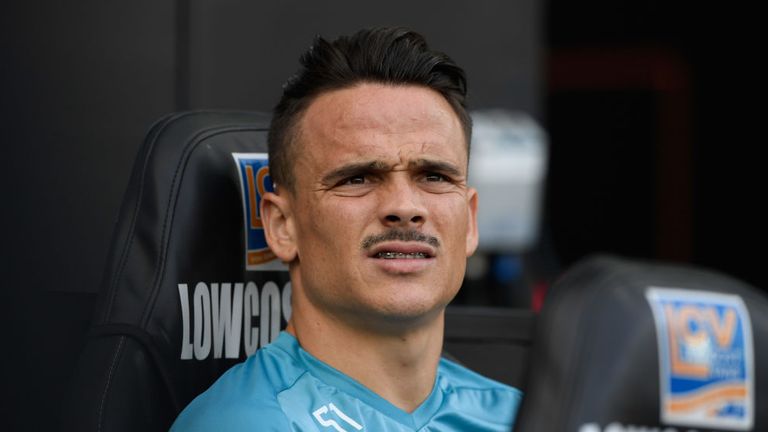
Mesa had not played outside of Spain prior to joining Swansea. In fact, the majority of his clubs have been based in the Canary Islands. Moving from there to Wales would be a significant change for anybody to go through. Having started only nine of the first 22 games this season, it seems he may still be experiencing an understandable period of adaptation.
In contrast, Virgil van Dijk's ability to adapt to new challenges will have been considered by Liverpool before his £75m move this month. He moved from Groningen to Celtic and then Celtic to Southampton, both times making an immediate and significant contribution to his new club in his debut season. This will give Liverpool's recruitment department confidence.
Motivation
As well as adaptability, clubs will be trying to anticipate a player's motivation if they were to sign for their club. Where is the player at in his career currently? How may he perceive a move to our club? Is it a step up or another step down from what they are used to? Finding these answers will help you understand whether a signing will really be raring to go.
In the modern game, players can be sheltered from harsh assessments. Agents may fear the consequences of being too pragmatic in their assessment of a client's career options in the knowledge that rivals will be happy to push pie-in-the-sky possibilities. As a result, players sometimes have an unrealistic notion of the level they 'should' be playing at.
Live Nissan Super Sunday


Understanding how genuinely motivated a player may be by the opportunity that you are offering them is vital to any deal's potential success. Some recent examples of loan deals where a player moved from a bigger club to a smaller one, highlight the importance of having a strong grasp of that individual's motives in agreeing to the transfer.
For example, Jack Wilshere's move from Arsenal to Bournemouth, and Mamadou Sakho's switch from Liverpool to Crystal Palace, both proved successful. In my view, one of the key factors in their enthusiasm was that both men believed they had a future at their parent club and viewed the loan move as an opportunity to prove their manager wrong.

However, when Scott Sinclair joined Aston Villa on loan from Manchester City in January 2015 it was a bit different. He was leaving the reigning Premier League champions for a club battling to stay up. What is more, he had experienced an underwhelming season-long loan at Villa's Midland rivals West Brom during the previous campaign, getting only 300 minutes.
Given that Sinclair had previously been headhunted by City for £7m after impressing at Swansea, this may have been a difficult period in his career in terms of his self-perception. Where did he really feel he belonged? The fact that Sinclair struggled at Villa but has been superb for Celtic since then suggests that competing for trophies brings out the best in him.
Conclusion
Professional football players have got undoubted talent - that is why they saw off the competition and made their way in the game in the first place. The key to recruitment, however, is not just to work out how talented an individual could be but how motivated they are to contribute to your club and whether they can adapt to the new demands.
During the January transfer window, it will be the clubs who understand the players on their shortlists, as human beings as well as footballers, who will have most success in the market.