
Burnden Park disaster: How Bolton are honouring the forgotten tragedy
Wednesday 23 September 2015 14:15, UK

Sky Sports News HQ reporter Ben Ransom finds out about the forgotten football tragedy as Bolton honour the 33 supporters killed in one of Britain's worst stadium disasters.
Bolton's FA Cup run in 1946 should have been a story of hope returning to a country coming out of conflict.
Things were starting to get back to normal, with international footballers coming home from the Second World War to resume their playing careers.
On March 9, 1946 an estimated 85,000 people descended upon Burnden Park to witness Bolton Wanderers face a Stoke City side inspired by the legendary Stanley Matthews.
But 33 supporters never made it back to their families.
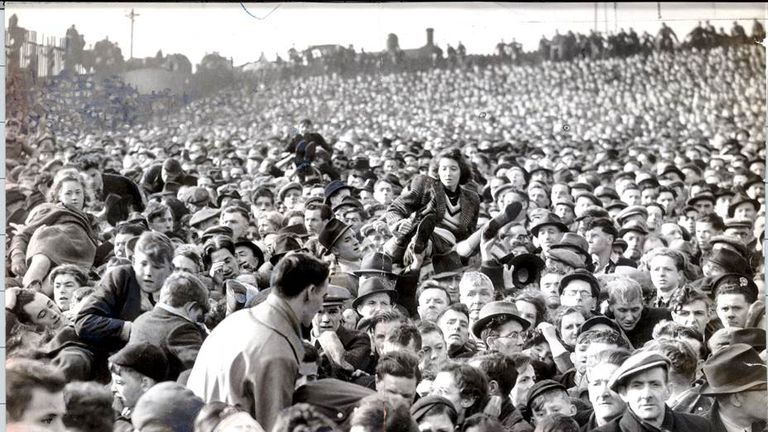
There were so many fans desperate to get into the ground they packed the Bolton end, with others climbing over the wall to avoid paying. Soon the terraces became dangerously overcrowded and inevitably something had to give. Fans suddenly spilled onto the pitch as a crush barrier collapsed, some were suffocated in a pile of bodies and others trampled to death.
It was a black day in the history of Bolton Wanderers - and also one of the worst disasters in the history of British football. So why does it continue to be known around the club as the forgotten football tragedy?
The club hope a new third kit commemorating the 70th anniversary will change that.
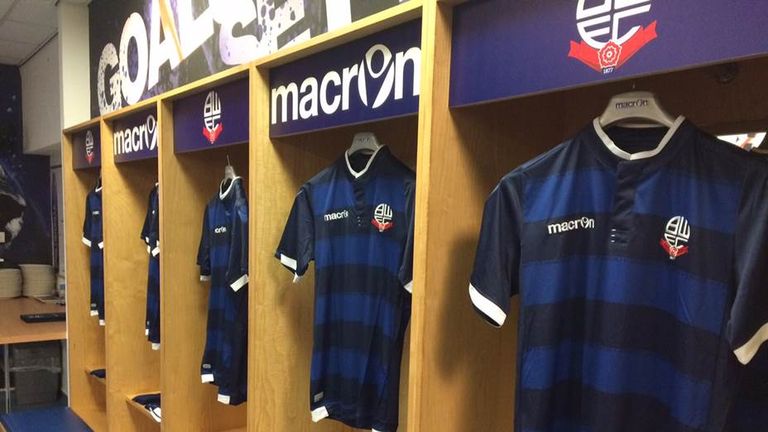
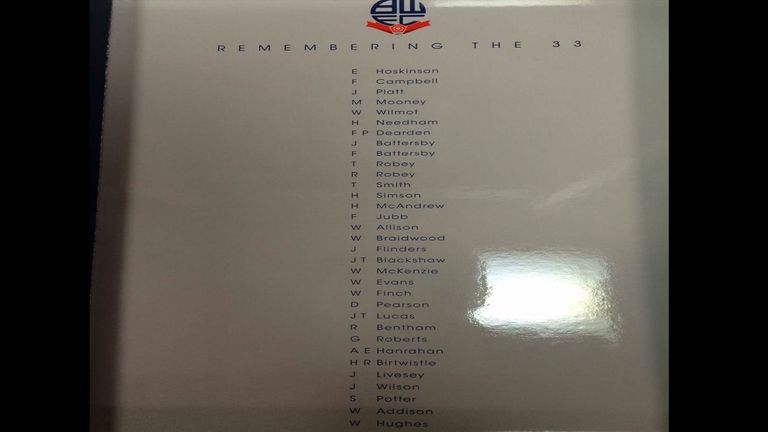
"It's a fantastic gesture by the club," Neil Lennon tells me in the home dressing room of the Macron Stadium. "The names of each of the 33 victims are embroidered into the shirt and you can see what it means to the people around the town."
One thousand limited edition shirts are being produced for supporters and appropriately there is an extra-special guest on hand to receive the first one.
Phyllis Robb, aged 100, survived the tragedy when she was lifted up by other supporters and passed over their heads to safety. The picture remains one of the most iconic images of the disaster, imagery not lost on the current Bolton manager.
"She's a remarkable lady" says Lennon as he presents her with the special shirt. "It's the darkest day in the club's history and one that quite rightly the club is remembering as it's approaching its 70th anniversary. And it's fantastic that Phyllis is here to live to tell the tale."
There are other staggering details about the tragedy that really have to be told.
The game was stopped while the 33 dead and some 400 injured were carried away, but after a delay of around half an hour the decision was taken for the players to return to the pitch to finish the match.
It might seem incomprehensible to us today but it's worth putting some context here about post-war Britain. It was the first time the FA Cup had been played since World War Two, and it's perhaps understandable those at Burnden Park that day had a different perspective on the horrors they witnessed.
Simon Marland is the club historian, and his grandfather was one of those hurt in the disaster, suffering broken ribs.
"Nobody knew what had gone on. If the game stopped the police were worried spectators would panic when they saw people on the pitch lying behind the goals, so they took the decision to carry on. The referee played out the game, and not surprisingly it petered out into a nil-nil draw."
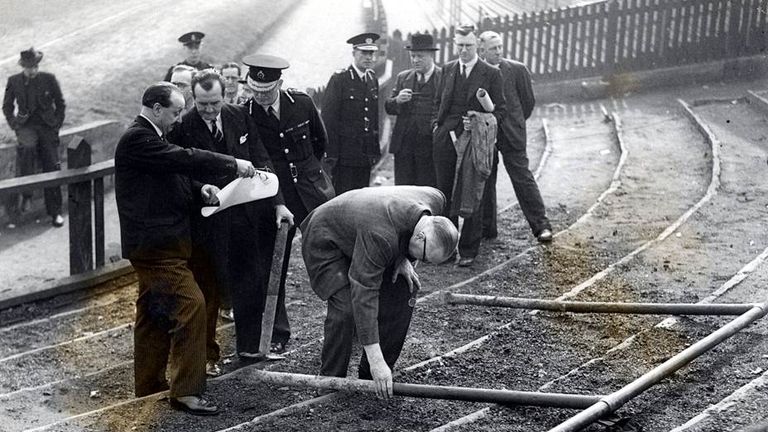
From the darkness did come some light and improvements to spectator safety. An inquiry led to tighter regulations about how many people were allowed into stadiums.
Bolton now want the memory of those who lost their lives to give hope to a new generation. Ten pounds from the sale of each shirt will go to a local charity helping the young homeless and unemployed.
Kieran Walsh is the operational manager for Bolton Young Persons Housing Scheme.
"It was really fantastic to be given the opportunity to be associated with this shirt, with this remembrance and with this club. The donations make a huge difference to the work that we do, providing practical and emotional help to young people."
Burnden Park itself might now be a memory - but at Bolton's new home those who lost their lives are certainly not forgotten.