
What can West Ham learn from Arsenal ahead of their Olympic Stadium move?

Thursday 6 August 2015 09:15, UK
West Ham's trip to the Emirates on Sunday gives them a taste of life in a new stadium as they prepare to leave Upton Park next summer, but what does Arsenal’s experience tell us about moving homes?
It seems fitting that West Ham’s final season at Upton Park should begin in the futuristic surroundings of Arsenal’s Emirates Stadium. The Hammers are, after all, a club with one eye firmly fixed on what lies ahead.
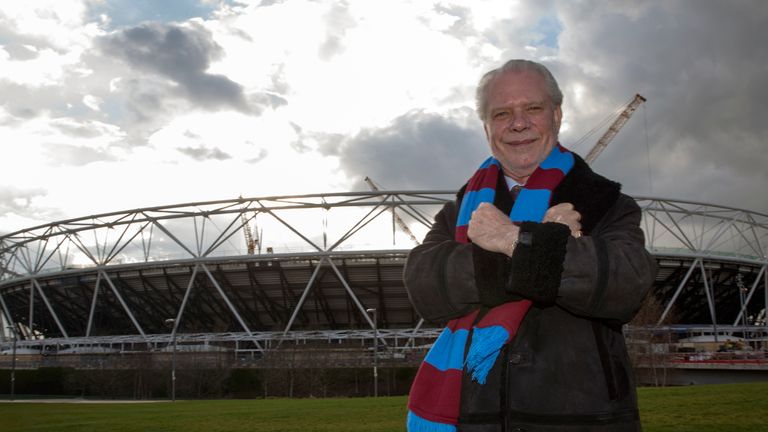
Indeed, co-chairman David Gold has already outlined West Ham’s lofty ambitions for the Olympic Stadium, the 54,000-capacity arena they will call home as of next summer. "We are hoping West Ham will be in a position very soon to worry the top five and have them saying: 'Who are these upstarts? Who do they think they are?’”
They are bold words, but the Hammers can take encouragement from Arsenal’s Emirates move. Arsenal were, of course, long-established as one of England’s top clubs when they left Highbury in 2006, but their new home is a magnificent arena which has given them a perfect platform to go to the next level - both on and off the pitch.
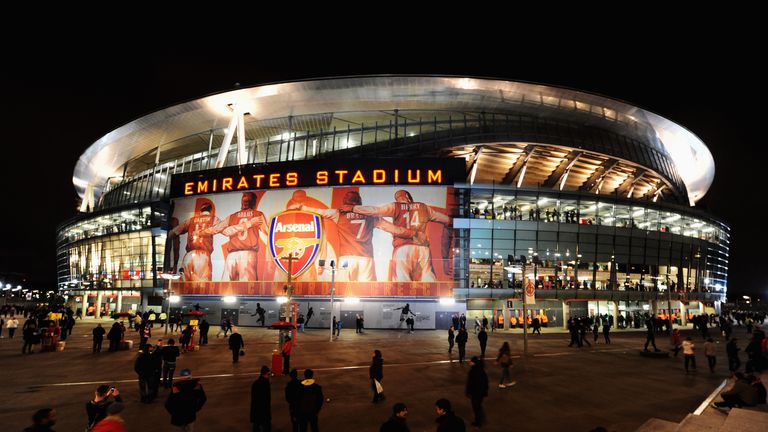
The figures speak for themselves. Arsenal’s match day revenue has rocketed from £37.4m per year at Highbury to close to £100m at the Emirates, allowing the club to clear the debts they accumulated during its £390m construction and emerge as one of the most financially secure clubs in Europe. It took eight years to win their first piece of silverware after the move, but the club are optimistic that back-to-back FA Cup wins are just the start.
Live Ford Super Sunday


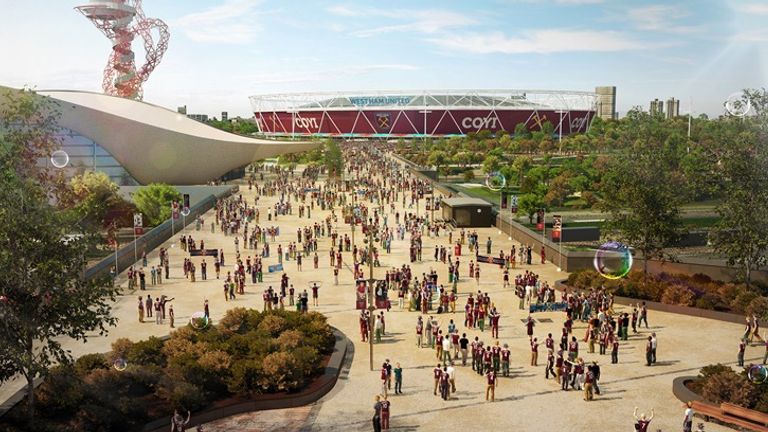
West Ham are a long way behind their London rivals, but they see similar potential at the Olympic Stadium. Rather than ploughing hundreds of millions into its construction, however, the Hammers have only had to contribute £15m (the same amount they paid for Andy Carroll) on top of a £2.5m annual rent for their 99-year lease. To put that into context, the overall cost of the construction and conversion of the Stratford arena now stands at over £700m.
“It’s an absolutely fantastic move for the club,” West Ham and England legend Sir Geoff Hurst told Sky Sports. “There are one or two die-hards who have not been having it, and the usual negatives about not filling it, but there are so many positives: the magnificent stadium, the accessibility of Stratford, it’s in our manor… Not many people have been involved in the club longer than me, and I’m absolutely positive that it’s going to be a fantastic move.”
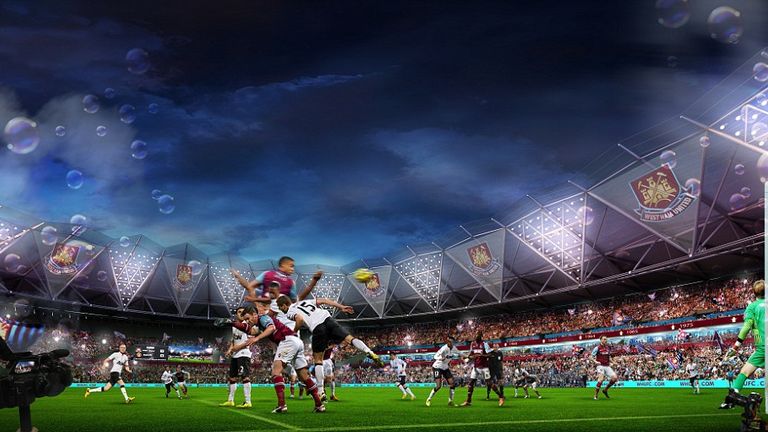
West Ham supporters have been invited to use state-of-the-art ‘virtual venue technology’ to see the view from their seats next season, and construction is ongoing on the world’s largest cantilevered roof to make the stadium suitable for football as well as athletics. The distance from Green Street to the Olympic Stadium is only two-and-a-half miles, but in every other sense they are worlds apart.
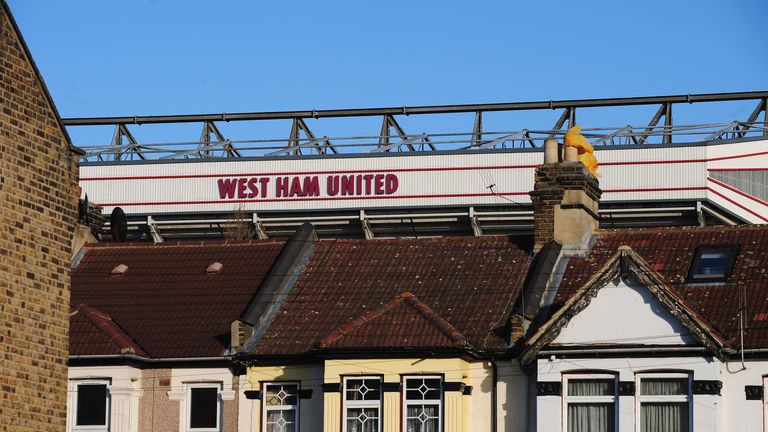
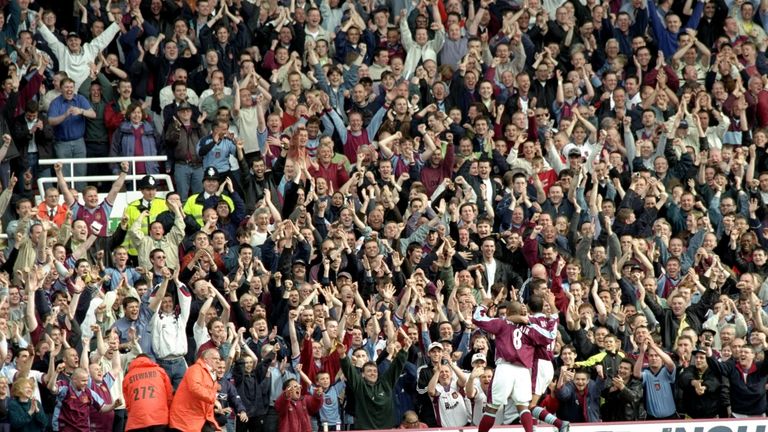
The 35,000-capacity Boleyn Ground has been West Ham’s home since 1904. It is a famously intimate ground with a unique atmosphere, and former Arsenal midfielder Ray Parlour, who grew up in east London, has fond memories both as a spectator and a player.
“My dad was a big West Ham fan so I was over there as a kid sometimes,” Parlour told Sky Sports. “The atmosphere was always electric, it was a very tough place to play. I know it has been widened out now but in the old days you were right on top of the fans. You could take a throw-in and have a bite of someone’s pie in the crowd, that’s how close you were.
“Highbury was excellent as well,” added Parlour, who won three Premier League titles with Arsenal between 1992 and 2004. “I loved the stature of it and the history as you walked up those marble stairs. They have both been very good stadiums, but football has moved on. The corporate side of the game is much bigger now, that’s where the revenue is for the clubs. As much as I loved Highbury, the Emirates now is a brilliant stadium and I’m sure the Olympic Stadium will be great for West Ham.”
Retractable seating will ensure West Ham’s fans are not watching from behind an athletics track at the Olympic Stadium, but Nigel Winterburn agrees with his former Arsenal team-mate’s assertion that football is moving on from the intimacy of grounds such as Highbury and Upton Park.
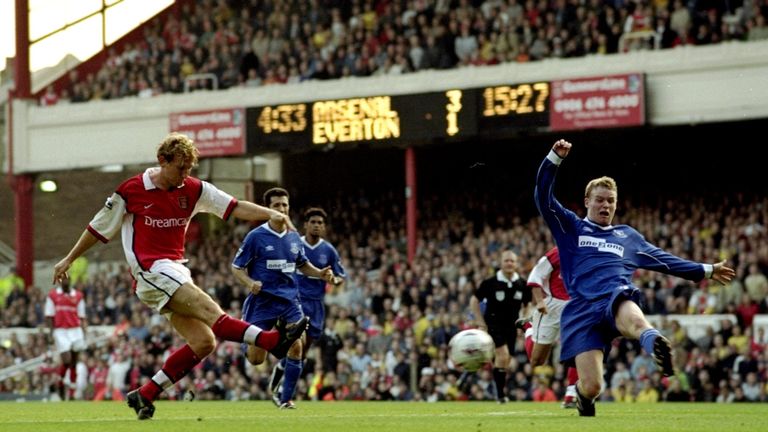
“They were compact stadiums, with the fans very, very close to the pitch,” said Winterburn, who had a three-year spell at West Ham after leaving Arsenal in 2000. “At the modern stadiums people want the corporate hospitality, dining and a seat with a perfect view. Upton Park was very, very high intensity in terms of its atmosphere. I think it’s hard to recreate that at these more modern, bigger stadiums.”
Parlour believes it’s crucial for West Ham to generate that atmosphere after the move. “As a player, the atmosphere is always very important, it gives you that extra lift when you need it,” he said. “I’m just hoping West Ham can keep the atmosphere they have at Upton Park.”
The cavernous Emirates Stadium certainly presented a challenge for Arsenal in that regard, but it has begun to feel more like home after the process of ‘Arsenalisation’ the club launched in 2009, and West Ham are already planning to adorn the Olympic Stadium in claret and blue and club branding.
Before West Ham’s thoughts turn to next year, however, new manager Slaven Bilic and his side are facing what Hurst describes as one of the biggest seasons in the club’s history.
“This year is of vital importance, more than any of the last hundred years,” he said ahead of their Super Sunday meeting with the Gunners. “We want to make sure that we’re comfortable in the Premier League before we move into the Olympic Stadium.”
The pressure is on Bilic to keep West Ham safely clear of the relegation zone, but after bringing in the likes of Dimitri Payet from Marseille and Angel Ogbonna from Juventus this summer, the Croat is targeting a top-10 finish in his first season at the helm before launching an assault on the European places in the Olympic Stadium.
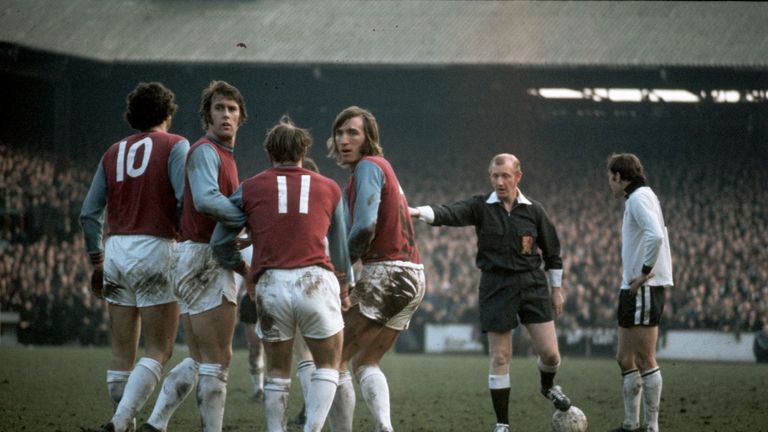
Hurst added: “We’re not a Manchester United or an Arsenal, but the heritage and the legacy of the club is fantastic. With the crowd we get and the longevity of the club, we should arguably be in the top half every year, and a team that’s in the top half of the Premier League needs to be playing in a fantastic stadium.”
Top-half finishes are one thing, but can West Ham eventually challenge for a Champions League place? Hurst is cautious. “We see the amount of money that has to be spent at Chelsea and Manchester City for them to be in the elite,” he said. “In my time they were nowhere near the elite. West Ham are a well-run club with the current bosses - but they are not going to have that kind of money to fork out.
“But could what happened at Man City happen to us?” he asks. “If you’re a billionaire and you’ve got the opportunity to buy a Premier League club, would you buy in Manchester or would you buy in London?”
West Ham could find out the answer to that question in the not too distant future, but there is plenty of work to do until then - and it starts at the Emirates on Sunday.
Watch Arsenal v West Ham live on Sky Sports 1 HD on Sunday from 12.30pm