
How England got smart: Why the games programme has been vital
The Premier League games programme has made a big difference

Saturday 8 September 2018 08:37, UK
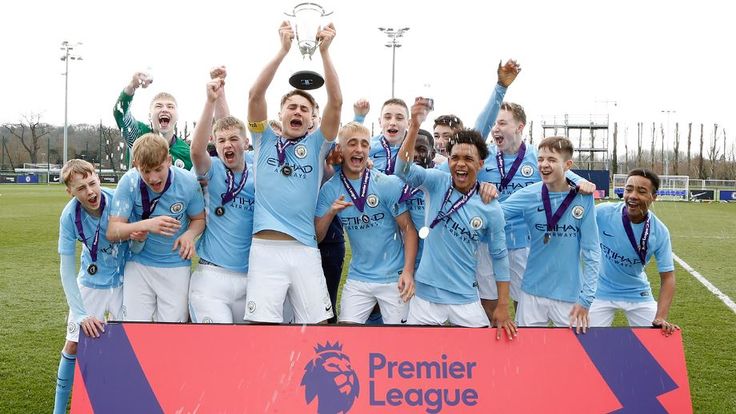
England are enjoying a period of rare success across the age groups but what’s the key? With the help of former England youth coaches, Adam Bate finds out why the Premier League games programme has made a big difference to player development.
Why are England doing better at tournaments? There are many explanations that have been offered up and the reasons are sure to be manifold. Some point to the momentum that's built up as teams feed off the feel-good factor at St George's Park. Others simply argue that this is just a freak of circumstance - the golden generation theory revisited.
But when it comes to the specifics of tournament football there is a belief that the impact of one particular change should not be underestimated. The introduction of the Premier League games programme at club level has given young players the insight into tournament play and the variety of experience that had been previously been lacking.
There has long been an awareness that tournaments present a unique challenge to players. It is the reason why for so long there was such frustration among those who worked in youth development at the number of withdrawals from age-group competition. Perhaps the nadir came in 2011 when as many as 30 players were unavailable for the U20 World Cup.
The following year things began to change for the better with the Premier League's Elite Player Performance Plan (EPPP). One of the four key components of this was the new games programme. Through various festivals and tournaments, this provides clubs with a combined total of around 6000 matches a season across all age groups.
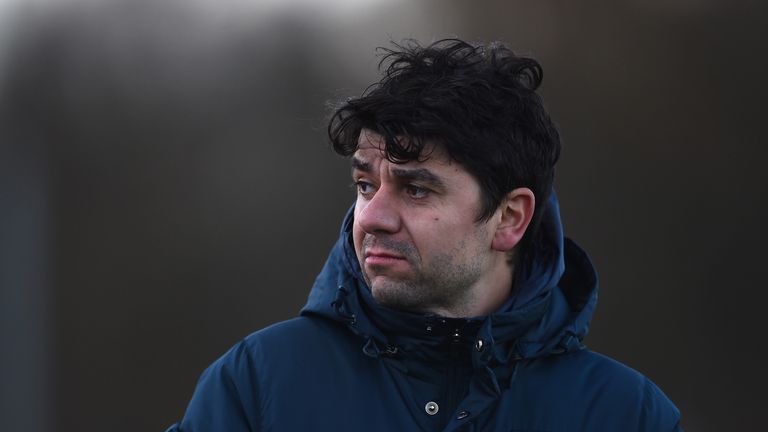
For those who have dedicated their working lives to youth development in this country, it is a source of pride and relief that the necessary changes have been made. Dan Micciche was the FA's technical lead for U12 to U16 as well as the England U16 coach and he believes the impact of the games programme can hardly be overstated.
"That is the big one," Micciche tells Sky Sports. "It had always been the missing part of the jigsaw. The Germans were always ahead of us in terms of club tournaments. I am told that some kids in Germany experience up to 15 tournaments a season. Spain have leagues as do Holland. So these other countries were in competitive situations earlier.
Playing a greater variety of games all over the world against all different kinds of opponents has been absolutely massive.
"Their players were accumulating more minutes and more match exposure. They had the stopwatch on the side and they were learning game management. The fact that our kids are now playing more games and are playing a greater variety of games all over the world against all different kinds of opponents has been absolutely massive."
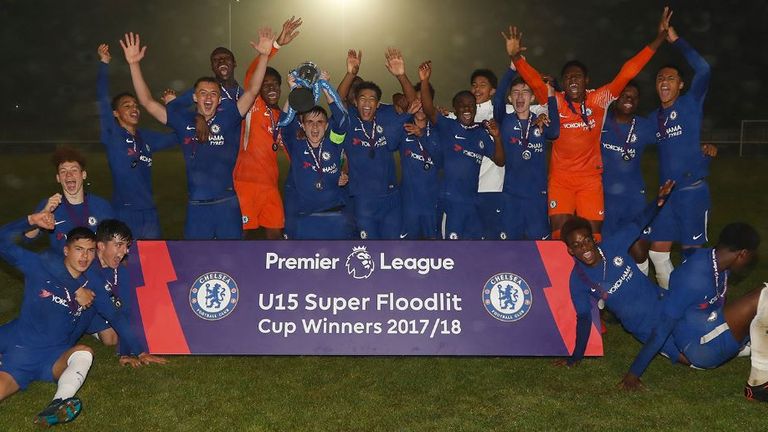
The variety of competitions that players are now involved is remarkable. The U15 floodlit cup is designed to get them used to performing under the lights just as they will need to do in their senior careers. Power-play tournaments have loud music piped in at random intervals to develop the concentration needed when playing in front of crowds.
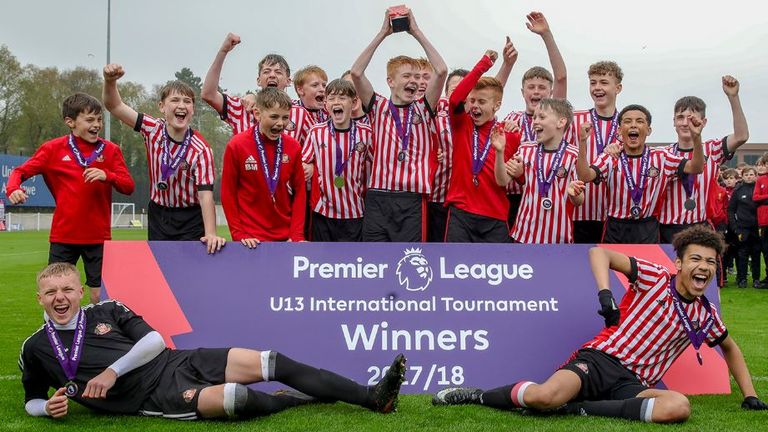
"They are getting more creative with the tournaments in terms of the size of the pitches," says Micciche. "There are underload and overload tournaments where you play with more or less players. There is futsal. There are regional groups before national groups and the incentive is there to get to the national level because they invite international teams.
"The Premier League deserve a big pat on the back because when the kids then get back to England and you are about to play Holland, you ask them if they know any of their players and they do. They will say that they played against so-and-so in a tournament in Switzerland and they played against this young lad in Japan. They have so many experiences already."
Live UEFA Nations League


The FA have embraced this too and are making a conscious effort to improve the breadth of those experiences. It was an added source of satisfaction that the U20 World Cup was won in South Korea after facing teams from five different continents. The U17 World Cup triumph in India included knockout wins over Japan, United States, Brazil and Spain.
Even when there was a gap in the competitive schedule, England's U17 team arranged to play friendlies against Brazil in March. John Peacock, the head coach of that side between 2002 and 2015, is convinced that it has been a factor in the success. "Tournament football over a condensed period of time is different," he tells Sky Sports. "You have to have that exposure.
Live International Football
"The clubs are doing a lot more now even at younger age groups and the FA have been very good at that in recent years too by going beyond Europe. They have gone many times to the Far East and South America playing different opposition. It is different and they have to have that exposure to different cultures. That has definitely been helpful."
As well as tournament experience, the games programme has other benefits. Perhaps the most obvious is that it gets young players on the pitch more often. "The regional games are on the doorstep and the national tournaments are played over a weekend with six games in two days," explains Micciche. "What that means is less travel and more play."

Talent identification is made easier for the national-team coaches too. "It helps with England when you are scouting because it is more realistic," he adds. "It is a tournament, which is what international football is, and the clubs are playing against other teams from nations as well so you are getting to see them in a much more real-life situation."
As Gareth Southgate looks to add young talent to his England squad in the coming months, there is likely to be much speculation about whether they are ready for the step up. But it is worth noting that thanks to the games programme, this next generation of English talent will be better prepared than ever before for the challenge of delivering at tournaments.
If you're reading on skysports.com comment below to get involved in the debate, but please adhere to our House Rules. If you wish to report any comment, simply click on the down arrow next to the offending comment and click 'Report'.