
Marcelino discusses Valencia's brilliant start to the La Liga season, Barcelona, Carlos Soler and Gabriel Paulista

Monday 27 November 2017 07:24, UK

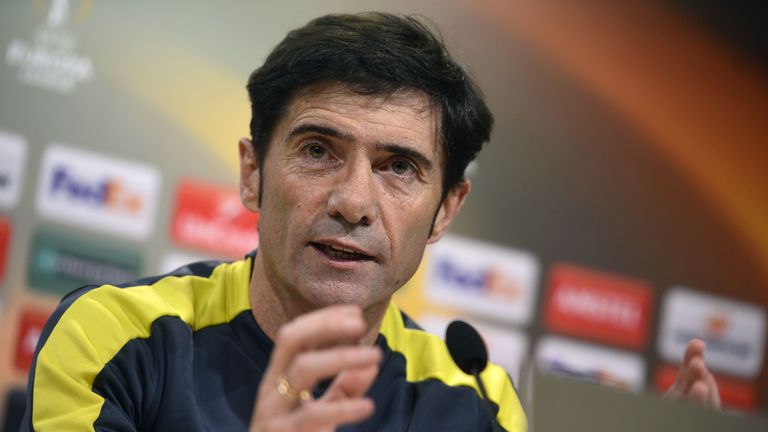
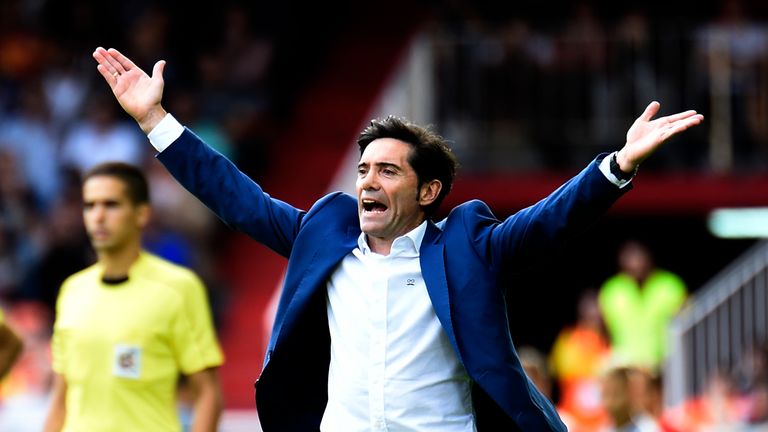
Valencia boss Marcelino discusses his side's brilliant start to the La Liga season, catching Barcelona, Carlos Soler and Gabriel Paulista.
Guillem Balague (GB): Let's start in the summer. Back in May, you knew what the situation was and that you were coming to Valencia. What were you told before arriving?
Marcelino (M): I had an initial conversation with Mateu Alemany and (Jose Ramon) Aleksanko, who was the sporting director at the time. In the first meeting, we explained who we were and how we work.
I tried to explain that if that matched up with the profile of a coach and his coaching staff that they deemed suitable for Valencia, we could keep talking. There was a second meeting, which shows that they were convinced by the first one and after that, we started focusing on the small details,
And I think we were on the same page in terms of our way of thinking and the basis which would underpin the project, and so we started working together. I think that through the combination of thinking, analysing, hard work and a slice of luck, we've managed to put together a very competitive squad.
GB: You've got it right a lot more than clubs usually do when many players are allowed to leave and many new players come in. You've got it spot on, so is there an explanation for that?
M: I think the most important aspect was getting it right in terms of deciding which players that were here last season to keep and which ones we could do without.
I believe that was a crucial starting point. As for establishing a squad made up of players and people, a notion that we consider very important, we started to look at player profiles that could fit in with what we already had and would complement the squad. That's exactly what we tried to do, while bearing in mind human qualities.
In many cases, the players already knew La Liga, which we felt was very important. They also knew the language and we believed that those two factors combined would help them settle in quickly.
GB: You brought in some players to improve the squad and other experienced players to slot straight into the starting line-up, such as Gabriel.
M: Yes, we knew at the start of the project that our priorities were at the heart of the defence and a defensive midfielder.
There was uncertainty over what would happen to Garay in terms of whether he would stay or not, and he did, because he's a player that meets our sporting ambitions, but there was a financial situation to bear in mind and we wanted to bring in two top centre backs.
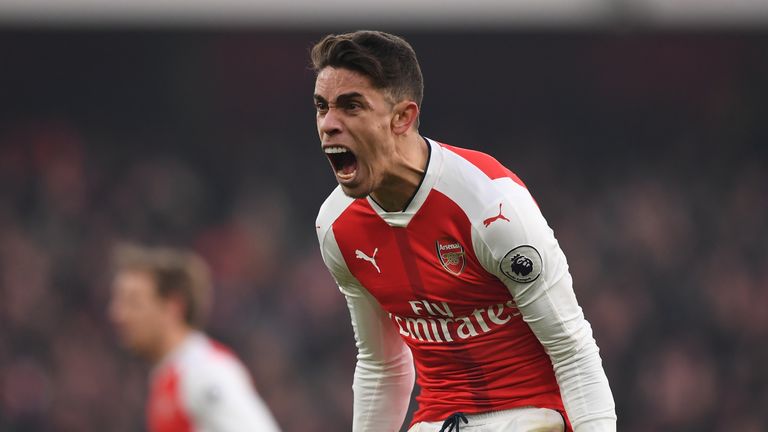
The circumstances came together, with Gabriel being able to leave Arsenal and he's a player that I knew well from our time together at Villarreal. We also signed (Jeison) Murillo, who already knew the league and we were familiar with thanks to several good seasons at Granada.
We were lucky enough that they wanted to come and that we reached agreements with their clubs.
GB: When you told them that there would be three training sessions in pre-season every day, did it help that the club was off the back of a bad campaign and all the players wanted to turn their fortunes around?
M: I don't know. I have to be grateful to all the players for how receptive they've been to the work, methodology and the team's style of play. They've been fully committed every day up until this point.
I think that we've been planting seeds ever since the start and developing an idea, and a way of conducting ourselves which they can identify with and, in theory, agree with. The combination of positive inputs within the squad has allowed us to build a very good team.
GB: One of the other keys is that the players say how they all feel important, which is very difficult to do.
M: I think knowing from the start that we were only going to play in La Liga and there would only be a short period of the season where that would be combined with the cup, we wanted quite a small squad in which everyone was a key player and we'd be able to have a standard weekly training schedule without Europe in midweek, which otherwise could've been a source of exhaustion for the coaching staff and players.
We've put together a youthful squad that is very enthusiastic and they've taken strength from last season which they found very hard both personally and professionally. They wanted to do whatever it took to change the club's fortunes, feel proud of their contribution because their quality and attitude may have been previously questioned. And I think that has helped foster a very positive mood within the squad.
GB: As for (Simone) Zaza, were you aware that he felt it was his last chance when he joined the club, after what happened to him at West Ham?
M: Simone arrived here in January and after six months with limited competition, he performed well and I believe he scored seven goals [sic. six] in the second half of the season, in a fairly average Valencia side in terms of results. He felt comfortable here in the city and in the team, which I think allowed his performance level to increase.
If a footballer feels comfortable, committed to the club and his team-mates, he's certainly got a much better chance of performing at his best.
GB: There are people who say that the personality and passion that Zaza has is like a ticking time bomb, but you seem to be managing that well. Do you feel comfortable with such players?
M: I think the most important thing is in your heart, rather than the moment. We all have moments where we get distracted or give inappropriate answers in our lives or jobs.
I think what really matters is in the heart and the way you feel after that initial reaction. Simone is a passionate player who has a strong temperament, just like I do on occasion, but he's a kind guy who gets on well with his team-mates.
He doesn't challenge the coaching staff, nor is he standoffish. It may happen at that moment and it's all back to normal 10 minutes later. Normality means mutual respect and that desire to get out there, play and be the best.
GB: At that moment, do you have to turn around and move away?
M: I think it's a matter of persuasion. As I was telling you, I also suffer from split-second impulses that sometimes I'd like to steer clear of, but it's a defect that we're born with. Over time we can improve in this field, but never get rid of it.
I think the best thing to do, as you've mentioned, is to let some time pass. Sometimes I try to do that because I know that everything will go back to normal.
GB: Do you think this game will show you exactly where you are and where you're going?
M: As for the measure for what we are and where we are, we've certainly already proven something because we've already played against the best teams. I think we've been showing the extent of our improvement because we're near the top of the table after 12 games and our statistics are very good.
We've been competitive in every game. No doubt that playing Barcelona in a packed-out Mestalla will give us a boost. And we'll give our heart and soul in the game, but it will be no different to the way we've competed in each of our previous fixtures.
GB: Gabriel said that after matches, a few of them ask one another, "Can we do it?" Do you think you can? Can you win the league?
M: No, I think that winning the league is impossible.If it's not impossible, it's tremendously tough because you'll need 90-something or 100 points to win it, which I think is impossible for a club like Valencia or even Atletico Madrid. If Real Madrid and Barcelona both dropped many points along the way, it would be possible for other clubs in scintillating form to compete with them.
Right now I think that's impossible. I do think we're capable of beating those teams in a one-off match. We've shown that against Real Madrid when we were close to winning. We hope to produce a similar performance against Barca.
GB: Leicester did a lot of damage, didn't they? Now it seems to be possible: if Leicester did it, any team can do it. Does that comparison not help here?
M: I think that in Spain there are two clubs that are a level above. Maybe in England there are four or five, but there aren't two that stand out as much from the rest.
I think that season it just so happened that none of those big clubs - and with all due respect to them, I don't think any of them are as big as Real Madrid or Barca - performed at their top level.
GB: Finally, have you already changed your targets for the season compared with what you set at the start of the season, given your current position? Or are your goals the same?
M: No, our aim is to be as ambitious as possible, to try to improve as much as we can every day and play every game as if it were a final. That's the notion that I've transmitted since my first day here.
We have the small advantage of not playing in Europe, so we can be purely focused on our next game which is always a week away. They are all like finals for us and we aren't distracted by any other competitions aside from the league and if we get through against Zaragoza, that potential period of cup ties in January.
That's how we must approach it. Every game is a final for us. So far, we've been tremendously competitive, but it's very tough to keep that up for nine months.
GB: Two names to finish up: Guedes, a player that didn't begin the season as a starter, but now certainly is. What has happened there?
M: Essentially the fact that he came here once the season had already started because the transfer window closed on August 31, but La Liga had started two weeks earlier.
We'd already played two games. He then got called up to the U21 squad, which slowed down the process of integrating him in the team.
There were also a group of players who'd been playing since the start and performing very well. Over time he managed to work his way into the XI by performing at a very high level and I hope that despite his young age, he can keep it up.
GB: If you guide him, and I know you will, could he become one of the best five players in the world?
M: I don't know. With such young players, there are many circumstances that play a role. It's not just down to their talent in terms of showing their level and the progress made during many consecutive years of competition.
He's got his feet on the ground, works hard and we have absolutely no complaints about his attitude. It's all down to football and, especially with such young players, making mid or long-term predictions can be a mistake.
I think the best move for him, or at least the one that we advise for him, is that he enjoys his job every day, tries to improve by having a fantastic attitude. And with all that coming together, he's capable of showing his talent as much as possible.
GB: Speaking of young players, to end up, there's been talk about Carlos Soler for some years now and even before he broke into the first team, he was touted as a future Spain player. We're seeing and he's confirming that he's at that level now, isn't he?
M: Yes, because Valencia aren't an easy side to break into. The club is remarkably demanding when it comes to the media and the fans because the history of La Liga shows that it's one of the best. We've consistently been among the top three or four sides in this competition.
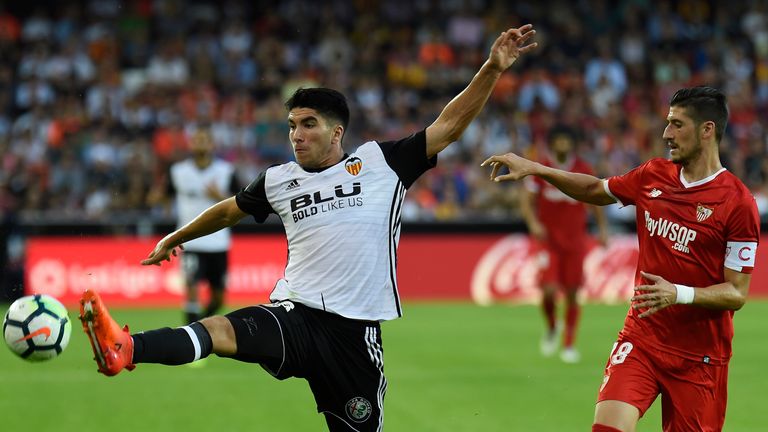
He came up through the youth ranks and has adapted very fast. His performance level last season was very high. We've tweaked his position this year and he has adapted very quickly. His performances are getting better and better and I think he's a very complete player, but like all young players - I'm not sure if he's made 50 appearances in the top flight - you can see that he's constantly improving. He's also helped by his very good attitude and the fact that he's very intelligent and focused.
Live La Liga Football


GB: How is he coping with the rumours about the interest of Manchester United and other big clubs which have already started coming out?
M: I think he's a Valencia man. I believe he's focused on tasting success at Valencia and he'll be here for many years. I don't think he just wants to do really well in order to leave in the short term.
I think he's enjoying his football and the team's good position near the top of the table, which I'm sure he's very happy about. His individual performances have been very good and I don't think he's considering his short-term future at the moment.