Analysis
Jesse Marsch sacked by Leeds United: Results did not tally with his constant talk of momentum and progress
Jesse Marsch spoke of momentum building at Leeds United but not everyone saw evidence of it and he was sacked on Monday. Adam Bate looks at the statistics and reflects on the disparity between results and the messages conveyed by the former boss

Tuesday 7 February 2023 10:36, UK
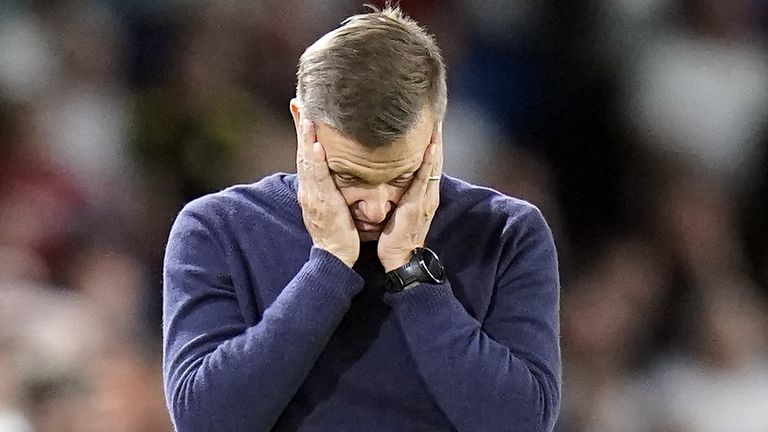
“This is for me our most complete performance that we have had since I have been here and the best example of how I believe that our team can play,” said Jesse Marsch. “We have something to attach ourselves to and a benchmark for how good we can be.”
Sitting in the press room at Villa Park last month and being told that this had, in fact, been "a big step in the right direction" for Leeds United was an odd experience. You had to check. Marsch's side had indeed lost. It was their seventh game without a win.
Cardiff and Accrington Stanley were subsequently beaten in the FA Cup but the disparity between the coach's own assessment of his team's performances and the actual results continued right up until his sacking on Monday, following their 1-0 loss to Nottingham Forest a day earlier.
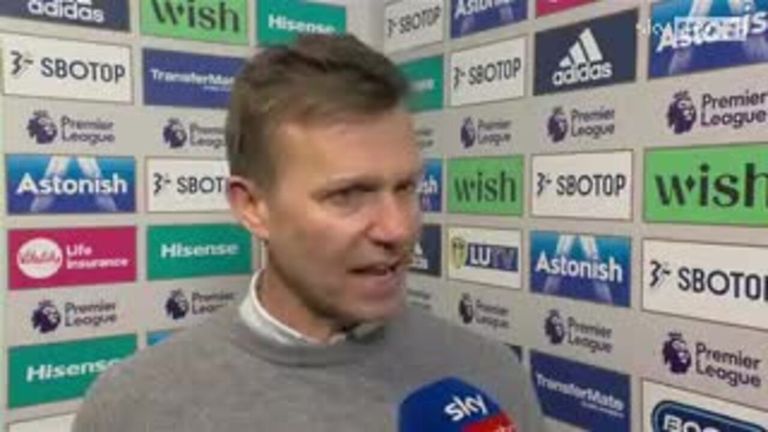
Some saw the positives. Others did not. At Villa Park, sections of the away support chanted for the manager to go. When he went over to them at the end, there were boos. "I would have expected an appreciation for how the team played," Marsch said afterwards.
In fairness, Leeds did have the clearer chances. Rodrigo rounded the Villa goalkeeper only to see his shot cleared from near the goal line. Jack Harrison's opportunity appeared even more straightforward only for Emiliano Martinez to somehow save from close range.
Against Brentford, they were stifled more effectively. A deep defence did not offer the same opportunities to run in behind. Thomas Frank did not want his team to pass out from the back as often so Leeds struggled to win possession of the ball high up the pitch.
Still, the underlying numbers offer encouragement. Leeds looked the better side, 'winning' the expected-goals contest, just as they did against Villa when the data showed that they created more than any other side in the Premier League that weekend.
Against Forest, again, they registered a higher expected goals total in defeat.
In isolation, it is unfortunate. In context, there is less sympathy.
Marsch's relentless positivity can be a little jarring.
"What I have been trying to stress to them this whole time is committing to the process of becoming a better team and playing how we want. Finally, we do that. We put together a 90-minute performance that is exactly what we are trying to achieve."
Maybe this was the problem. It is certainly what made Marsch's situation unique among the latest list of crisis clubs in the Premier League. Most under-pressure coaches are criticised because the perception is that they are struggling to implement their ideas.
That was not Marsch's issue. He was seeing his ideas in action. The players were, by his own measure, succeeding in delivering the brand of football that he demanded. And yet, it was not working. Playing the sort of game that he wanted to play did not bring results.
What is Leeds' style?
Leeds were a tactically distinct team under Marsch. This is worth stressing at a time when any new manager able to string a couple of results together is deemed worthy of having their surname prefixed to the word 'ball'. For better or for worse, Marsch-ball really is a thing.
Here are some metrics that illustrate that point. Leeds' appetite to win the ball back high up the pitch is unusual. Only Newcastle have made more high-intensity sprints than they have in the Premier League this season and this approach helps them to break up play.
Opta defines a sequence as a passage of play that is ended by a defensive action by the opponent or the ball going out of play, perhaps as a result of a shot. A pressed sequence is defined as one that ends within three passes inside the team's own half.
No team have forced more such situations than Leeds this season. They are an incredibly awkward team to pass the ball against because of this intensity. Their PPDA figure - opposition passes allowed per defensive action - is the lowest in the Premier League.
The result is that Leeds are able to start their own attacks closer to the opposition goal than all but the top two teams. However, that is where the similarities with Manchester City and Arsenal end, because Leeds are just as frantic with the ball as they are without it.
They are the most direct team in the Premier League in terms of the speed of their progression towards the opposition goal. It means they lose it more too. Opta defines a build-up attack as a sequence of 10 or more passes ending in a shot or a touch in the box.
Man City have had 118 of them. Leeds have had a mere fraction of that. It has happened just 16 times in 20 games. This is ideological. It is Marsch's vision of how football should be played - and the problem for him is that it was not leading to Leeds winning matches.
Of course, elements of this direct - some prefer 'vertical' - approach claim their lineage from Marsch's predecessor Marcelo Bielsa. It is why there were those at the club who were keen to pronounce the American as Bielsa's natural successor even after firing him.
The pair do share a passion for an intense game. The problem is that Leeds ditched the best bits of Bielsa and kept the worst. The tactical variety and subtlety of Leeds at their best is now absent but the chaotic defending remains, vulnerable and imprecise.
It was a criticism of Marsch during his brief time at RB Leipzig too. That commitment to aggressive play 'against the ball' fitted the Red Bull ethos. But once his team had possession, it was too unrefined even for Bundesliga tastes, the home of counter-pressing.
But Leeds went all in on Marsch. The money from the sales of Raphinha and Kalvin Phillips was reinvested. Eight outfield players have arrived since the summer, none of them over the age of 25 and three of them from Marsch's former club in Salzburg.
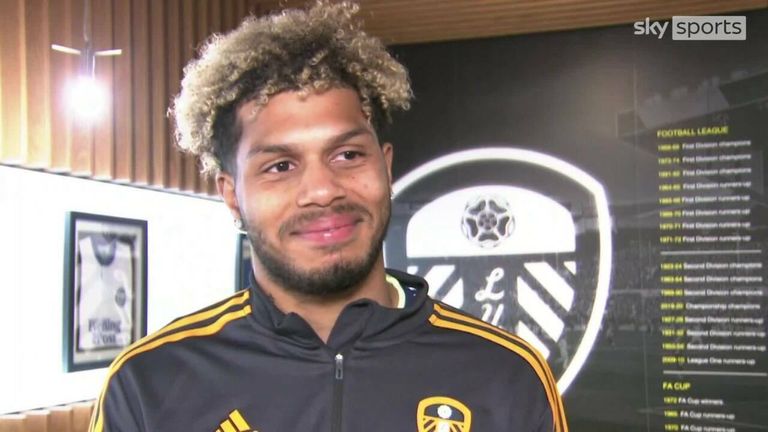
There is potential in these signings. Wilfried Gnonto might be the pick of the lot, though Marsch has been denied some of the credit for his recent form because he did not see fit to start the youngster until the middle of November. That feels a little unfair.
"Outstanding," said Marsch after Gnonto shone at Villa. "Aggressive, dangerous, good on the ball, clever, intensive without the ball. He plays like he is seven feet tall. We are making progress with players so now it is really about bringing it all together as a team."
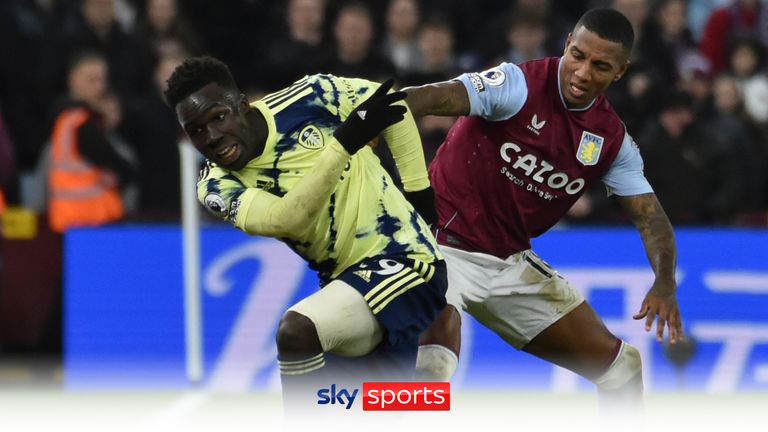
There was hope, until the end, that their luck would turn. The expected-goals differential at Villa was not quite the biggest in a losing effort this season, but that record is held by Leeds against Arsenal. They have had the better chances in most of their draws too.
Even so, the ease with which Manchester City cut through at Elland Road just after Christmas skews the statistics against Marsch - a five-game rolling average of their expected goals scored and conceded does not reveal the progress of which he speaks.
"I know if we play like this we will get results much more often than we have," said Marsch. He saw Leeds "becoming the team we want to be" and said that "if everyone commits to the way we want to play, we can be a dynamic, attacking team." He doubled down.
"We have to continue on this path," Marsch insisted. But not every supporter agreed and nor did the club's decision-makers. Was this an exciting young team on the brink of turning the corner or a talented group whose efforts were being undermined by systemic failings?
After a seventh Premier League game without a win and with the side 17th in the table, Leeds came to the latter conclusion.
A version of this article was originally published on January 25, 2023