Scottish football contributes more than £800m a year to the national economy, supporting 14,000 jobs
The findings come from a report commissioned by the Scottish FA, SPFL and SWPL; Scottish football is worth £820m to the country's economy; it supports 14,000 jobs; Scotland have qualified for the World Cup for the first time since 1998
Monday 19 January 2026 10:30, UK

Scottish football is worth more than £800m to the country's economy, new research has revealed.
The game also supports 14,000 jobs across Scotland, according to the analysis from the Fraser of Allander Institute at the University of Strathclyde.
Attendances at professional matches involving Scottish teams topped 6.8 million during the 2023/24 campaign.
- Scottish Premiership games coming up live on Sky Sports
- Got Sky? Watch now on the Sky Sports app 📱
- Not got Sky? Get instant access with no contract 📺

The research was commissioned by the Scottish Professional Football League (SPFL), the Scottish Women's Premier League (SWPL) and the Scottish Football Association (SFA) and carried out independently by the Glasgow-based economic think tank.
The report examined the impact of football through the day-to-day economic activity of clubs themselves and spending by supporters attending domestic league and cup matches.
It also took into account expenditure linked to "international" fixtures - including Scotland men's and women's national team matches and European club competitions.

Neil Doncaster, group chief executive of the SPFL, said the report demonstrated the scale of football's contribution to communities across the country.
"This new research underlines the hugely significant economic contribution of our clubs and fans right across the country," he said.
The study also captures the increasing economic significance of women's football following the integration of the SWPL into the SPFL Group in the 2022/23 season.
Attendances in the women's game have steadily risen, accompanied by increased commercial investment and visibility.
Clubs are also competing more regularly in European competitions.
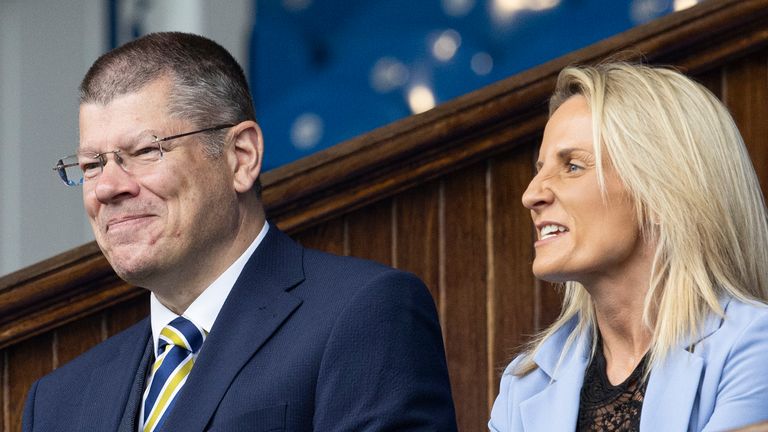
SWPL managing director Fiona McIntyre said the findings showed that growth on the pitch was being matched off it.
"It's extremely encouraging to see independent research clearly demonstrating the positive economic impact of both the men's and women's game in Scotland," she said.
"We are incredibly proud of the progress of the women's game, with growing attendances, increased investment and rising commercial interest helping to drive that contribution."

The findings represent a marked increase on the Institute's previous SPFL-focused study, published in 2020 using data from the 2017/18 season.
It found that SPFL clubs and spectator spending contributed £444m to Scotland's GDP and supported around 9,300 full-time equivalent jobs.
The Scottish FA said the economic benefits identified in the report also helped support wider social outcomes, particularly in disadvantaged communities.

Chief executive Ian Maxwell highlighted initiatives such as the Extra Time programme, which provides breakfast clubs and after-school sessions for children.
"As the national association, we see how this economic benefit drives social impact," he said.
"From job creation to sustaining local and national businesses, football clubs and their supporters have a significant positive impact across Scotland.
"This report is a great example of the game working together to reinforce the positive impact our clubs and fans make."
Scotland's national sport will provide a further boost to businesses across the country when the men's national team takes part in the 2026 World Cup in the USA, Canada and Mexico this summer.