
Celtic win Scottish Premiership title but does Hearts' emergence mean the Scottish football landscape has changed forever?
Celtic have won a 14th top-flight title in 15 years, but it was Hearts who led the way for 250 days this season; Danny Rohl's Rangers made a late title push but faltered post-split; Motherwell impressed under Jens Berthel Askou to finish ahead of Hibs, while Falkirk finished in the top six
Saturday 16 May 2026 19:34, UK

For 250 days, Hearts threatened to disrupt Scottish football's natural order.
After nearly eight months at the league's summit, Derek McInnes' side were 90 minutes away from becoming the first non-Old Firm team to win the title since Sir Alex Ferguson's Aberdeen in 1985.
Ultimately, they fell agonisingly short.
- Celtic strike late to beat Hearts and win title on dramatic final day
- Scottish Premiership games coming up live on Sky Sports
- Got Sky? Watch now on the Sky Sports app 📱
- Not got Sky? Get instant access with no contract 📺
Martin O'Neill woke the hare just in time to pip the tortoise to the finish line as Celtic were crowned champions for the 14th time in the past 15 years.
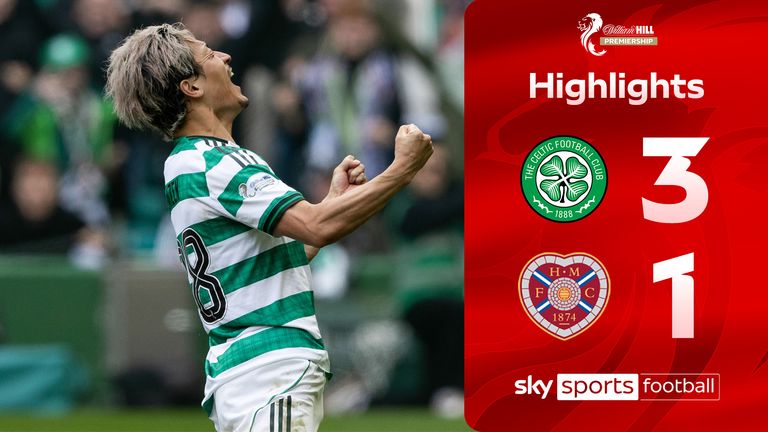
But that tortoise will be running without the burden of a shell next campaign, and some may argue that the natural order has already been shaken.
After a dizzying season of twists and turns, is Scottish football now entering a new era?
A third force to be feared?
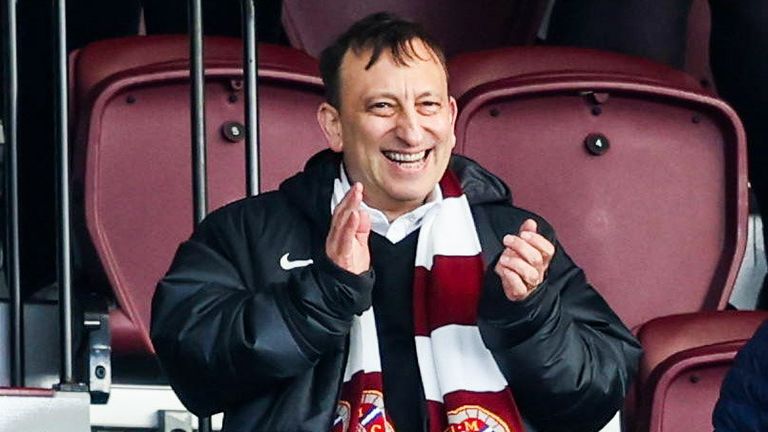
When Hearts' minority stakeholder Tony Bloom declared his ambition to split the Old Firm on the eve of the 2025/26 Scottish Premiership season, his optimism was mistaken for delusion.
He was laughed at for targeting a title triumph within a decade but was 90 minutes away from doing it nine years ahead of schedule.
Perhaps the conventional wisdom is that the Old Firm will never be this weak again, and that Hearts will never have a better opportunity to win the league.
Rangers endured their worst-ever start to a league season under Russell Martin before settling for their third-choice candidate in Danny Röhl as his successor. At Celtic, Brendan Rodgers' shock resignation triggered an explosive accusatory statement from Dermot Desmond as fan revolt foregrounded football for much of the campaign. Wilfried Nancy lasted 33 painful days sandwiched between O'Neill's two miraculous interim spells in the dugout.
All of the above is true, but that does not diminish the achievement of this Hearts team.
Champions or not, natural order was broken with four games to spare when McInnes' men condemned Rangers to a measly third-place finish.
And this is just the beginning.
Rome wasn't built in a day, nor was Brighton & Hove Albion or Union Saint-Gilloise.
Tynecastle chiefs expect to be stronger again next season as the genius of Jamestown Analytics scours the globe in search of the next Claudio Braga, Moises Caicedo or Alexis Mac Allister.

Head coach McInnes, along with Bloom, Jamestown and dependable captain Lawrence Shankland, formed the four pillars which carried much of the success of this season. But beneath them are foundations as strong as the auld castle rock set by the club's majority shareholders, the fans.
Dedicated supporters have pledged more than £20m since 2010 through the Foundation of Hearts - and they won't stop now.
The nightmare American dream
Rangers had spent much of the past decade and a half in the shadow of their rivals but were promised a return to "where they belong" when the American consortium, led by Andrew Cavenagh and the investment wing of the San Francisco 49ers, took control of the club last summer.
Eighteen signings, two head coaches, and £40m later, the club are in a weaker position than what they were this time last year - third.
Russell Martin oversaw the club's worst start to a league campaign in 47 years before CEO Patrick Stewart and Sporting Director Kevin Thelwell paid the ultimate price for a dismal summer transfer window.
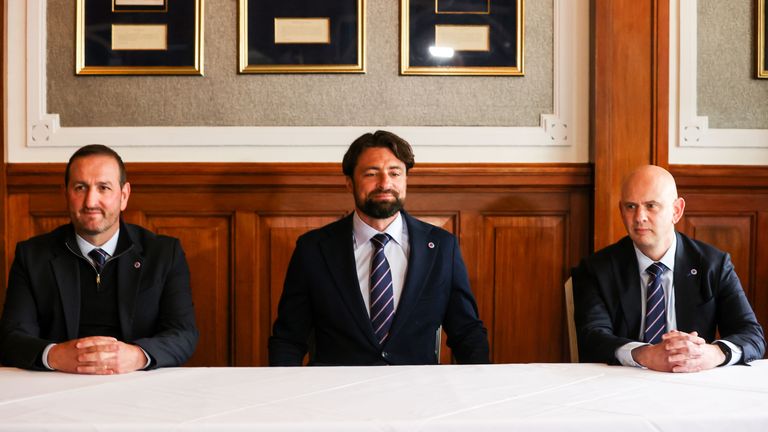
Röhl took over with the team 13 points off top spot and initially threatened a title charge before a late-season collapse saw his side lose four of their last five matches to slump to a third-place finish, 10 points behind the champions.
For years, fresh investment was thought to be the answer to all of Rangers' problems but Cavenagh and co's misplaced millions and seemingly scattergun signing policy prove that strategy is more important than resource.
With no intention to appoint a sporting director, and another head coach subject to supporter dissent, the Ibrox club find themselves in familiar territory both on and off the field.
Despite foreign fortunes, the perpetual 'Rangers cycle' persists.
- Appoint a new manager mid-season
- Benefit from 'new manager bounce'
- Threaten a title charge
- Throw it away when the pressure is on
- Commence squad rebuild
- Start season poorly
- Sack the manager
The club's hierarchy must find a way to break the cycle and cultivate a winning mentality, or the perennial bridesmaids of recent history could become just evening guests.
Challenges from the back benches?
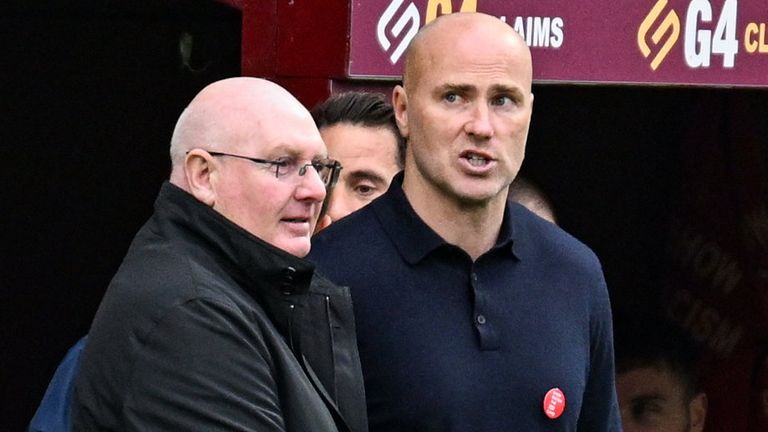
Hearts were not the only surprise package of the season.
Motherwell and Falkirk captured the imagination of supporters across the country with refreshingly courageous brands of football.
Jens Berthel Askou's Motherwell, who at one point were considered a fourth force in the title race, dominated matches against the top three, home and away.
Players who were considered to be distinctly average, such as Paul McGinn, Stephen O'Donnell and Stephen Welsh, are now among the top performers in the league.
Captain McGinn was one of five 'Well players included in PFA Scotland's Team of the Year, alongside Calum Ward, Elliot Watt, Elijah Just and the league's top goal scorer, Tawanda Maswanhise.
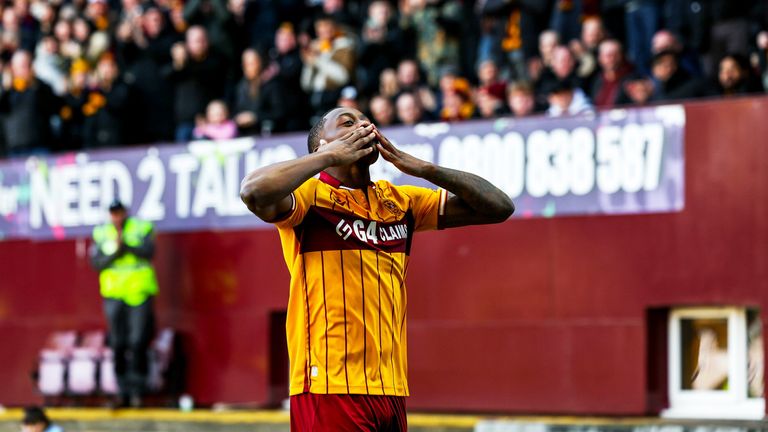
Whether or not they are able to keep hold of their mastermind manager this summer, the supposed 'Kingmakers' of this title race have a blueprint to operate as more than just pawns next term.
John McGlynn's Falkirk followed up back-to-back promotions with an improbable top-six finish, using a squad which consisted of 14 players from their invincible League One-winning team of two seasons prior.
Their attack was spearheaded by Barney Stewart, who they signed from Heriot-Watt University, the latest in a long list of players developed way beyond their perceived potential by McGlynn.
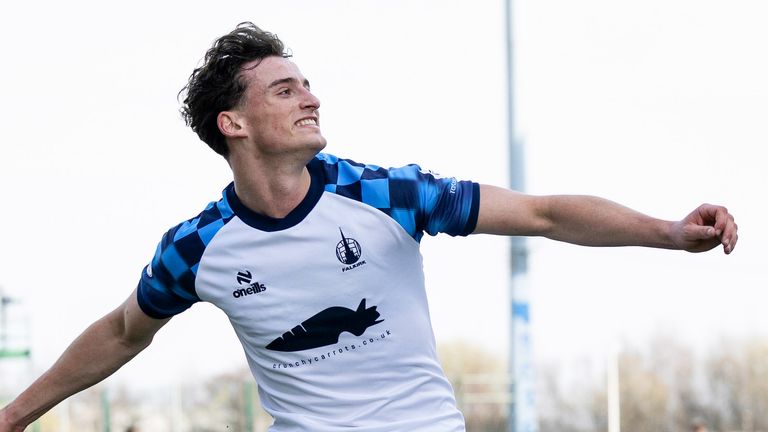
With a season of top-flight experience under their belt, the Bairns go into next season as Premiership adults.
Meanwhile, sleeping giants Aberdeen have shown encouraging signs under new boss Stephen Robinson and David Gray's Hibernian will once again be hoping to challenge around those European places.
In many ways, the Scottish football landscape is actually a mirror picture of British politics. Two clubs have dominated this country for decades, now those from the fringes seek to grip power as the big two falter.
I do not envy the pollsters tasked with trying to predict how next season will go.