
Carolyn Radford interview: CEO of Mansfield calling for inclusivity


Friday 29 September 2017 09:12, UK
Carolyn Radford became English football’s youngest CEO in 2011 but the wait for equality in football goes on. As part of National Inclusion Week, Adam Bate spoke to Radford about the challenges she still faces despite her accomplishments at Mansfield Town.
"I think the world of football," says Carolyn Radford. "It is a great place to work but it just needs moving out of the dark ages to become a bit more modern and inclusive."
It is seven years since John Radford bought Mansfield Town and six years ago this month that he appointed his now wife as the club's chief executive officer. At 29, she became the youngest CEO in English football. Despite having a politics degree from Durham University and being a qualified lawyer, some dismissed it as a mere publicity stunt.
Others were far less charitable than that.
"It was kind of shocking," Radford says of the criticism. More troubling is that little has changed. "It is still ongoing," she adds. "People thought I was a publicity stunt and they still think that despite the fact that the football club is unrecognisable from what it was when I walked in. I think that is what they call football banter and that is fine, I just keep going."
Of course, it is not fine.
"You just have to have sheer determination and be quite hard-faced," admits Radford. "That is what I am now. I just don't react now to comments because it is not worth getting worked up about things. But I do think that the competitive nature of football has made me an easy target for ridicule.
"The first thing is being young. Right away, you are a target because of that. Then there is the fact that there are not many females. There is a sheer lack of representation across football and that is still the case six years on. People talk about my credentials but if you look at the CVs of other CEOs in football, mine stands up there as one of the better ones."
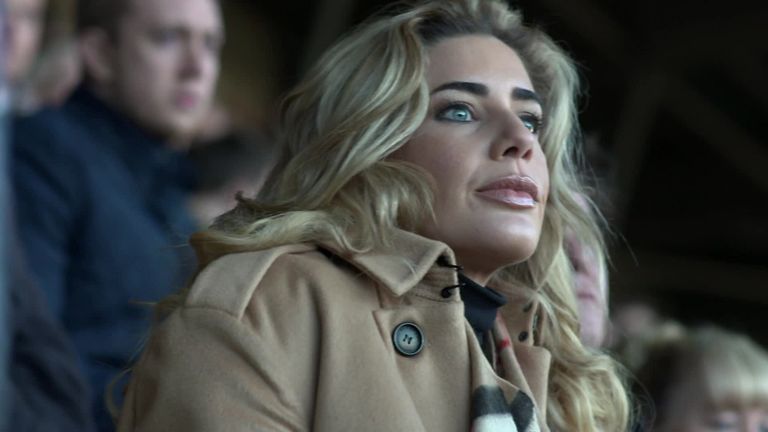
There are not many females. There is a sheer lack of representation across football.
Some of the criticism Radford has endured might be more explicable had she presided over a disastrous period in the club's history. Instead, Mansfield were promoted back to the Football League in 2013 and have since stabilised in League Two with big plans for the future - a Hilton hotel on site and a new training ground too. Championship football is the goal.
It is a far cry from what Radford inherited. "It was sliding down a slippery slope," she recalls. "It just was not active. Now we have things going on all the time. With the players splitting their time between here and the new training ground, there are a lot of fans who come and watch. We have a sports bar that is open all the time. Before it was like a ghost town.
"I had the appetite to make change happen. A lot of it was just by being youthful and energetic. People would say: 'That's how we have always done it.' So we had to have a clear-out of minds to change the culture of how everything was being run. Looking back, I think the people who have remained can see huge positive changes in everything."
The forthcoming club fireworks night is a good example of how things have changed. "In our first year it was all cash on the turnstiles," she says. "There was no ticketing system. People were coming to see the fireworks, handing over their money and a woman was going around with a black bin-liner to each turnstile, collecting it up. It just wasn't a business."
Adding a greater sense of professionalism was paramount but keeping the club rooted in the community was vital too. Mansfield Town Ladies were reformed and the academy has "been heavily invested in" too. Radford describes it as "pure business sense" but there is an awareness that involving youngsters from the age of seven has other benefits too.
It is here that Radford warms to her theme and the enthusiasm for politics is apparent. "A football club has to be at the hub of the community, especially somewhere like Mansfield which, economically, has had a really rough time," she explains. "You can go back to Thatcherism and the closing of the mines. There was quite a bit of apathy around the town.
"A football team can lift things. When we won promotion and had the bus journey around the town it was really great to see it bring the community together and that is what football can do. I always think the football club is the new church. If you look at towns that are doing well, the football club can help to lift them."

How far Mansfield can really go remains to be seen. The increased television revenue in the Premier League also leads to greater disparity down the pyramid due to the way that the Football League chooses to divide the money. But Radford points to Burton Albion as a "great example" of how a club with similar resources can survive in the Championship.
In National Inclusion Week, perhaps Radford can be a great example too. "I think it is about making sure that the females that are involved carry on being vocal," she says. "We also need to stress the point that while it is challenging to be involved it is rewarding too. It is exciting and I absolutely love it. We need more females in football."
Whether it will happen, of course, is another matter. "There are similar issues with the composition of parliament and we see it in other industries too," notes Radford. "The Football Association are moving towards that now they have been told that they have to have more females involved." But, for now, the wait goes on. "It has not changed," she adds.
Football, it seems, is yet to see the light.