
Ref Watch: Dermot Gallagher selects best, worst and most bizarre refereeing decisions
Thursday 19 May 2016 17:33, UK
Was it handball? Did a player dive? How on earth did the referee not see the incident?
Officials' every decision comes under intense scrutiny from fans and experts alike, and the end of a season allows us greater hindsight to run the rule over the most crucial.
In his final Ref Watch feature of the season, former Premier League referee Dermot Gallagher picks out the decisions that have had everyone talking, and gives us his verdict.
The good
MATCH: Liverpool v Everton, April 20
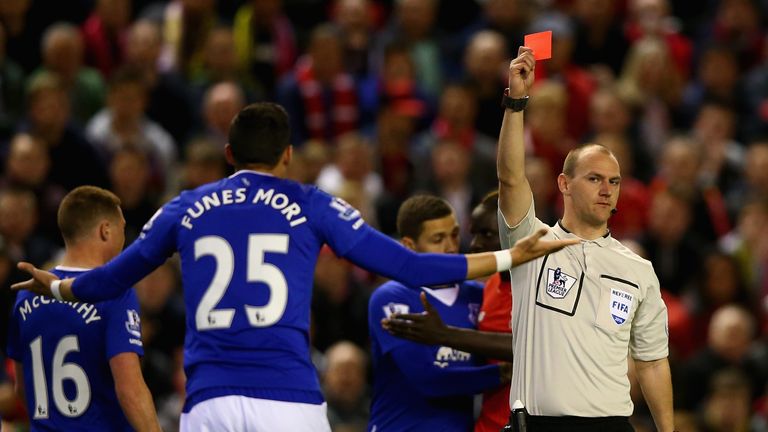
INCIDENT: Already 2-0 down in the Merseyside derby, things went from bad to worse for the beleaguered Toffees as Ramiro Funes Mori was sent off for a dangerous-looking challenge on Divock Origi. A straight red card seemed harsh on first viewing, but many people's opinion changed on seeing replays.
GALLAGHER'S VIEW: Red card, correct decision
GALLAGHER SAYS: It's the best team refereeing decision I've seen this season. If you look at Bobby Madley's initial reaction, he thinks it is a yellow card. Peter Kirkup is the assistant referee and has a better view, and he immediately signals to Madley that it was worse than that, and deserved a red card. Kirkup has stood up and been counted, Madley has backed him and the right decision has been made.
MATCH: West Brom v Southampton, September 12
INCIDENT: Callum McManaman went down in the penalty area under a challenge from Matt Targett in the 16th minute but nothing was given by referee Stuart Attwell, much to the home side's frustration. Replays showed that the Saints defender won the ball.

GALLAGHER'S VIEW: No penalty, correct decision
GALLAGHER SAYS: When you first see that, everyone thinks it is a penalty. When you see it again, it is not. Stuart Attwell is the referee, and was trialling to be moved up to the Premier League, and now has moved up, and you can see why he has with decisions like that. What was also really good about this was that West Brom head coach Tony Pulis came out afterwards and said what a really good decision it was. It reinforced what a good decision it was.
The bad
MATCH: Manchester City v Tottenham, February 14
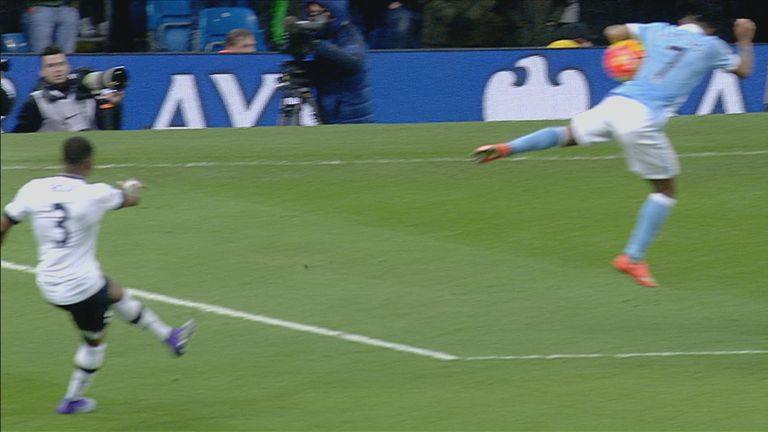
INCIDENT: At 0-0, Tottenham were given a penalty as Danny Rose's cross was adjudged to have hit Raheem Sterling's arm. Sterling, stood just inside the area, turned his back as the cross came in and the ball appeared to hit him under the armpit.
GALLAGHER'S VIEW: No penalty, incorrect decision
GALLAGHER SAYS: A little bit of lack of concentration and judgement, that's all you can say. I am sure if Mark Clattenburg was sat here now, he'd say the same - it was not a penalty. Whether he had lost his focus, whether he was looking at something different, whether he anticipated that Sterling was going to block the ball with his hand, I don't know what was going through his head.
MATCH: Manchester City v Manchester United, March 20
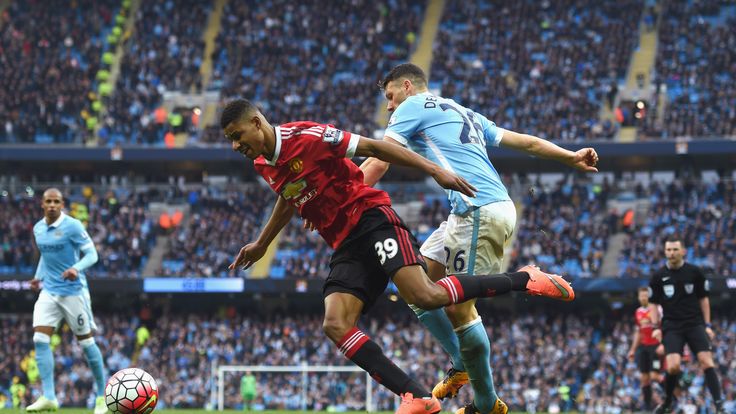
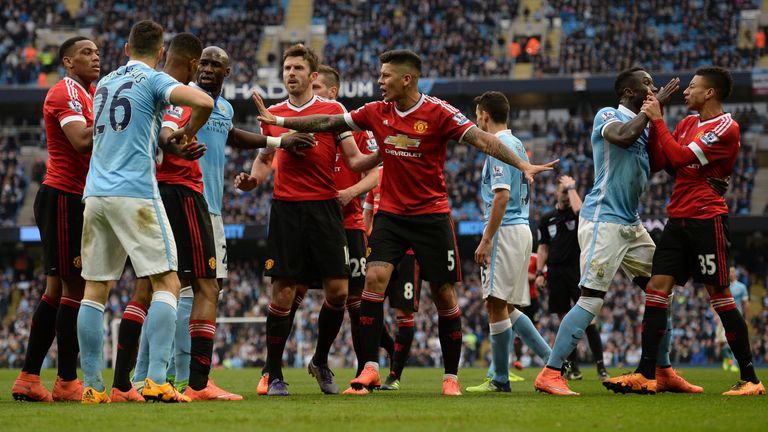
INCIDENT: In the penalty box, Martin Demichelis appeared to barge into Marcus Rashford, knocking him off balance, but no penalty was given.
GALLAGHER'S VIEW: Penalty, incorrect decision
GALLAGHER SAYS: This is a strange one. I think penalties are gut reactions, and my gut reaction was 'penalty'. When you look at Michael Oliver, he goes to put his whistle to his mouth for a penalty, then pulls it away. What could change your mind so quickly? I don't know, and that is why it is a mystery.

The bizarre
MATCH: Stoke v Chelsea, November 7
INCIDENT: Loic Remy broke into the box and met the on-rushing Jack Butland, hurdled him, then gradually lost his footing as he attempted to take a shot at goal, which went wide.
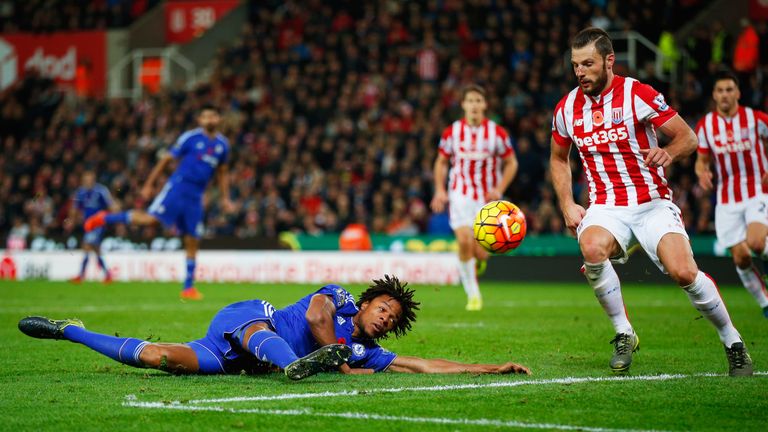
GALLAGHER'S VIEW: No penalty, but there's a 'but'....
GALLAGHER SAYS: It is a moral dilemma. If the referee would have given a penalty, people would have said 'why was he impeded?'. The referee can only do what the law says, and that is allow the play to continue. Questioning the law is a different matter, but in this situation, the referee did all he could.
MATCH: AFC Wimbledon v Accrington, March 5
INCIDENT: Accrington's Billy Kee appeared to score the opening goal, but referee Trevor Kettle chalked it off as he blew for half-time just as Kee shot.
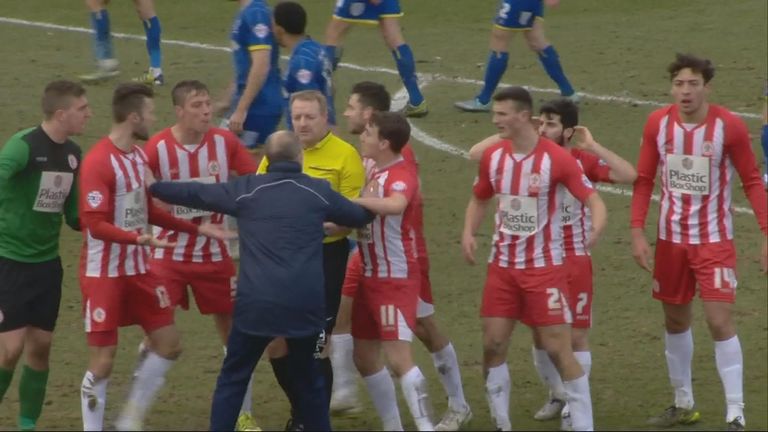
GALLAGHER'S VIEW: Technically a correct decision, but not one I would have made.
GALLAGHER SAYS: The referee is the sole judge of time. The question is whether he can be that accurate. It begs two questions, really. One is whether we should have timekeepers, and the other is whether the referee should be more aware of what is happening at the time and not put himself in that position.